
Get more content that can help you
Content
Few product categories create as much confusion on a bill of materials as wires and cables. The two words are often typed into the same search box, but they are not the same thing. A wire is a single conductor, while a cable is an assembly of multiple insulated conductors enclosed in a common protective sheath. This structural difference drives every other decision a buyer faces, from current capacity and flexibility to price and service life. Here is what the difference means in practice.
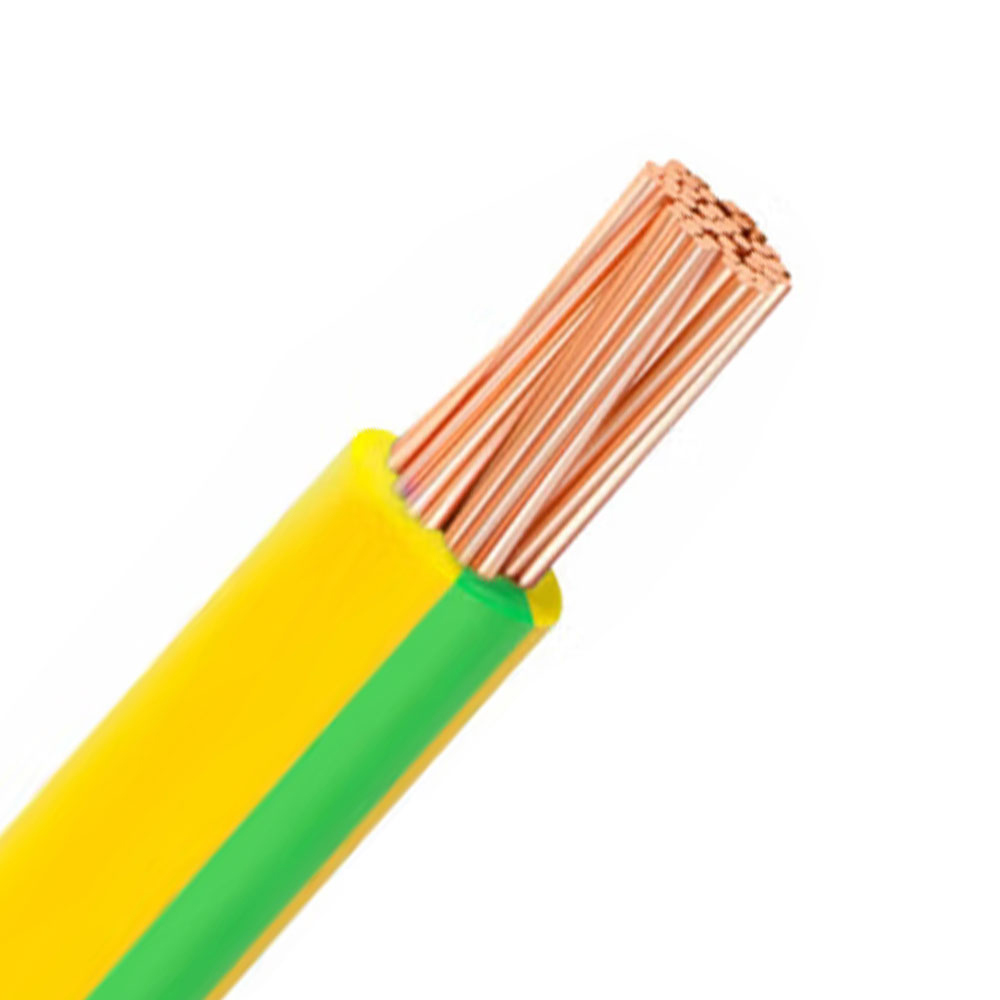
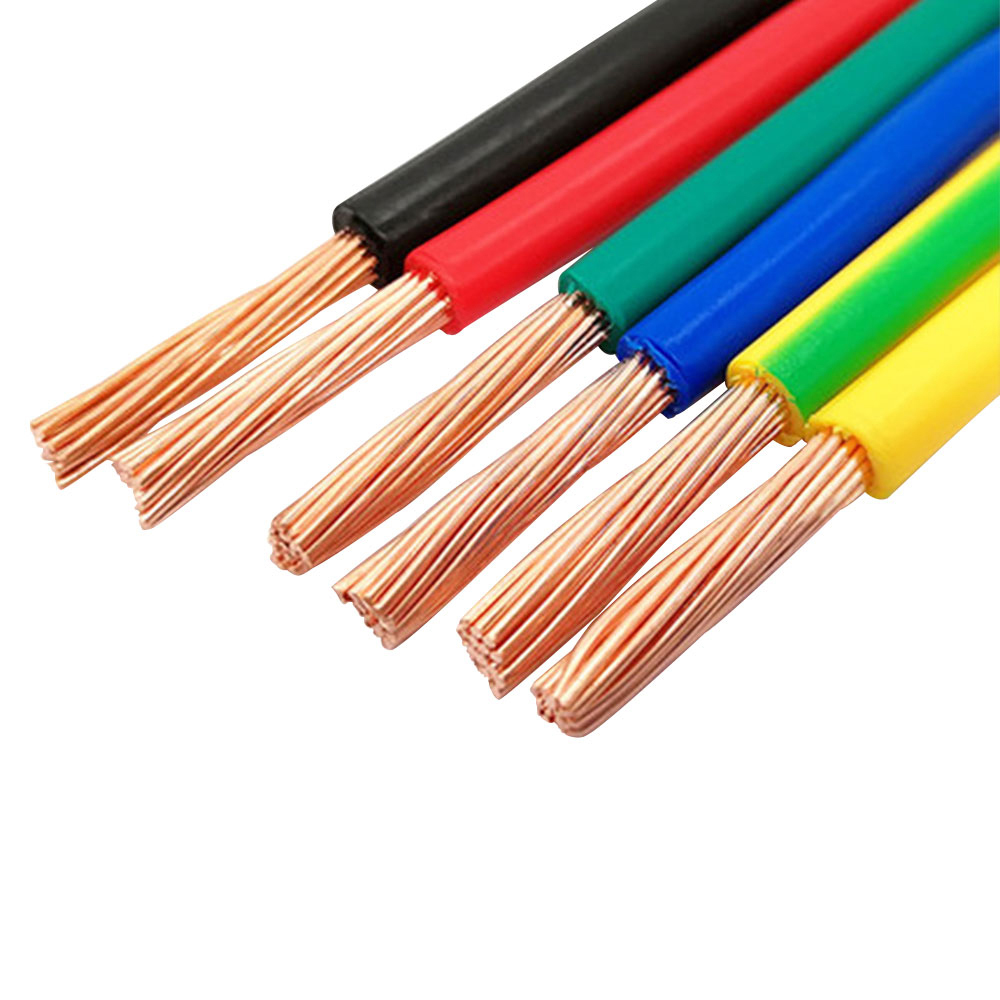
A wire starts and ends with one conductor. It is usually drawn from copper, which offers high conductivity and good oxidation resistance, or aluminum, which is lighter and cheaper for a given current. A solid wire is a single thick strand; a stranded wire is a group of thin strands twisted together so the conductor stays flexible while keeping enough cross-section for the current.
Wires can be bare or insulated. Bare wire is used where the risk of accidental contact is managed by spacing, as in overhead lines and grounding connections. Insulated wire has a thin layer of PVC or another compound around the conductor, but it has no outer jacket because there is nothing to bundle. BV and BVR building wires installed in conduit are the clearest example. Their advantages are simple: low cost, small diameter, and easy stripping.
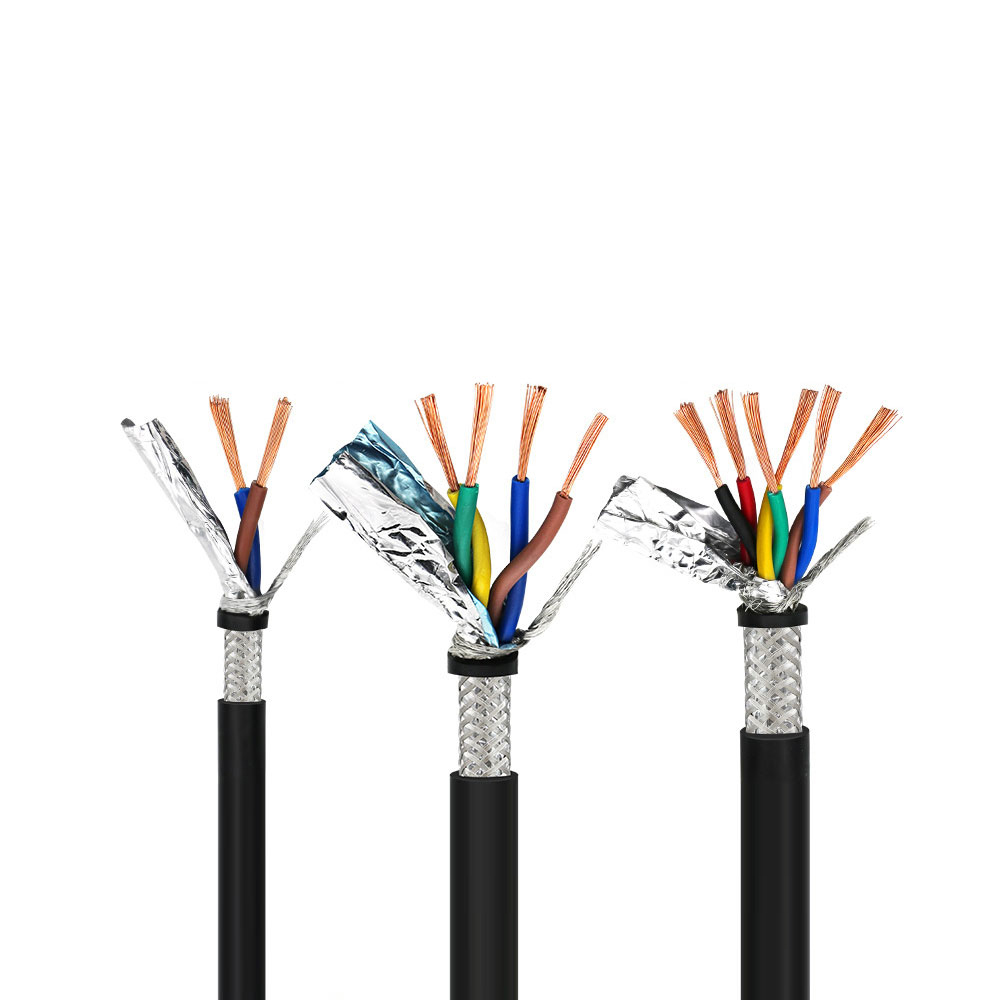
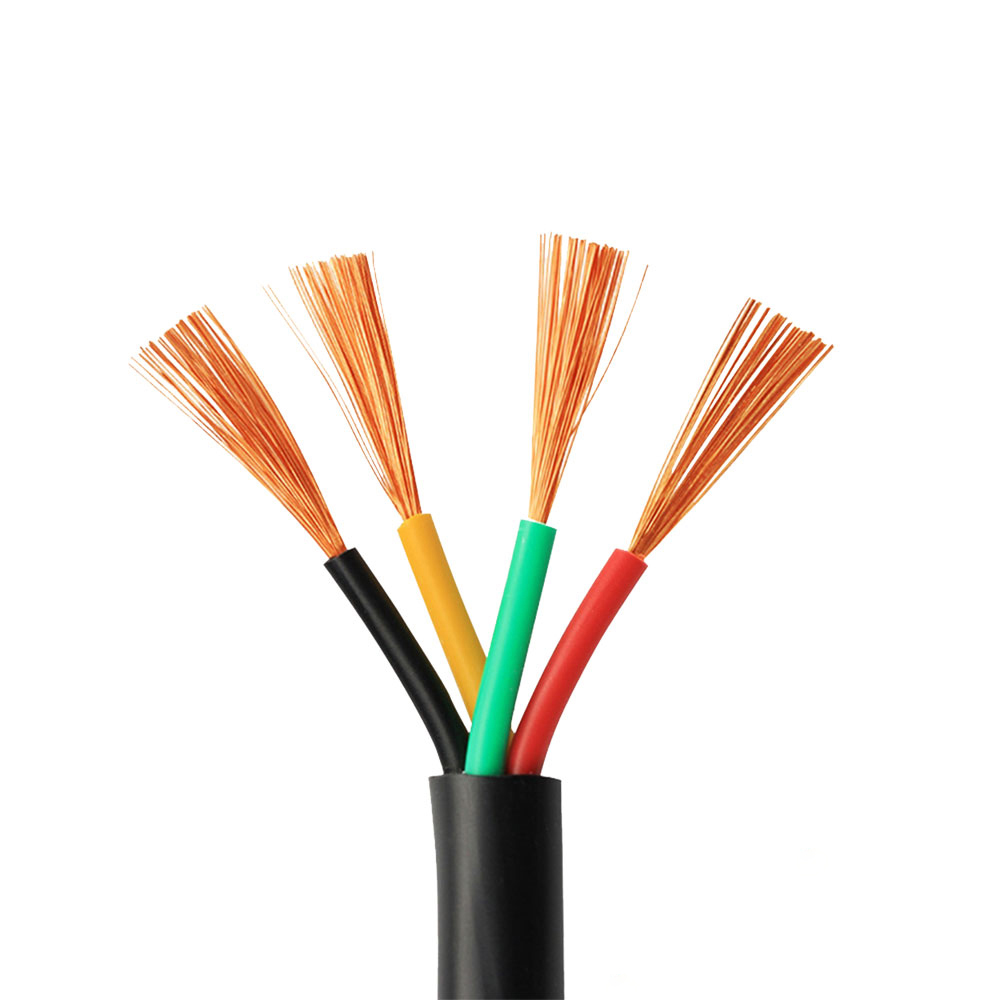
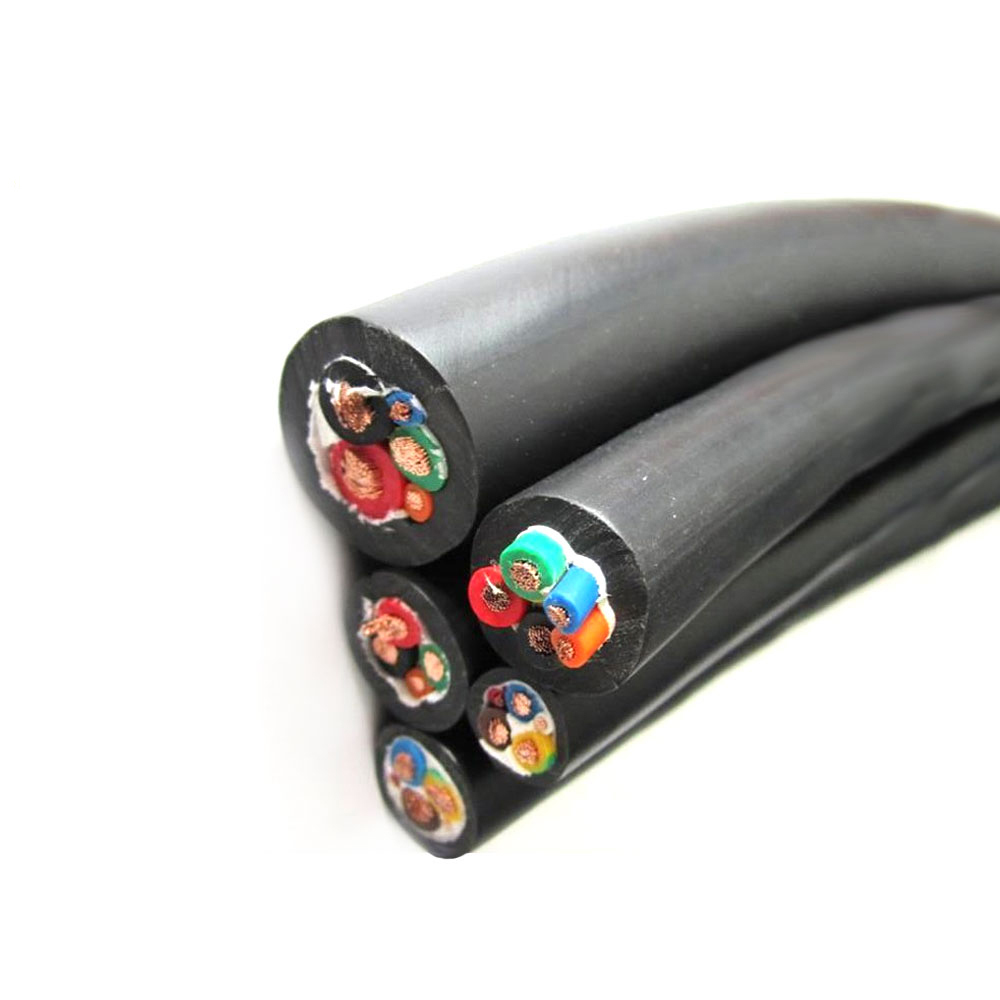
A cable is a fully manufactured assembly. It contains two or more insulated conductors laid up together and enclosed by a continuous sheath. Between the conductors and the sheath, the designer can add:
The sheath changes the mechanical behavior entirely. A cable is pulled, clamped, and routed as one unit. It resists moisture, oil, chemicals, and abrasion as a system. Even a single wire with heavy insulation is still one conductor; the line between a wire and a cable is drawn at the assembly level, not at the insulation thickness.
The comparison below summarizes the practical distinctions.
| Feature | Wire | Cable |
|---|---|---|
| Number of conductors | One | Two or more |
| Outer sheath | Not present | Present, over the whole bundle |
| Shielding options | Rarely available | Foil, braid, or combination |
| Mechanical strength | Depends on the conduit or raceway | Built into the jacket and armor |
| Flexibility | Solid wire stiff; stranded wire flexible | Engineered flex life in special types |
| Typical use | Branch circuits, grounding, panel wiring | Power feeds, controls, signals, machinery |
| Relative cost | Lower | Higher |
When several conductors must travel the same path, grouping them into a cable almost always beats pulling individual wires. The exception is when every conductor must be pulled separately into conduit to allow for future rewiring.
Ampacity is determined by conductor size, insulation temperature rating, and ambient conditions. When multiple current-carrying conductors share one cable, heat builds up faster, so the cable is usually derated compared with the same conductors installed separately. A 2.5 mm2 conductor in free air carries more current than the same conductor inside a four-core cable. Buyers who skip this calculation end up with an undersized cable and overheating.
Flexibility is not the same as flexible enough. A stranded wire bends easily during installation, but it cannot survive millions of cycles in a drag chain or robot arm. Cables built for that duty use finer strands, specialized insulation such as silicone or polyurethane, and optimized lay lengths. The construction has to be designed as a system; replacing a flexible cable with ordinary single wires never works.
Control and data cables depend on geometry. Conductor twisting, pair spacing, and shield coverage determine how well the cable rejects interference. A bundle of individually installed wires has no controlled geometry, so common-mode noise and crosstalk become unpredictable. For stable transmission in automation, a cable with a complete shielding structure is a bad place to cut cost.
In commercial and residential buildings, single insulated wires remain the workhorse for branch circuits. BV, BVR, and similar types are pulled into PVC conduit, steel conduit, or trunking to feed sockets, lighting, and small equipment. They install quickly, strip cleanly, and cover the full range of cross-sections a project needs. Flame-retardant and low-smoke versions are required by building codes where evacuation safety matters.
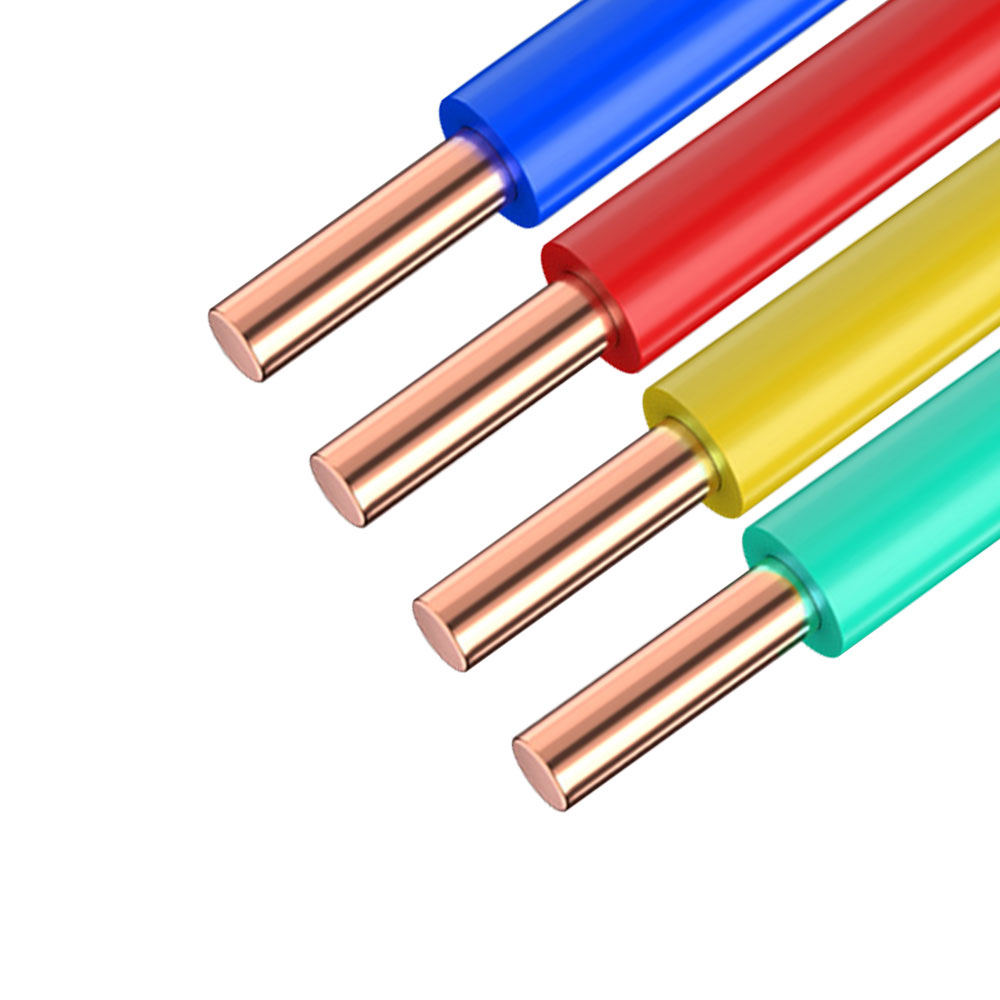 BV/NH-BV Flame-Retardant and Fire-Resistant Building WireThis single-conductor wire supports standard and fire-resistant applications, passing flame and integrity tests for branch circuits in residential and commercial settings, and is essential for emergency systems.View Product →
For a single conductor to stay accepted by inspectors and perform for decades, its insulation must pass thickness, voltage, and flame tests. Choosing a certified building wire is not a luxury; it is the baseline for insurance approval and final handover.
When power moves from a transformer to a main panel, or from a substation to a facility, a multi-core cable replaces individual wires. XLPE-insulated power cables are the standard choice at 0.6/1 kV and above because cross-linked polyethylene handles long-term operating temperatures up to 90 degrees Celsius, resists moisture, and allows higher current density than PVC insulation.
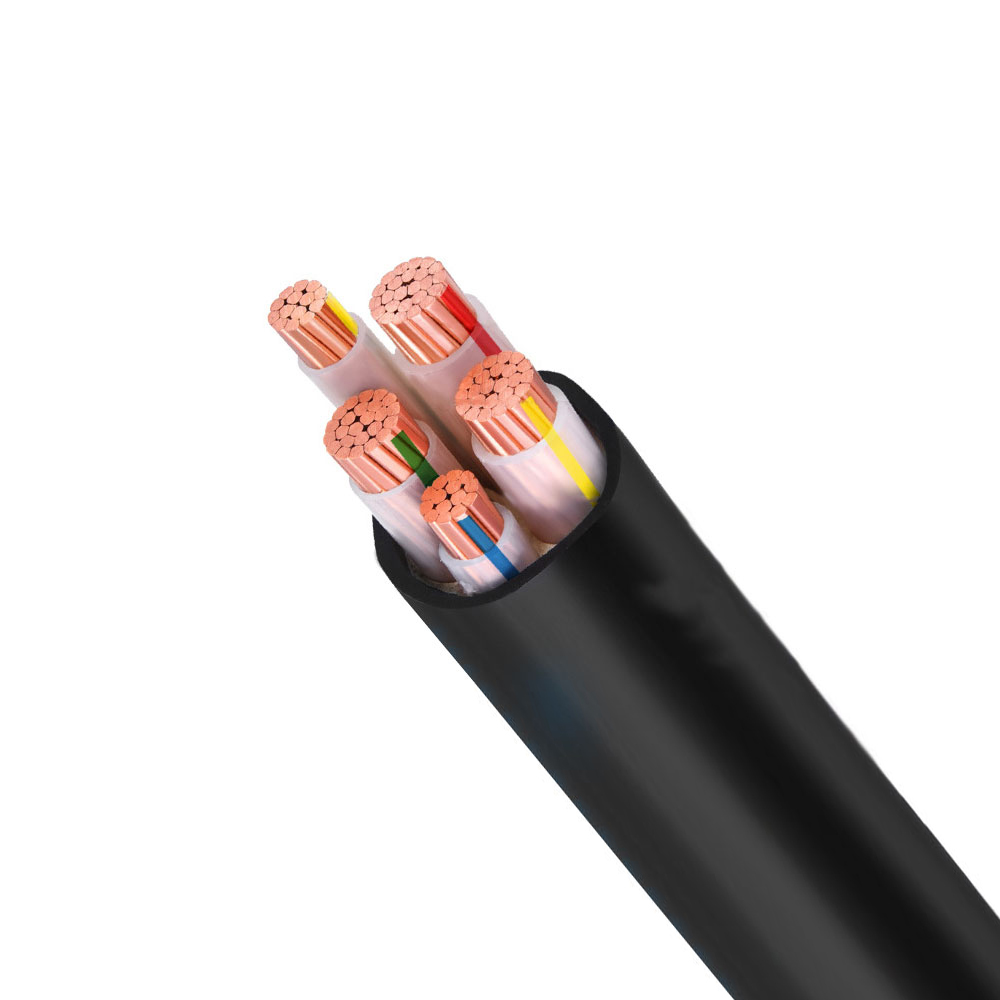 YJV XLPE-Insulated Power Cable for Medium-Voltage DistributionCross-linked polyethylene insulation allows a 90°C continuous rating and higher ampacity, making this cable a reliable choice for transformer-to-panel connections and demanding power distribution installations.View Product →
Armored variants add steel tape or wire armor so the cable survives direct burial and mechanical abuse. The choice between PVC, XLPE, and armor comes from the installation environment, not from habit.
Industrial control circuits carry low-voltage signals that must stay accurate in an electrically noisy environment. A shielded control cable uses twisted pairs and a braided or foil shield to keep process signals clean. In production lines and automated equipment, these cables run next to motor feeders that would corrupt an unshielded connection.
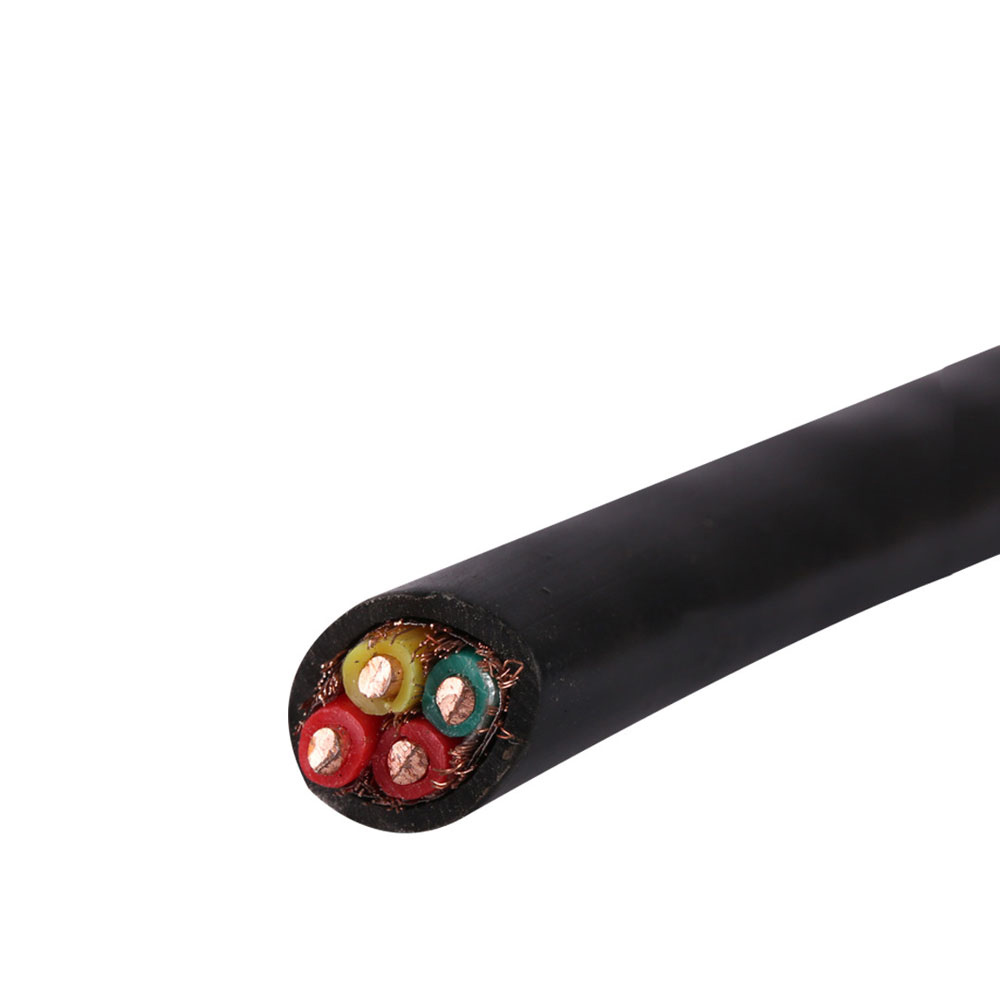 KVVP Braided-Shield Control Cable for Industrial Noise RejectionCopper braid shielding suppresses electromagnetic interference, keeping control and instrumentation signals stable in noisy industrial environments, suitable for fixed installations in production and monitoring systems.View Product →
Motion applications add another layer. Drag chain cables, robot cables, and servo cables are built for millions of flexing cycles and must be selected by bend radius, acceleration, and travel distance as much as by ampacity. Standard catalogs rarely cover these variables, which is why many manufacturers publish dedicated automation and robotics cable solutions instead of expecting buyers to improvise.
Once you know whether the job calls for a wire or a cable, confirm the specifications. These details cause the most problems when left vague.
Buying from a manufacturer gives you more than a price quote. Anhui Zhishang Cable Technology operates a 5,000-square-meter production base with in-house quality engineers and research and development staff, producing building wire, power cables, control cables, and specialty cables under CE and UL certification programs. When the working conditions are unusual, a manufacturer can recommend the right construction instead of selling whatever is in stock.
The wire versus cable question is settled by structure. One conductor is a wire; multiple conductors under a shared sheath form a cable. That difference controls mechanical protection, signal performance, flexibility, and installed cost. For simple branch circuits and internal wiring, a wire is the honest choice. For power feeders, controls, and any application that moves, a cable is the minimum acceptable solution.

We firmly believe that good cables are not only a competition of materials, but also a reflection of craftsmanship, quality, and responsibility.

Links
Product
Send Inquiry
No. 29 Sankeshu Road, Xuanzhou District, Xuancheng City, Anhui Province, China
+86-18621104555/+86-563-2622999
 Electrical Cable Manufacturer
OEM/ODM Wire and Cable Solutions
Electrical Cable Manufacturer
OEM/ODM Wire and Cable Solutions
 English
 Español
 عربى
عربى
 русский