Sensor Signal Cable Comprehensive Introduction
I. Definition and Core Characteristics
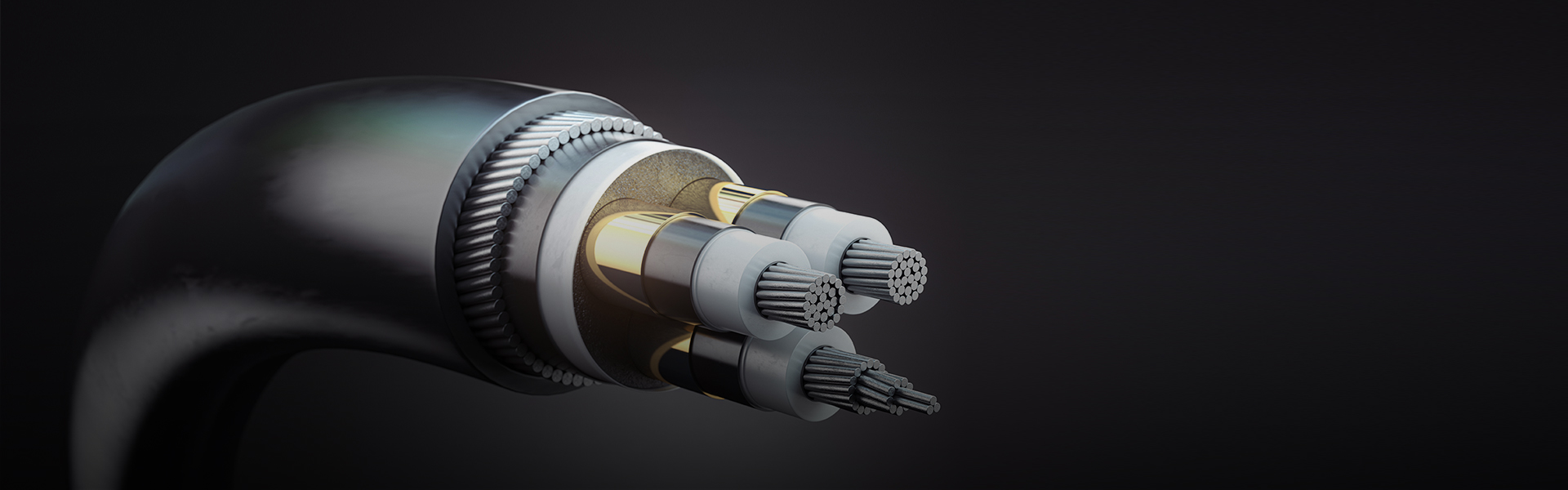
Sensor signal cables are precision cables specifically designed to connect various sensors and transmitters to control systems (such as PLCs, DCSs, and data acquisition devices). Their core task is to stably and accurately transmit low-level analog or digital signals at millivolt (mV) or milliampere (mA) levels. Unlike power cables, they place extremely high demands on signal integrity, anti-interference capability, and mechanical reliability, serving as the "nerve endings" of automated measurement and control systems.
Core Characteristics:
Low Noise and High-Fidelity Transmission: Special designs and materials are employed to minimize signal attenuation, distortion, and introduced noise during transmission.
Excellent Anti-Interference Capability: Multiple shielding techniques (e.g., twisted-pair shielding, overall shielding) and balanced transmission technologies are used to effectively resist electromagnetic interference, radio frequency interference, and ground loop interference in industrial environments.
Stable Electrical Parameters: Conductor resistance, pair capacitance, impedance, and other parameters must be highly uniform and stable to ensure consistent signal transmission.
Precision Mechanical and Durability: Often required to withstand harsh conditions such as bending, twisting, vibration, oil exposure, and temperature variations, protecting fragile signal wires from breakage or degradation.
II. Main Types and Application Scenarios
Classification by Signal Type and Shielding Method:
Analog Signal Twisted-Pair Shielded Cable: Each signal pair is individually twisted and wrapped in aluminum foil shielding (pair shielding), with an additional overall braided shield over all pairs. This is the gold standard for transmitting high-precision analog signals (e.g., thermocouples, RTDs, strain gauges).
Applications: Process industries (chemical, pharmaceutical) for temperature, pressure, and flow transmitter loops; precision testing and measurement equipment.
Digital/Bus-Specific Cables: Feature strictly matched characteristic impedance to fieldbus standards (e.g., 150Ω for PROFIBUS DP, 120Ω for CAN), utilizing twisted-pair and overall shielding structures.
Applications: Connecting sensors and controllers in fieldbus networks such as PROFIBUS, CAN, and DeviceNet.
Thermocouple Extension/Compensation Cables: Use alloy conductors with thermoelectric properties matching specific thermocouple types (e.g., Type K, J) to extend the thermocouple cold junction to a temperature-stable point in the control cabinet.
Applications: Long-distance temperature measurement in high-temperature environments such as metallurgy and heat treatment furnaces.
General-Purpose Multi-Core Shielded Control Cables: Integrate multiple groups of twisted-pair shielded lines for centralized sensor wiring scenarios.
Applications: Connecting multiple sensors on automated production lines and test benches.
Typical Application Areas:
Industrial Process Control and Automation: Connecting pressure, temperature, level, and flow sensors throughout factories.
Mechanical Equipment Condition Monitoring: Applications of vibration sensors, encoders, and proximity switches in CNC machine tools, fans, and pump sets.
Scientific Experimentation and Test Measurement: Connecting oscilloscopes, data acquisition devices, and various test sensors (e.g., force, displacement, acoustic).
Building Automation: Wiring for temperature, humidity, CO₂, and illuminance sensors.
III. Key Production Process Controls
Conductor Selection and Processing: Use annealed soft copper wires with smooth surfaces (tin-plated for oxidation resistance) and fine single-wire diameters to ensure flexibility and low resistance.
Insulation Material and Extrusion: Select high-quality PE or PVC with stable dielectric constants and low loss. Extrusion thickness is uniform, and eccentricity is strictly controlled to maintain stable pair capacitance.
Precision Twisting and Cabling: Signal pairs are precisely twisted at constant, optimized pitches, which is key to canceling magnetic field interference (common-mode interference). For multi-pair cables, pitches are staggered to reduce crosstalk.
Multi-Layer Shielding Structure:
Pair Shielding: Each pair or group of pairs is individually wrapped in aluminum-plastic composite tape (100% coverage) to isolate pairs from each other.
Overall Shielding: A tin-plated copper braided shield (typically ≥85% coverage) is applied over the cable core to resist external interference.
Drain Wire: A tin-plated copper drain wire is placed within or under each shielding layer to ensure grounding continuity.
Sheathing and Identification: The outer sheath is typically made of oil-resistant and abrasion-resistant PVC or PUR. Clear numerical or color coding is crucial for accurate wiring of multi-core cables.
IV. Detailed Core Advantages
Ensures Measurement Accuracy and System Reliability: Outstanding anti-interference capability and signal integrity ensure that signals received by the control system accurately reflect the measured physical quantities, forming the foundation for precise control and efficient production.
Reduces Downtime and Maintenance Costs: Rugged and durable designs minimize sensor false alarms, equipment malfunctions, and unplanned downtime caused by signal interference or wire breakage, lowering maintenance frequency and costs.
Simplifies Installation and Debugging: Good flexibility and clear identification facilitate wiring in complex control cabinets and field environments. Excellent anti-interference performance reduces additional debugging efforts to eliminate noise during installation.
Enhances System Safety: In safety instrumented systems, reliable signal transmission is directly related to the correct triggering of safety functions such as emergency shutdowns. High-quality sensor cables are essential for functional safety.
Long Lifespan and High Adaptability: Capable of operating stably for extended periods in industrial environments with humidity, oil exposure, wide temperature ranges, and chemical corrosion, ensuring long service life.
Summary
Sensor signal cables are the critical bridge connecting the physical world to digital control systems. Their value lies not in transmitting large amounts of energy but in the "purity" and "fidelity" of the signals they transmit. In the context of Industry 4.0 and smart manufacturing, data accuracy is the foundation of all analysis, optimization, and decision-making. Therefore, when selecting sensor cables for automation projects, they should not be treated as low-value connecting accessories but as integral components of core measurement loops, requiring high-standard selection and investment.

 English
 Español
 عربى
عربى
 русский