
Get more content that can help you
Content
Mining environments are among the most electrically and mechanically demanding settings on earth. Underground mines, open-pit operations, and surface processing plants all impose conditions that destroy ordinary cables within months — or cause catastrophic failures that endanger lives. Mining cable is a specialized category of power and control cable designed to survive constant mechanical abuse, explosive atmospheres, water and mud exposure, extreme temperature swings, and continuous flexing under load. Getting the selection right means understanding every layer of the cable's construction and how each part contributes to safety and service life. The following sections break down the critical components that must be evaluated before specifying any mining cable.
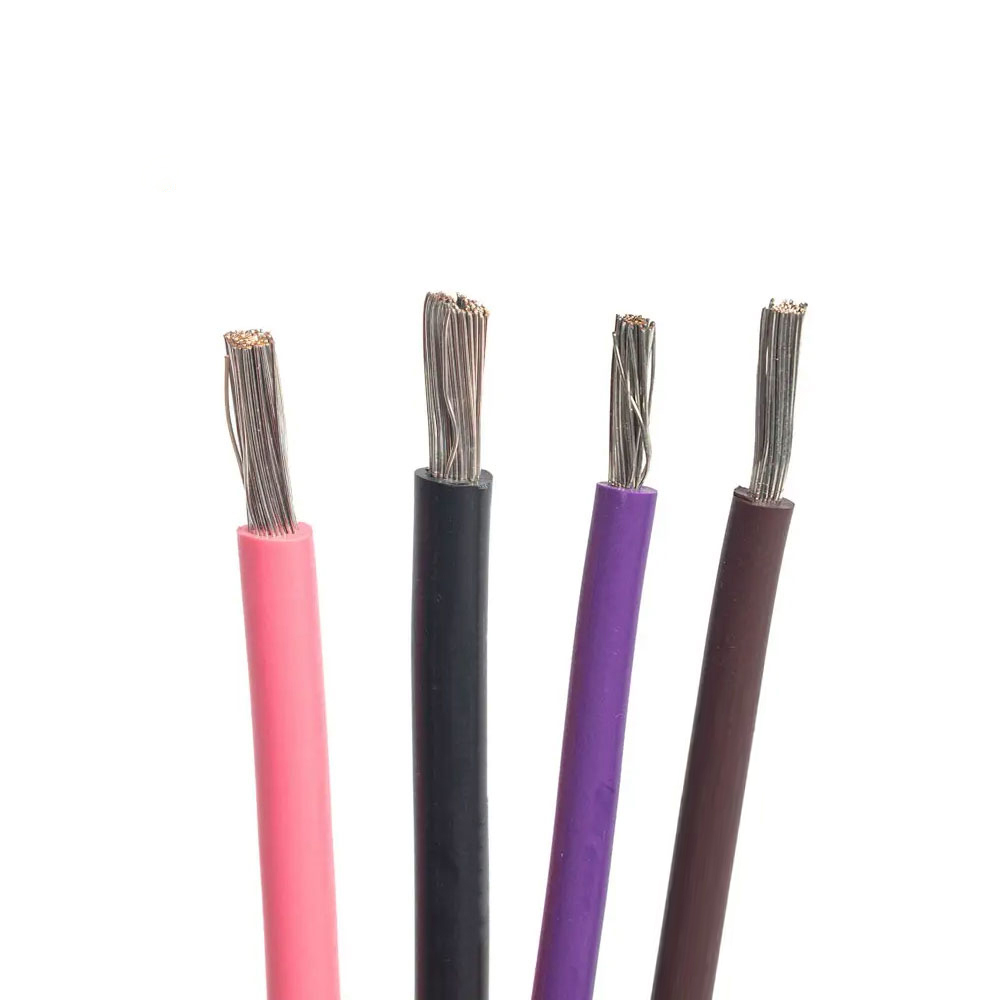
The conductor is the electrical core of any cable, and in mining applications its construction has a direct bearing on both performance and durability. Copper is the standard conductor material for mining cables because of its superior conductivity, flexibility, and resistance to work-hardening under repeated bending — a property aluminum cannot match at equivalent cross-sections. However, the way the copper is stranded is equally important.
Mining cables typically use finely stranded or rope-lay stranded conductors, which distribute mechanical stress across many individual wires rather than concentrating it in a few large ones. This greatly improves fatigue life in reeling, trailing, or festoon cable applications where the cable is coiled and uncoiled repeatedly throughout its service life. The conductor cross-section must also be selected with voltage drop and fault current capacity in mind, taking into account the often very long cable runs between surface power supplies and underground equipment.
The insulation layer surrounds each conductor and must maintain reliable dielectric strength throughout a service life measured in years of harsh use. In mining cables, EPDM (ethylene propylene diene monomer) rubber is the most widely used insulation material because it offers an outstanding combination of flexibility at low temperatures, high dielectric strength, excellent resistance to moisture and ozone, and good thermal performance up to 90°C continuously.
EPR (ethylene propylene rubber) is a closely related alternative with similar properties. Both materials retain their flexibility far below the freezing point — an important characteristic for cables used in cold climate surface operations or refrigerated underground sections. Cross-linked polyethylene (XLPE) is sometimes used for higher-voltage mining feeder cables where thermal ratings above 90°C are required, but it is generally less flexible than EPDM and less suited to continuous flexing applications.
The insulation thickness must comply with the voltage rating of the circuit. Mining cable standards — including MSHA (Mine Safety and Health Administration) requirements in the United States, AS/NZS 2802 in Australia, and IEC 60502 internationally — specify minimum insulation thicknesses for each voltage class. Specifying insulation rated above the actual circuit voltage provides an additional safety margin and helps extend service life.
Proper grounding in mining cables is not optional — it is a life-safety requirement. Mining regulations in virtually every jurisdiction mandate that portable and trailing cables supplying mobile equipment include dedicated grounding conductors that provide a low-impedance return path for fault current. This ensures that if a phase-to-ground fault occurs, the protective relay or fuse operates rapidly enough to prevent a lethal touch voltage from persisting on the equipment frame.
Many mining cable designs also incorporate a ground check or pilot conductor — a small additional conductor used by the ground continuity monitoring (GCM) system to verify that the grounding path is intact before and during operation. If the ground conductor is broken, the GCM de-energizes the circuit before the equipment can be used. This feature is mandatory for trailing cables on continuous miners, shuttle cars, and other face equipment in many underground coal and hard rock mining standards.
The outer sheath is the cable's primary line of defense against the physical abuse of the mining environment. It must resist cutting, abrasion, crushing, oil contamination, chemical attack, and UV radiation — often simultaneously. The choice of sheathing compound has a larger impact on field service life than almost any other design variable.
| Sheath Material | Key Strengths | Typical Application |
| CPE (Chlorinated Polyethylene) | Excellent oil, flame, and ozone resistance; tough and flexible | Trailing and reeling cables for mobile equipment |
| Neoprene (CR) | Good flame and weather resistance; proven track record | General mining use, surface and underground |
| PCP (Polychloroprene) | Superior abrasion and cut-through resistance | Hard rock and open-pit high-abrasion environments |
| PUR (Polyurethane) | Exceptional abrasion resistance; good low-temperature flexibility | Reeling cables and cold climate surface operations |
In addition to material selection, sheath thickness is a critical parameter. Thicker sheaths provide better mechanical protection but add weight and reduce flexibility. The optimal balance depends on the specific mechanical hazards of the installation — a cable dragged over rock faces needs a thicker, tougher sheath than one suspended in a cable festoon system.
Fire and explosion represent the most catastrophic risks in underground mining. Both coal mines (where methane and coal dust create explosive atmospheres) and certain hard rock mines (where blasting gases linger) require cables that will not propagate flame if ignited. This is a non-negotiable regulatory requirement, not a performance preference.
Mining cables for underground use must pass standardized flame propagation tests. In the United States, MSHA requires compliance with 30 CFR Part 18 flame resistance testing. International standards include IEC 60332-3 for flame spread on cable bundles and IEC 60754 for halogen content in combustion gases. Cables used in gassy mines must also meet specific anti-static requirements to prevent sparks generated by triboelectric charging of the sheath from igniting methane.
When evaluating flame retardancy, also consider the smoke and toxic gas output during combustion. In a confined underground heading, dense smoke or toxic fumes from burning cables can incapacitate miners before they can evacuate. Low-smoke zero-halogen (LSZH) sheathing compounds are increasingly specified for underground mining applications for this reason, even where not explicitly mandated.
Many mining cables are not static installations — they must flex repeatedly throughout every shift. Trailing cables for continuous miners and shuttle cars are dragged, coiled, and straightened hundreds of times per day. Reeling cables on cable reels on shovels and draglines cycle even more frequently. The cable design must accommodate this without fatigue failure of conductors, cracking of insulation, or delamination of the sheath.
The minimum bend radius — typically expressed as a multiple of the overall cable diameter — defines the tightest curve the cable can tolerate without damage. For reeling applications, the dynamic bend radius during operation must remain above this minimum at all reel positions. Cable designs intended for reeling use specialized stranding geometry, lay lengths, and filler materials to distribute bending stress as evenly as possible across the cross-section. Simply using a standard trailing cable in a reeling application is a common and costly mistake that leads to premature failure.
Every mining cable must carry a clearly defined voltage rating matching — or exceeding — the circuit it will serve. Mining power systems commonly operate at 600V, 1000V, 3.3kV, 6.6kV, and 11kV depending on equipment type and country. Using a cable with an inadequate voltage rating is a serious safety hazard, while significant over-specification adds unnecessary cost and weight.
Beyond voltage rating, confirm that the cable holds all required third-party certifications for the jurisdiction of use. MSHA approval is mandatory for trailing and portable cables in US mines. Australian mines require compliance with AS/NZS 2802 and state mining regulations. European operations must meet applicable ATEX or IECEx requirements for cables used in potentially explosive atmospheres. These certifications are not administrative formalities — they confirm that the cable has been independently tested and verified to meet the safety performance levels the standards require. Purchasing uncertified cables to reduce cost is a risk that no responsible mine operator should accept.

We firmly believe that good cables are not only a competition of materials, but also a reflection of craftsmanship, quality, and responsibility.

Links
Product
Send Inquiry
No. 29 Sankeshu Road, Xuanzhou District, Xuancheng City, Anhui Province, China
+86-18621104555/+86-563-2622999
 Electrical Cable Manufacturer
OEM/ODM Wire and Cable Solutions
Electrical Cable Manufacturer
OEM/ODM Wire and Cable Solutions
 English
 Español
 عربى
عربى
 русский