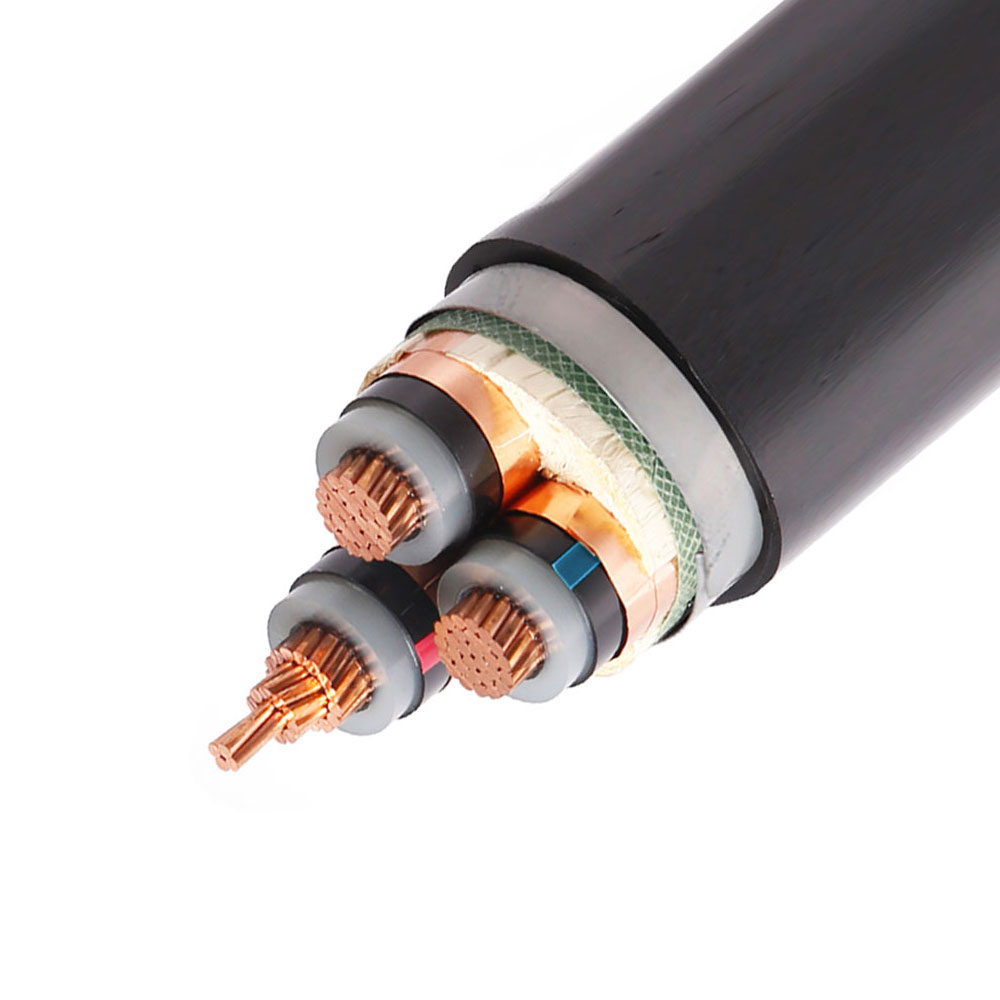

Get more content that can help you
Content
When a factory expansion loses production time to a cable failure, or a solar farm discovers its DC wiring can't handle the thermal load, the root cause rarely lies in the transformer or switchgear. It usually traces back to a cable that was undersized, incorrectly insulated, or poorly suited to its environment. This is why we approach the topic of an electricity distribution solution from a cable-centric perspective: the physical layer that connects every component of the network is also the most common point of failure when selection is treated as an afterthought.
An electricity distribution solution is more than a list of components. It is the integrated framework that takes power from the transmission grid and delivers it safely to end users—whether that end user is a manufacturing plant, a hospital, or a residential complex. The architecture typically follows a standard path: high-voltage transmission lines step down through substations, move through primary distribution feeders, get reduced again by distribution transformers, and finally reach customers through secondary lines and service connections.
A complete solution combines four layers: system architecture design, equipment selection (transformers, switchgear, protection devices), the cabling and wiring that carries the current, and the monitoring systems that keep it all under control. Within this structure, the cable layer deserves special attention because it is the one element that must physically span the entire network—from the substation yard to the final load point.
For a full view of how different cable families fit into this architecture, you can explore our complete range of power cables, which spans low-voltage building wire through medium-voltage aerial and armored types. In this article, we focus on the decision framework for selecting those cables correctly.
Understanding the function of each network segment makes cable selection clearer. Different stages of distribution impose completely different mechanical, thermal, and electrical requirements on the conductors that serve them.
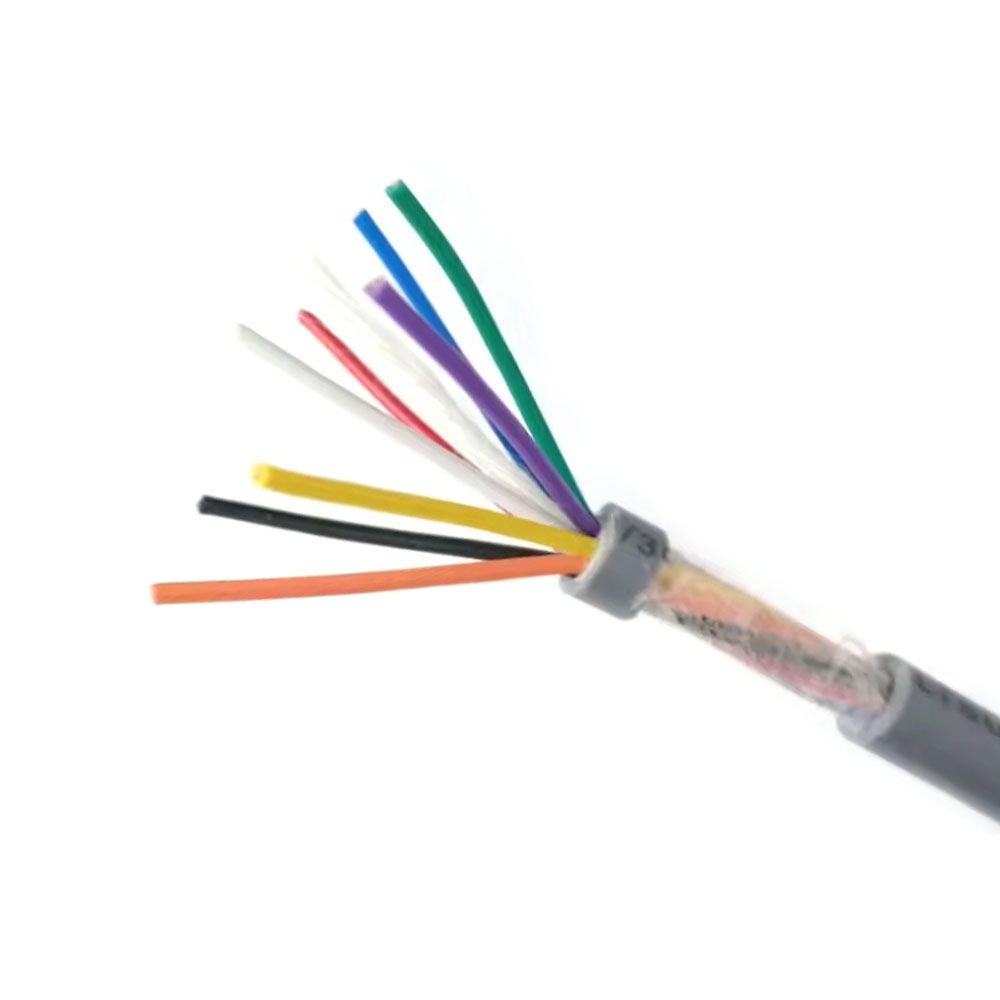
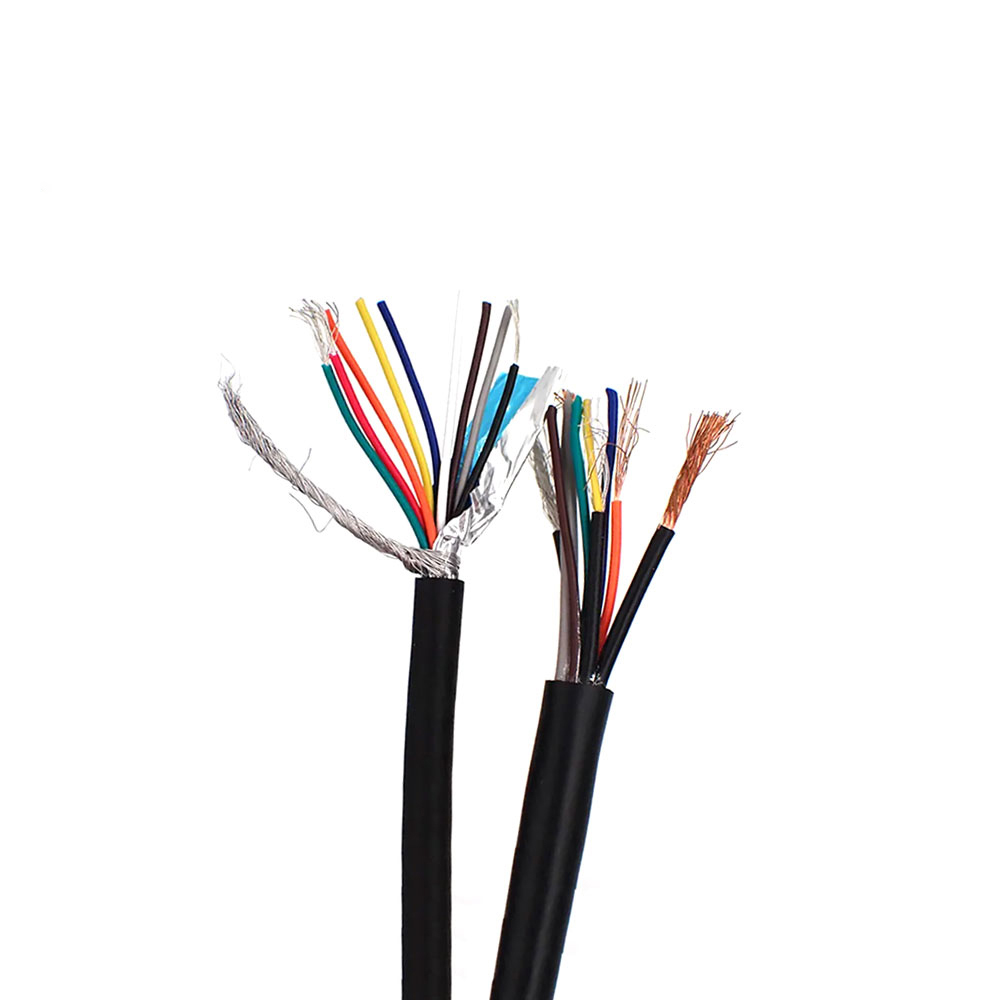
Substations perform voltage transformation and fault isolation. Inside these facilities, the cabling environment differs markedly from the field. Control cables and computer cables connect relay panels, protection circuits, and instrumentation—these are not power feeders but signal carriers, and they require shielding to resist electromagnetic interference from adjacent high-voltage buses. For outdoor substations, the critical cable needs include resistance to UV exposure, wide temperature swings, and occasional contact with moisture. This is a good example of why the "solution" mindset matters: a power distribution solution is not just about the big feeder cables but also about the control and communication links that make automated protection possible.
Primary distribution operates at medium voltage—typically 10kV to 35kV in many systems—and forms the backbone between the substation and local distribution transformers. These lines may be run underground or overhead. For overhead primary lines, the cable must withstand continuous outdoor exposure, wind vibration, and temperature cycling. This is where aerial insulated cables for overhead distribution lines become relevant. They offer the insulation of a power cable with the mechanical robustness needed for pole-mounted installations.
Secondary distribution operates at low voltage (typically 0.6/1kV) and runs from distribution transformers to service points. These cables often enter buildings or are buried in duct banks, so the priorities shift to mechanical protection, flame retardance, and in some cases low smoke emission for populated areas.
The final leg of the network enters the customer's property. Within commercial or residential buildings, wiring must comply with fire codes and often with low-smoke, halogen-free (LSZH) requirements to protect occupants during a fire event. Building wire with flame-retardant PVC, or low-smoke zero-halogen compounds like the WDZ series, is the standard choice here. The distinction between industrial premises and public buildings matters: a warehouse may prioritize mechanical toughness, while an office tower prioritizes smoke emission and flame spread characteristics.
The cable selection process for any distribution project boils down to a set of interdependent technical decisions. Getting these right upfront prevents costly rework, unplanned outages, and safety violations later. The core pillars are voltage rating, insulation chemistry, conductor material and cross-section, sheath and armoring, and fire/environmental compliance.
The system voltage dictates the insulation class. Low-voltage distribution (0.6/1kV) and medium-voltage primary circuits (6/10/35kV) demand fundamentally different cable designs. For insulation, the practical choice is between PVC and cross-linked polyethylene (XLPE).
| Parameter | PVC Insulation | XLPE Insulation |
|---|---|---|
| Rated conductor temperature (continuous) | Typically 70°C | Typically 90°C (and up to 105°C for special grades) |
| Overload capability | Moderate | Higher short-term overload tolerance |
| Dielectric loss | Higher | Lower |
| Water resistance | Good with proper jacket | Better in wet conditions with proper design |
| Mechanical toughness | Flexible | Stiffer but durable |
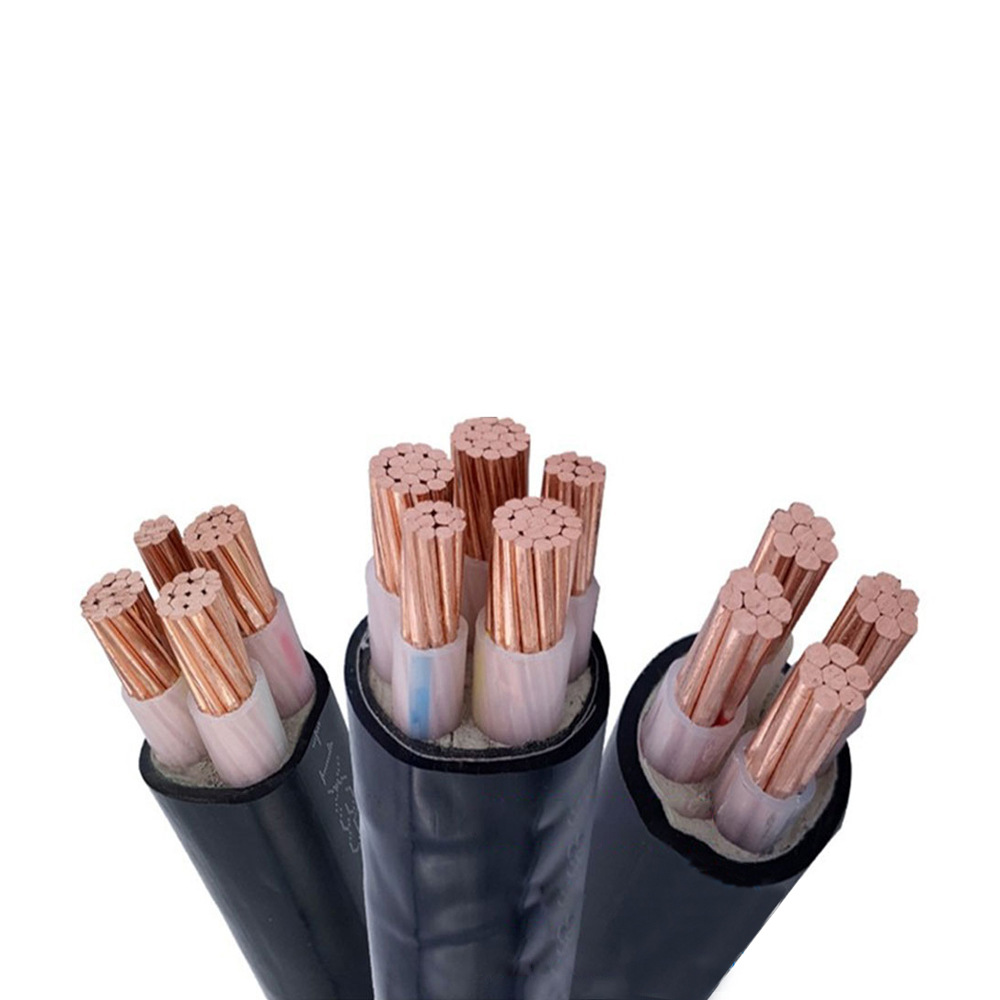
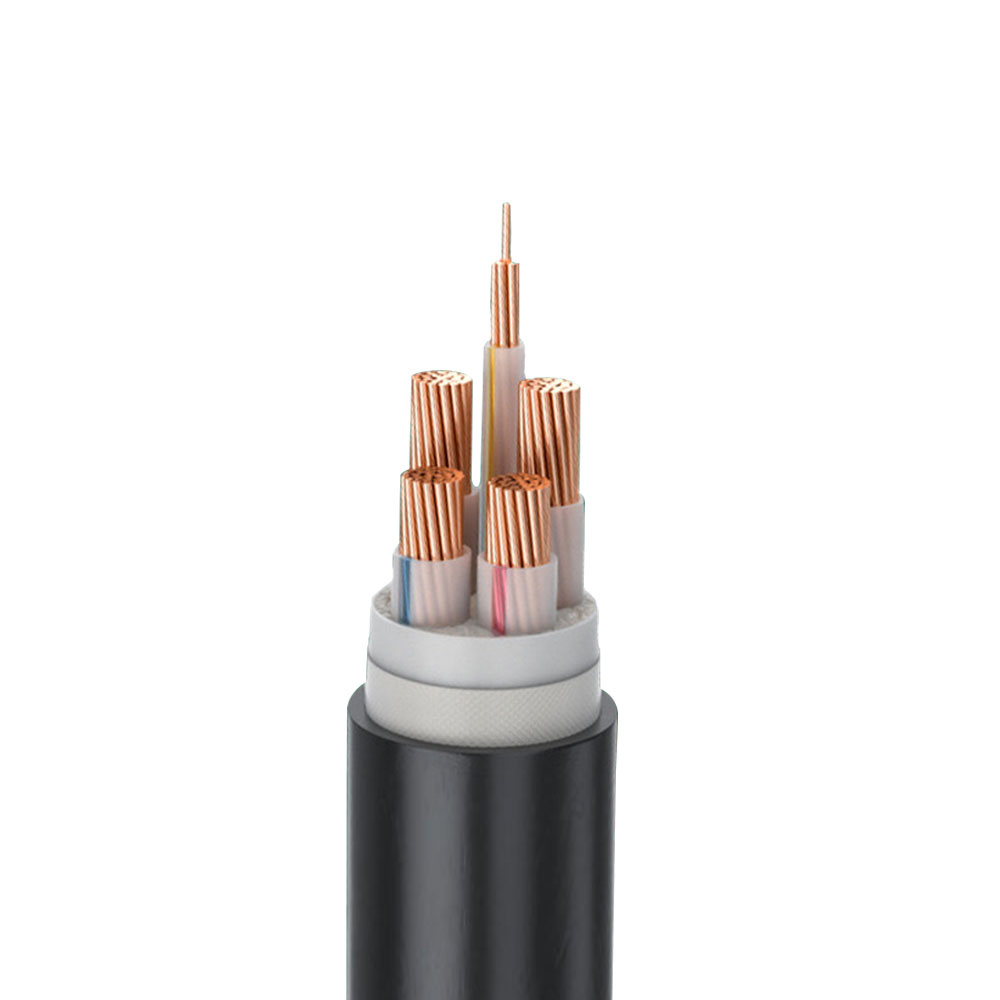
The higher thermal rating of XLPE means a given conductor size can carry more current than the same conductor with PVC insulation, or alternatively, a smaller conductor can be used for the same load. This makes XLPE the dominant choice for medium-voltage primary feeders and for many high-demand low-voltage circuits. For a deeper look at the performance advantages in modern systems, review why XLPE-insulated power cables are a preferred choice for modern distribution systems. You can also examine a specific design with XLPE-insulated power cables with enhanced heat resistance for higher ambient temperature environments.
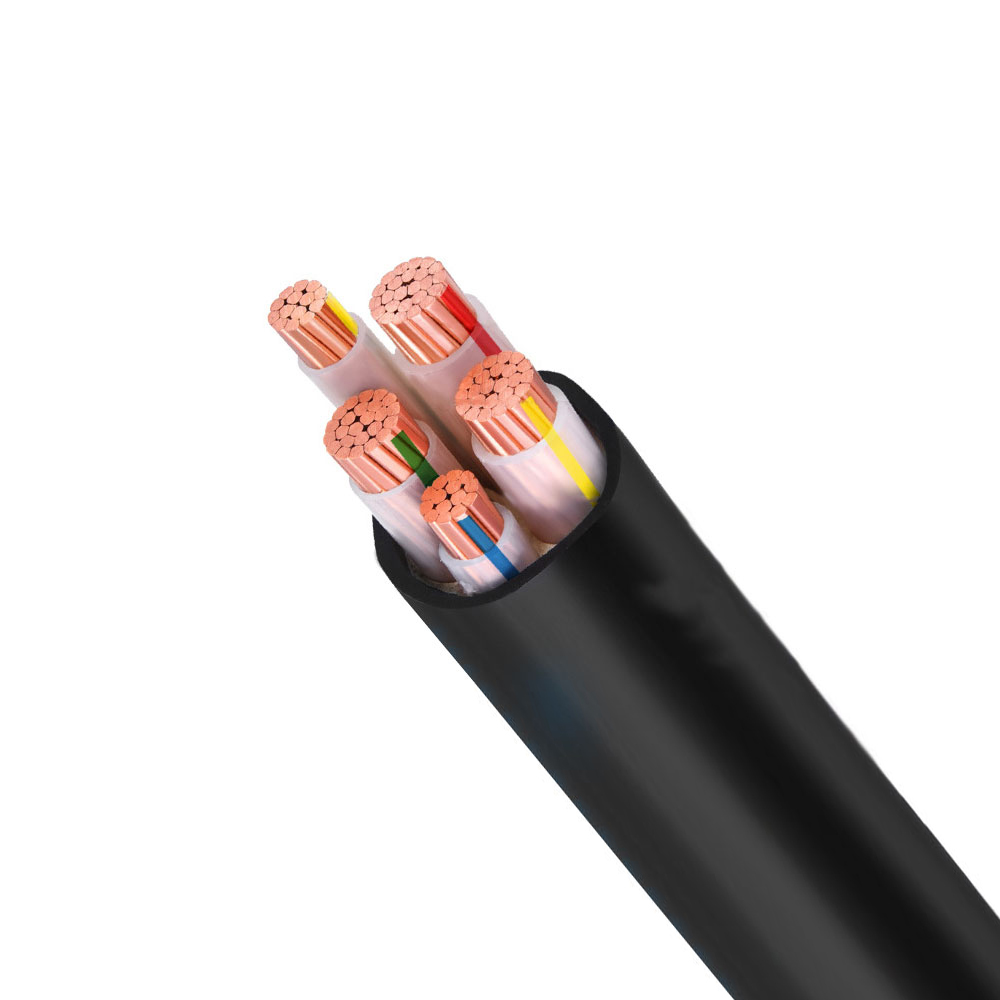 YJV Heat resistance XLPE Insulated and Sheathed Power Cable Suppliers, WholesaleZhishang Cable is Wholesale YJV Heat resistance XLPE Insulated and Sheathed Power Cable Suppliers and Factory in China,Excellent heat res...View Product →
Two conductor materials dominate: copper and aluminum. Copper offers higher conductivity, better ductility, and greater resistance to corrosion in most environments. Aluminum is lighter and typically more economical, but it requires larger cross-sections for the same current-carrying capacity and demands careful termination techniques to prevent galvanic corrosion at connections.
Cross-section selection must account for three factors simultaneously: the load current, the acceptable voltage drop over the cable run, and the short-circuit rating (the ability to survive a fault for a specified duration). As a rule of thumb, for runs beyond 50 meters at low voltage, voltage drop often becomes the limiting factor rather than ampacity. Undersized conductors cause excessive heat, which accelerates insulation aging and increases line losses.
The environment determines the outer protection layer. Cables laid directly in the ground benefit from steel tape armoring (SWA or STA) to resist rodent damage and mechanical impact. In damp or chemically aggressive soil, a polyethylene (PE) or polyurethane (PUR) sheath provides a moisture barrier. For aerial installations, UV-stabilized PE sheaths are common. For trays inside industrial plants, a PVC outer sheath is typical, but where fire safety is paramount, LSZH materials are required.
Fire performance is a legal and safety-driven criterion. Flame-retardant (FR) cables inhibit fire spread, but they can still emit smoke and corrosive gases. Low-smoke zero-halogen (LSZH) cables limit the release of halogen gases and reduce smoke density, which is critical in tunnels, high-rise buildings, and control rooms where evacuation and equipment protection matter.
Legislative compliance applies to the entire product lifecycle. For projects in the European market, CE certification and RoHS/REACH compliance are mandatory considerations. For North American projects, UL certification is often a contractual requirement. A manufacturer with both CE and UL certified product lines simplifies procurement for distributors and contractors who serve international clients.
The ideal cable for a steel mill is rarely the ideal cable for a server room. Understanding the environmental and operational demands of each scenario is the difference between a reliable installation and a recurring maintenance problem.
Factories combine high ambient temperatures, exposure to oils and chemicals, vibration from machinery, and the constant flexing of moving equipment. Power feeders within a plant must withstand heat and mechanical strain. Control cables for production lines need shielding to protect signals from electromagnetic interference generated by motors and drives.
Automation systems, in particular, demand high-flex cables that can withstand millions of bending cycles in drag chains. For these settings, cable solutions designed for automated production lines provide the necessary flex life and signal integrity. In petrochemical plants, cables may be exposed to solvents and caustic agents; specialized cable solutions for petrochemical environments are engineered with jacketing materials that resist chemical attack while maintaining electrical performance.
Occupant safety drives cable selection in commercial spaces. The priority is to limit flame spread and smoke generation during a fire, and to maintain circuit integrity for essential systems like fire alarms and emergency lighting. Low-smoke, zero-halogen building wire (e.g., WDZ series) is the industry's answer to this requirement.
Vertical transportation adds a unique requirement. Elevators use specialized traveling flat cables that must support their own weight, remain flexible through millions of flex cycles, and maintain electrical continuity in a moving system. The same fire-safety logic applies to HVAC control wiring, which often runs through return-air plenums where flame and smoke properties are strictly regulated.
Solar and wind farms introduce a distinct set of conditions. Photovoltaic (PV) systems operate with DC circuits at high voltages and in continuous outdoor exposure. The DC side of a solar array requires cables with superior UV resistance, high-temperature tolerance (often up to 120°C at the conductor), and resistance to weathering over a 25-year design life. The AC side, connecting inverters to collection points, follows more conventional low-voltage distribution practice, but the entire system must be designed to handle variable loads and potential overvoltage events.
Energy storage systems present another layer of complexity. Battery racks require flexible cables that can handle high DC currents, tolerate temperature fluctuations, and offer robust insulation to prevent short circuits in confined spaces. For these installations, dedicated cable solutions for energy storage projects address the specific thermal and mechanical demands of battery enclosures.
For the DC collection network itself, a dedicated product is often necessary. Using weather-resistant cables designed for photovoltaic systems ensures that the solar farm's low-voltage wiring matches the environmental durability of the panels themselves.
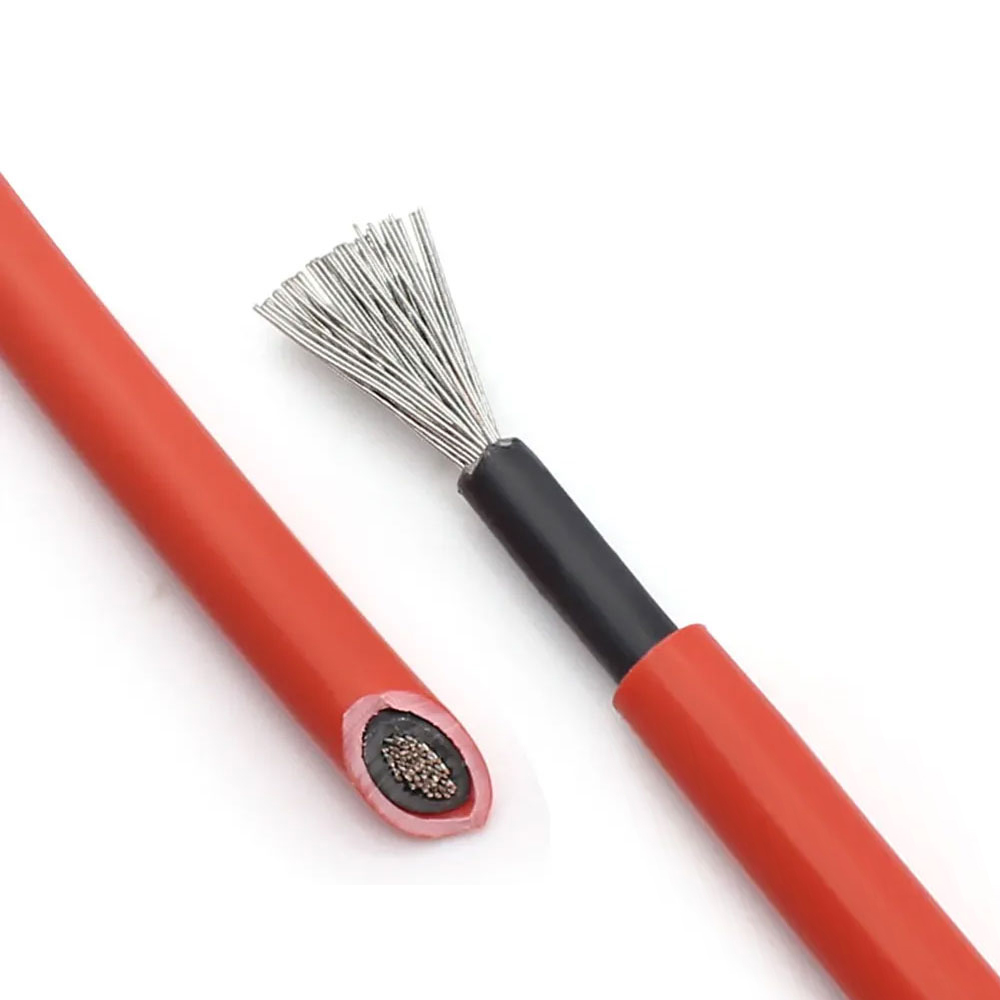 PV1-F Excellent weather resistance Photovoltaic Cable Suppliers, Wholesale FactoZhishang Cable is Wholesale PV1-F Excellent weather resistance Photovoltaic Cable Suppliers and Factory in China,Characteristics: PV1-F i...View Product →
The conventional distribution network is becoming a smart grid: a system with sensors, remote monitoring, automated fault isolation, and two-way communication between the utility and end devices. This evolution has a direct consequence for cable choice—beyond power delivery, the network now carries data.
Modern distribution automation relies on communication cables that carry telemetry from sensors, status signals from switchgear, and commands to remote disconnects. These signal cables must operate in the same harsh environments as power cables—substation yards, underground vaults, and industrial sites—while resisting electromagnetic interference from the nearby power conductors.
In many new projects, the solution is a composite cable that integrates optical fibers within the power cable structure. This approach allows utilities to add broadband communication along existing distribution corridors without installing separate cable. Fiber optic composite cables provide the high-bandwidth link needed for advanced metering infrastructure, fault detection algorithms, and real-time load balancing, all while retaining the power delivery capacity of the conventional copper or aluminum conductor.
The quality of the final installation depends as much on the specification dialogue with the manufacturer as it does on the cable itself. A knowledgeable supplier catches mismatches between the stated requirements and the actual operating conditions before the cable is manufactured, not after it fails in service.
When requesting a quotation, provide the following information to the manufacturer:
A manufacturer with in-house research, production, and sales operations offers meaningful advantages for such projects. The ability to control the production process from raw conductor to final sheath reduces tolerance variation and shortens lead times. A wide product range—spanning power cables, control cables, communication cables, and specialized types such as elevator flat cables or charging pile cables—simplifies procurement. Instead of juggling multiple suppliers for different cable families, a project team can consolidate its supply chain with one partner that covers the full scope of the distribution network.
This is particularly valuable for the kind of scenario-specific engineering that industrial, renewable, and infrastructure projects demand. When a manufacturer offers dedicated engineering support for applications like energy storage project solutions or automation systems, the project team receives practical guidance on cable routing, support spacing, and termination methods that generic spec sheets cannot provide.
The reliability of an electricity distribution solution is anchored in the choices made about its cabling. Five factors determine whether a distribution network delivers consistent performance over its design life:
Every distribution project—whether a factory expansion, a commercial tower, or a photovoltaic park—carries its own mix of electrical and environmental constraints. The correct approach is to treat cable selection as a design decision, not a procurement afterthought. A competent manufacturer will ask detailed questions about the installation environment, the operational duty cycle, and the safety standards that apply to the final location of the cable. Those questions are not bureaucratic friction; they are the first line of defense against premature cable failure.
If you are in the specification or procurement phase of a distribution project, use the contact page on this site to reach our engineering team. Provide the parameters outlined above, and we will translate them into a concrete cable recommendation. The right cable is not the cheapest one in the catalog—it is the one that delivers the lowest total cost over the asset's lifetime, which is the true measure of a reliable electricity distribution solution.

We firmly believe that good cables are not only a competition of materials, but also a reflection of craftsmanship, quality, and responsibility.

Links
Product
Send Inquiry
No. 29 Sankeshu Road, Xuanzhou District, Xuancheng City, Anhui Province, China
+86-18621104555/+86-563-2622999
 Electrical Cable Manufacturer
OEM/ODM Wire and Cable Solutions
Electrical Cable Manufacturer
OEM/ODM Wire and Cable Solutions
 English
 Español
 عربى
عربى
 русский