

Get more content that can help you
Content
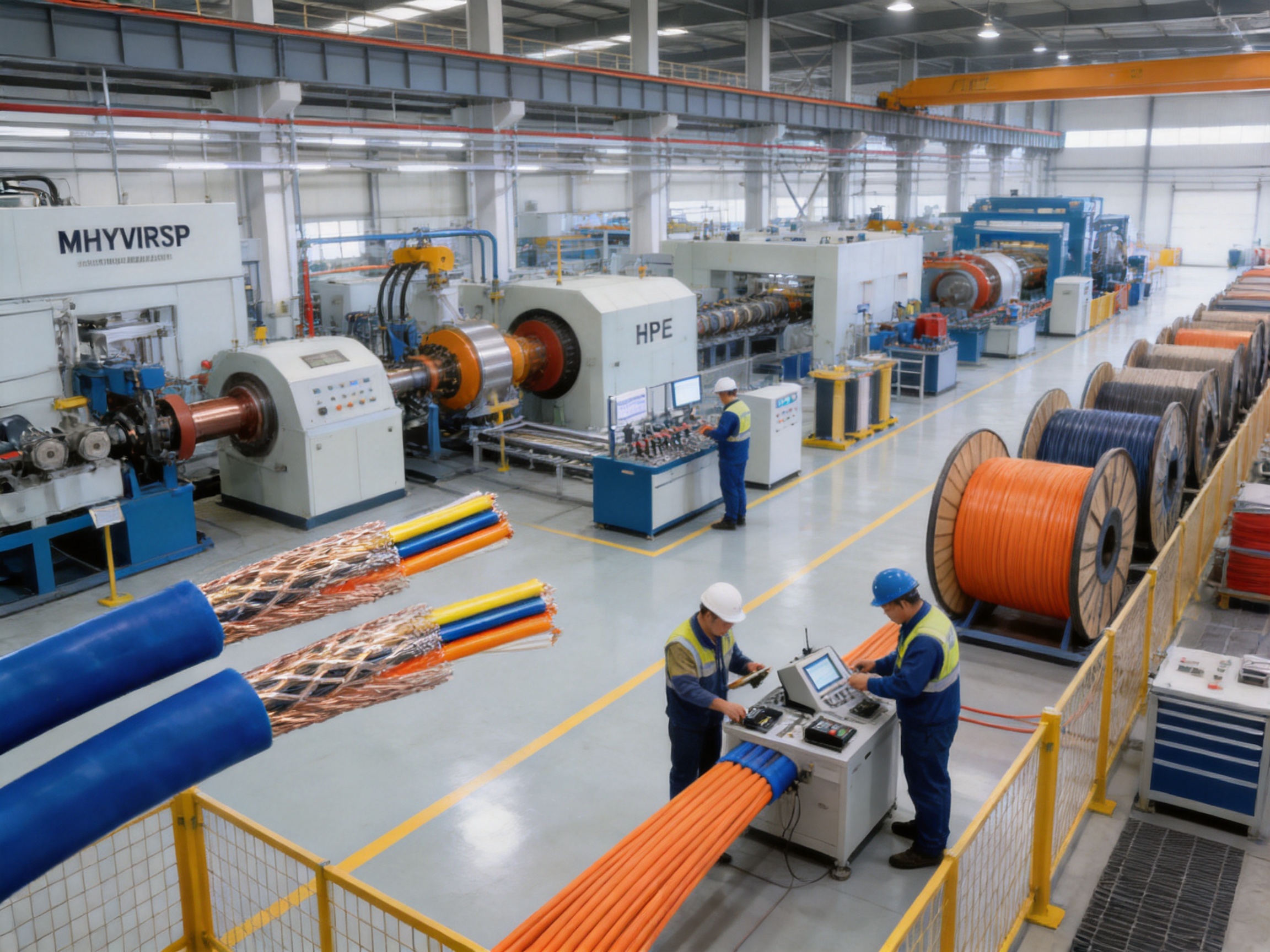
Modern underground mining depends on reliable communication. Voice systems, monitoring equipment, inspection robots, portable sensors, emergency devices, and mobile control units must exchange information in an environment filled with vibration, moisture, dust, mechanical movement, electrical noise, and restricted installation space. A communication cable used in such conditions must do more than carry a signal from one point to another. It must remain electrically stable while being moved, bent, dragged, twisted, and exposed to demanding underground conditions.
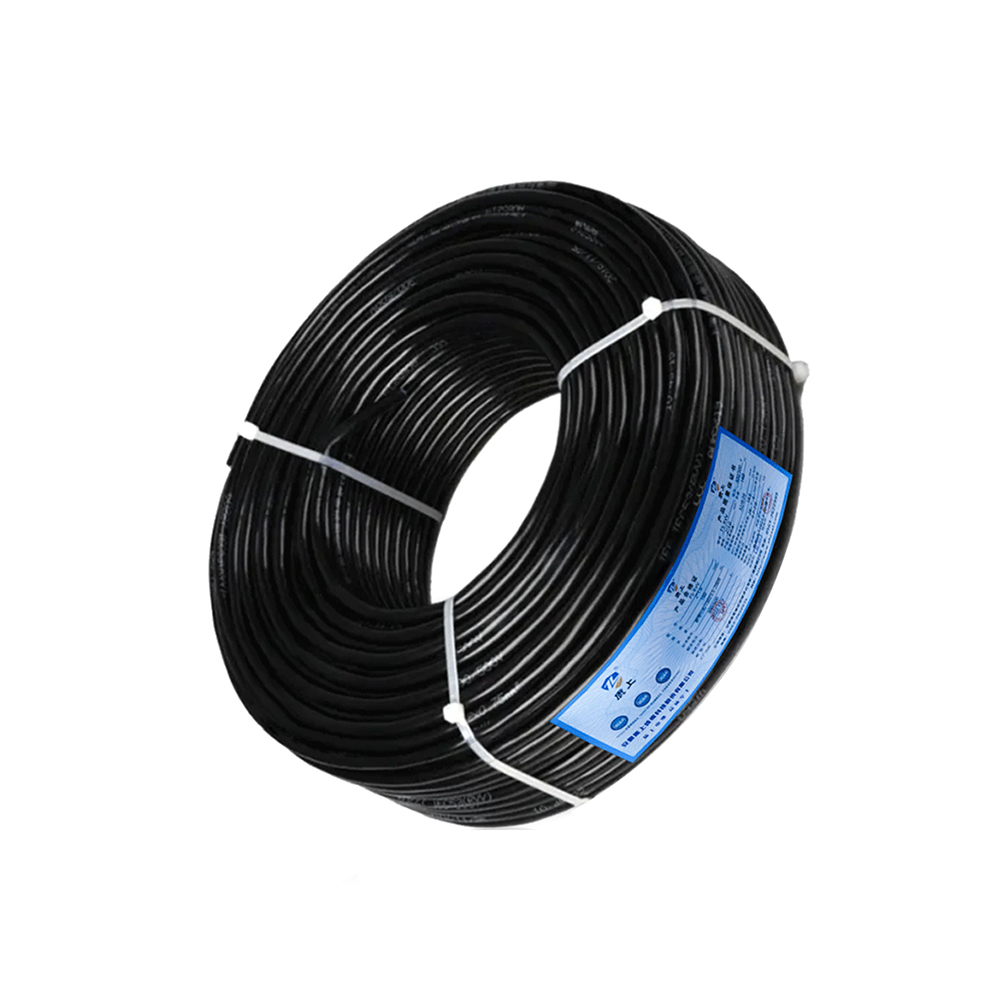
MHYVRP is a shielded mining communication flexible cable designed for these requirements. It combines a fine-stranded, highly flexible conductor structure with high-density polyethylene insulation, an aluminum-plastic composite tape shield, a tin-plated copper drain wire, and a flame-retardant flexible PVC sheath. This construction is intended to provide dependable signal transmission, electromagnetic interference resistance, mechanical flexibility, and improved environmental durability in mobile mining applications.
The cable is suitable for underground coal mine mobile monitoring equipment, portable communication devices, inspection robots, movable sensors, and other systems that require both signal protection and frequent movement capability. Its rated voltage is 300/300 V, and it is available with one to twenty-four cores in twisted-pair or star-quad configurations. Core cross-sections can be customized within the stated range of 0.5 mm² to 1.0 mm².
This article examines the design, performance, manufacturing strengths, application value, installation considerations, and customization capabilities of MHYVRP mining cable. It also explains why a specialized manufacturer with integrated research, production, testing, and technical support can offer advantages over general-purpose communication cable suppliers.

MHYVRP Strong anti-interference ability Mining Cable
Underground mines create a difficult operating environment for low-voltage communication cables. Unlike cables installed in offices, buildings, or protected equipment cabinets, mining cables may be exposed to continual movement, impact, bending, moisture, oil, corrosive substances, and temperature changes. They may also be routed close to power cables, motors, variable-frequency drives, switching equipment, and other sources of electromagnetic interference.
A standard communication cable may provide acceptable performance in a fixed indoor installation but fail to deliver the same reliability in a mobile mining system. Repeated bending can fatigue the conductor. Inadequate shielding can allow interference to affect data or voice signals. A rigid sheath can crack or become difficult to handle. Poor moisture resistance can reduce insulation performance. Insufficient flame retardancy can create unacceptable safety risks in underground coal mine environments.
Mining communication cables therefore need a balanced design. The conductor must be flexible without creating excessive resistance. The insulation must provide good dielectric performance and stable signal characteristics. The shielding system must reduce the influence of external electrical noise while remaining compatible with cable movement. The outer sheath must protect the internal components without making the cable unnecessarily stiff or heavy.
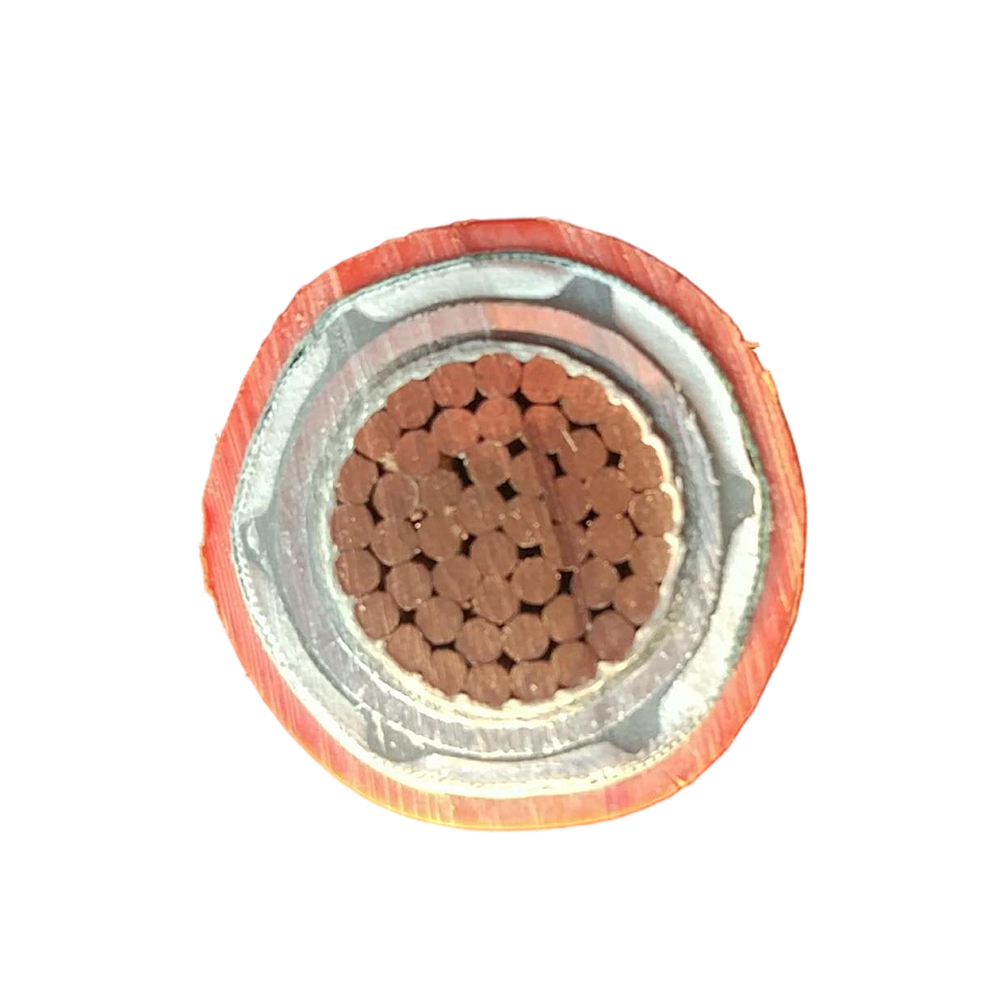
MHYVRP addresses these requirements through a coordinated multi-layer structure. Its Class 7 ultra-fine multi-stranded tin-plated copper conductors are designed for repeated movement. HDPE insulation supports low-loss signal transmission and high insulation resistance. The aluminum-plastic composite tape shield provides a continuous interference barrier, while the tin-plated copper drain wire supports grounding of the shield. A flexible flame-retardant PVC sheath protects the cable in harsh working areas.
The result is a cable designed not simply for nominal electrical continuity, but for sustained performance in dynamic underground applications.
The conductor is manufactured from tin-plated copper using an ultra-fine multi-stranded Class 7 structure. Class 7 conductors are associated with very high flexibility because they contain many small strands rather than a single solid conductor or a small number of large strands.
This structure provides several practical advantages. First, bending stress is distributed across many fine strands. Second, the conductor can follow the movement of portable and mobile equipment more easily. Third, the cable is easier to route through confined spaces and around equipment frames. Fine stranding also helps reduce the risk that repeated flexing will concentrate mechanical stress at one location.
Tin plating adds another layer of protection. The plating helps improve resistance to oxidation and supports long-term electrical reliability in environments where humidity and contamination may be present. It also contributes to improved termination stability when suitable connectors, terminals, or grounding accessories are used.
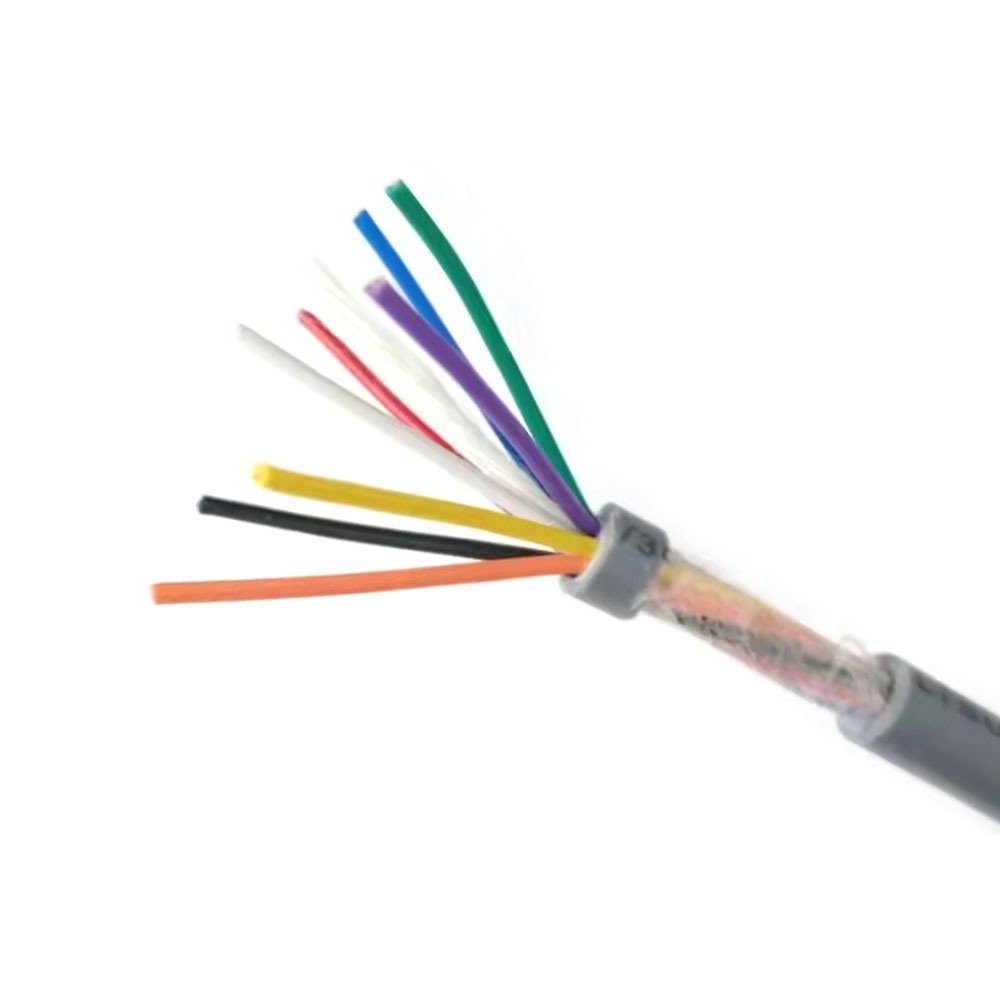
The standard single-core cross-section range is 0.5 mm² to 1.0 mm². This range allows the cable to be configured for different transmission requirements, installation lengths, and equipment interfaces. Core count can be selected from one to twenty-four cores, with twisted-pair and star-quad structures available according to the communication system design.
Each conductor is insulated with high-density polyethylene. HDPE is widely valued for its electrical properties, including high insulation resistance, low dielectric loss, and stable performance over a broad operating range. These properties are particularly useful in communication cables because signal quality depends not only on conductor resistance, but also on the behavior of the insulation surrounding each conductor.
The stated insulation resistance of MHYVRP is at least 1,500 MΩ·km at 20°C. This high value helps reduce leakage between conductors and supports stable operation in low-voltage communication circuits. HDPE also provides a suitable dielectric environment for maintaining signal integrity over the cable length.
The transmission specification includes attenuation of no more than 1.0 dB per 100 meters at 1 kHz. This specification indicates that the cable is designed to limit signal loss within the stated testing conditions. Actual system performance will also depend on cable length, connected equipment, termination quality, grounding, installation routing, and the communication protocol in use.
The shielding layer consists of an aluminum-plastic composite tape together with a tin-plated copper drain wire. The composite tape creates a conductive barrier around the insulated conductors. When correctly overlapped, terminated, and grounded, the shield helps reduce the coupling of external electromagnetic energy into the communication circuit.
Underground equipment often operates near motors, power switching devices, pumps, conveyors, control panels, and high-current electrical systems. These sources can generate electromagnetic fields that interfere with sensitive communication signals. A shielded cable helps reduce this risk by providing a controlled path for unwanted electrical energy instead of allowing interference to couple directly into the signal conductors.
The specified shielding effectiveness is at least 70 dB in the 30 MHz to 100 MHz range, and the shielding layer coverage is at least 90 percent. These specifications demonstrate the cable’s focus on interference control. Effective performance still requires correct installation. The drain wire should be connected according to the grounding design, and shield termination should be carried out in accordance with the equipment and system requirements.
The drain wire ground resistance is specified at no more than 0.1 Ω/m. A low-resistance grounding path is important because a shield can only perform effectively when unwanted energy can be directed away from the signal circuit. Poor termination, discontinuity, or an unconnected drain wire can significantly reduce the benefit of the shielding structure.
The outer sheath is made from flexible flame-retardant polyvinyl chloride. The sheath provides mechanical protection and helps the cable tolerate contact with moisture, oil, abrasion, and common underground contaminants. Its flexible formulation is intended to preserve maneuverability during installation and operation.
Flame retardancy is a central consideration for cables used in underground coal mine environments. The product specification states that the cable passes the MT 818.1-1999 mining flame-retardant test. This characteristic helps reduce the risk of flame propagation along the cable in the event of an abnormal heating or ignition incident.
The sheath is available in orange or blue. Bright sheath colors can support visual identification, route management, maintenance work, and safety organization in areas where multiple cable types are installed. Color selection may be coordinated with a mine’s identification practices or project documentation.
The stated sheath tear strength is at least 12 N/mm. This supports resistance to damage during handling and routing. The sheath is also described as resistant to oil, moisture, and corrosion, making it suitable for demanding underground conditions. Nevertheless, the cable should still be installed with appropriate protection against crushing, sharp edges, excessive tension, and uncontrolled dragging.
The following table summarizes the principal product specifications provided for MHYVRP mining cable.
| Parameter | Specification |
|---|---|
| Product model | MHYVRP |
| Application category | Shielded flexible mining communication cable |
| Number of cores | 1 to 24 cores |
| Core arrangement | Twisted pair or star quad |
| Conductor | Tin-plated copper, Class 7 ultra-fine multi-stranded |
| Single-core cross-section | 0.5 mm² to 1.0 mm² |
| Rated voltage | 300/300 V |
| Test voltage | 1,500 V AC for one minute |
| Insulation material | High-density polyethylene |
| Shielding structure | Aluminum-plastic composite tape shield with tin-plated copper drain wire |
| Shielding layer coverage | At least 90% |
| Shielding effectiveness | At least 70 dB from 30 MHz to 100 MHz |
| Sheath material | Flame-retardant flexible PVC |
| Operating temperature | -40°C to +65°C for long-term operation |
| Short-term overload temperature | +85°C for up to two hours |
| Attenuation | No more than 1.0 dB/100 m at 1 kHz |
| Insulation resistance | At least 1,500 MΩ·km at 20°C |
| Capacitance unbalance | No more than 120 pF/km |
| Fixed-installation bending radius | At least 8 times the cable outer diameter |
| Mobile-installation bending radius | At least 10 times the cable outer diameter |
| Flexural fatigue resistance | At least 800,000 bending cycles at a 100 mm curvature radius |
| Drain-wire ground resistance | No more than 0.1 Ω/m |
| Sheath tear strength | At least 12 N/mm |
| Flame-retardant performance | Passes MT 818.1-1999 mining flame-retardant test |
| Available sheath colors | Orange or blue |
These values should be considered together rather than evaluated in isolation. A communication cable may have excellent attenuation performance but still be unsuitable for a mobile installation if its conductor is too rigid. Likewise, a highly flexible cable may not be appropriate for an interference-heavy environment if the shielding system is insufficient. MHYVRP is designed as a combined solution in which electrical, mechanical, and safety features support one another.
One of the clearest advantages of MHYVRP is its suitability for movement. The ultra-fine Class 7 conductor structure and flexible PVC sheath allow the cable to be routed around mobile equipment and used in installations where bending occurs repeatedly.
General-purpose fixed communication cables are often optimized for static building wiring. Their conductors, insulation, and sheath may not be designed for continual movement. Using such a cable on a mining robot, movable sensor, or equipment drag route can lead to premature conductor fatigue, sheath cracking, or connection failure.
MHYVRP is specified for at least 800,000 bending cycles under the stated test condition of a 100 mm curvature radius. The product information also indicates that its bending lifespan is approximately 40 percent higher than that of ordinary shielded cables. Actual service life depends on bending radius, movement speed, tension, torsion, temperature, routing method, and the presence of abrasion or crushing forces, but the design is clearly directed toward repeated flexing.
Mining installations often contain a mixture of communication and power equipment. Without adequate shielding, electromagnetic noise may produce data errors, communication interruptions, unstable sensor readings, or unwanted signal distortion. MHYVRP uses an aluminum-plastic composite tape shield with high coverage and a dedicated drain wire to improve interference control.
Compared with an unshielded cable, the shielded design offers a stronger defense against external electromagnetic fields. Compared with a basic shield that is poorly terminated or mechanically inconsistent, the specified coverage and drain-wire structure provide a more controlled approach to interference management.
The cable is particularly valuable where communication lines must pass near switching equipment, motors, power distribution components, mobile machinery, or other noise sources. Correct separation from power cables and proper grounding remain important, but the cable’s construction provides an additional layer of protection.
The flexible flame-retardant PVC sheath is designed for exposure to the practical conditions found in underground work areas. Moisture, oil, dust, mechanical contact, and corrosive contaminants can all affect cable life. A suitable sheath helps protect the conductor and insulation from these external influences.
The operating temperature range of -40°C to +65°C supports use across a broad range of mine environments. The stated short-term overload capability is +85°C for two hours. Temperature performance must always be considered alongside current loading, installation grouping, ventilation, and local safety requirements.
The orange or blue sheath also provides an operational advantage. Clear visual identification can help maintenance teams distinguish communication cables from power cables, control circuits, or other cable categories. This can reduce the risk of incorrect disconnection or accidental damage during expansion and repair work.
The combination of HDPE insulation, controlled capacitance characteristics, flexible copper conductors, and shielding supports stable signal transmission. The stated capacitance unbalance is no more than 120 pF/km, which helps maintain more consistent electrical behavior between conductors.
Stable transmission is important for monitoring systems, portable communication equipment, and sensor networks. A cable that introduces excessive attenuation, imbalance, or noise can reduce the practical reliability of the entire system, even when the connected electronic equipment is technically capable of high performance.
MHYVRP is therefore not merely a mechanical mining cable. It is designed to preserve communication quality while the cable is exposed to movement and electrical interference.
Underground mobile monitoring equipment may measure gas concentration, temperature, humidity, pressure, vibration, machine status, or environmental conditions. These devices may be repositioned as the working face changes. MHYVRP can provide a flexible communication connection between mobile monitoring equipment and a local control or data collection system.
The shield helps reduce the influence of nearby motors and electrical systems, while the flexible conductor structure supports repeated repositioning. The correct number of cores and conductor size can be selected according to the sensor arrangement and communication architecture.
Portable communication devices require cables that can be handled frequently without becoming difficult to coil or route. A flexible shielded cable can be used in portable communication assemblies, temporary communication points, and equipment connections where movement is part of normal operation.
The orange or blue sheath can simplify identification when temporary wiring is installed in a busy underground work area. The cable’s relatively low-voltage communication design is suitable for appropriate portable systems, subject to equipment specifications and applicable mine regulations.
Inspection robots may travel through tunnels, equipment areas, or confined locations where a cable is used for communication, control, video, or sensor data. The cable may bend around guides or experience repeated movement as the robot changes direction.
For such applications, cable selection should account for the robot’s travel path, movement speed, minimum bend radius, torsion, cable-support method, and possible contact with sharp edges. MHYVRP’s flexible structure and specified flexural fatigue resistance make it a candidate for these applications when the mechanical conditions remain within the product’s design limits.
Mining operations frequently require temporary wiring during equipment commissioning, geological investigation, maintenance, production changes, or safety inspections. A cable used for temporary wiring must be easy to install and remove, sufficiently robust for repeated handling, and capable of maintaining signal quality in an electrically noisy environment.
MHYVRP is designed for this type of mobile use. It can support connections to movable sensors, portable data acquisition equipment, temporary monitoring stations, and similar systems. Temporary installation should not mean careless installation. Cable routes should remain protected from vehicle traffic, crushing, sharp edges, excessive tension, and unauthorized modification.
The performance of a cable depends on the consistency of its manufacturing process. A carefully selected material specification can still produce unreliable results if conductor stranding, insulation extrusion, shielding application, sheath extrusion, or final testing is poorly controlled.
Anhui Zhishang Cable Technology Co., Ltd. integrates research and development, production, and sales. The company operates a modern production base of approximately 5,000 square meters and has more than 50 employees, including quality engineers and research and development technicians with more than ten years of industry experience. Its reported manufacturing capacity includes ten automated production lines and monthly output of up to ten million meters.
Manufacturing begins with conductor material preparation. For MHYVRP, the conductor is specified as tin-plated copper with an ultra-fine multi-stranded structure. Consistent strand diameter, lay length, plating quality, and compactness are important for achieving stable resistance and repeatable flexibility.
Automated or controlled stranding equipment can help maintain uniform geometry along the cable length. This matters because irregular stranding can create localized stiffness, uneven insulation thickness, and mechanical stress concentrations. Quality checks may include conductor resistance, dimensional inspection, visual examination, and verification of the plating condition.
HDPE insulation is applied through an extrusion process. The extrusion line must control material temperature, pressure, line speed, concentricity, surface quality, and insulation thickness. Stable processing helps ensure that the conductor remains centered within the insulation and that the dielectric layer remains free from voids, cracks, and significant dimensional variation.
Online diameter monitoring and spark testing can identify certain insulation defects during production. Finished cable testing can then confirm insulation resistance and withstand voltage. The stated test voltage for MHYVRP is 1,500 V AC for one minute, supporting verification of insulation integrity under the specified test condition.
After insulation, the cores are assembled into the required twisted-pair or star-quad configuration. Core arrangement affects signal balance, capacitance, flexibility, and installation behavior. Controlled twisting helps maintain consistent geometry and reduces the possibility of irregular electrical characteristics along the cable.
For multi-core versions, the manufacturer must also control core identification. Clear and durable identification reduces termination errors and supports maintenance. The final arrangement should be checked for roundness, pitch consistency, core order, and compatibility with the intended connector or terminal system.
The aluminum-plastic composite tape shield is applied around the core assembly with controlled overlap and tension. Shielding coverage is a critical manufacturing characteristic. Too little overlap can create gaps, while excessive or irregular tension can damage the tape, deform the core assembly, or reduce flexibility.
The tin-plated copper drain wire is positioned to maintain reliable contact with the conductive side of the composite tape. Its placement and continuity are important because the drain wire provides the intended grounding path for the shield. The shield and drain wire should be inspected for continuity, coverage, bonding consistency, and mechanical stability.
The flexible flame-retardant PVC sheath is extruded over the shielded core assembly. The process must achieve consistent thickness, a smooth surface, adequate adhesion, and dimensional control. The sheath should protect the internal structure while maintaining the flexibility required for mobile operation.
Material formulation and mixing control are especially important for flame-retardant PVC. The compound must provide the required balance between flame performance, flexibility, tear strength, environmental resistance, and processing stability. Color consistency is also relevant because orange and blue sheath colors are used for identification and safety management.
Quality assurance should continue after production. Typical checks for a cable of this type may include conductor continuity, conductor resistance, insulation resistance, withstand voltage, dimensional inspection, shielding continuity, drain-wire resistance, attenuation, capacitance balance, sheath appearance, and flame-retardancy verification.
The company emphasizes full-core, full-length, and pure-copper specifications for standard cable models, together with product test reports and warranty support. These practices can help customers verify that the delivered cable corresponds to the agreed design rather than relying solely on a general product name.
For mining projects, documentation is particularly important. Cable schedules, test reports, material records, identification information, and installation guidance help project teams manage procurement, inspection, installation, and future maintenance.
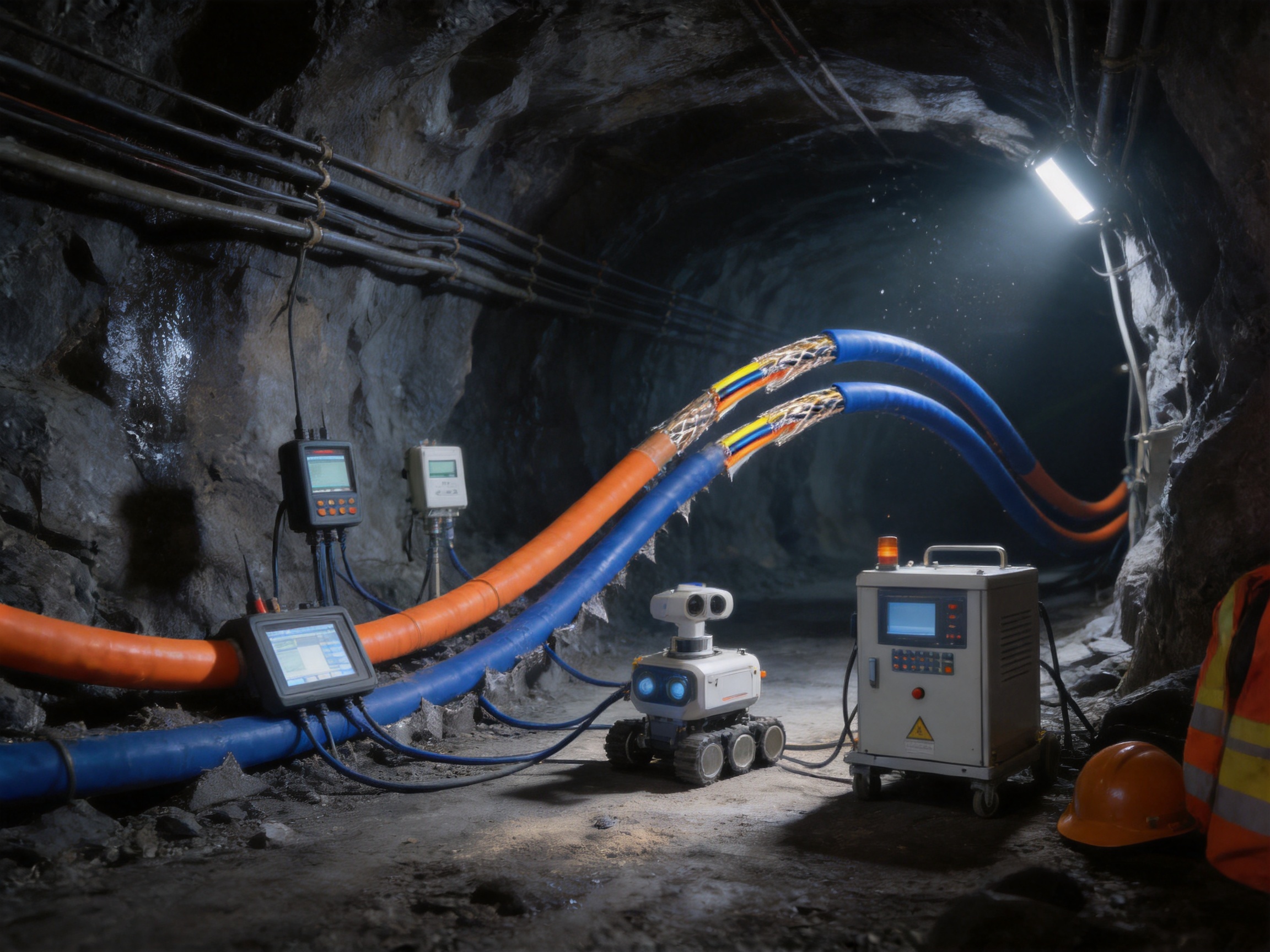
A specialized cable supplier can provide value beyond the physical product. Mining and industrial customers often need assistance selecting conductor sizes, core counts, shielding structures, sheath colors, termination methods, and delivery schedules. A supplier with in-house technical and manufacturing capabilities can respond more effectively than a trading company that depends entirely on external factories.
Anhui Zhishang Cable Technology Co., Ltd. describes its business as integrating research and development, production, and sales. This integrated structure supports communication between technical engineers, production teams, quality personnel, and customers. When a project requires a modified cable, the company can review the electrical and mechanical requirements, assess production feasibility, prepare samples, and organize manufacturing through a coordinated process.
The company supports OEM and ODM development based on customer drawings or samples. This is useful when a mining equipment manufacturer needs a cable with a specific core arrangement, identification scheme, connector interface, shielding construction, or outer diameter. Customized product development can also be used when a cable must fit a restricted cable gland, drag chain, robot assembly, or portable instrument.
Standard products are reported to be stocked for fast shipment, while customized products typically require seven to twenty days of lead time. Actual lead time depends on specification, order quantity, raw-material availability, testing requirements, packaging, and shipping arrangements. The distinction between standard and customized production helps customers plan procurement more realistically.
The reported production capacity of up to ten million meters per month can support both regular orders and larger project requirements. Capacity alone does not guarantee quality, but a structured production system with automated lines, experienced technical staff, and testing procedures can improve repeatability and delivery coordination.
The company also states that its products are supplied to customers in the United States, Canada, Australia, Japan, and parts of Eurasia. International experience can help a manufacturer understand the importance of product documentation, dimensional consistency, export packaging, communication with overseas customers, and project-specific requirements.
Mining installations are not identical. A cable selected for a portable sensor may have different requirements from a cable used with a mobile robot or a temporary communication system. MHYVRP can be customized in several areas according to project needs.
The available range of one to twenty-four cores allows the cable to be matched to different communication and control architectures. Twisted-pair construction may be selected for balanced communication circuits, while star-quad construction may be useful for particular transmission arrangements or equipment interfaces.
Single-core cross-sections from 0.5 mm² to 1.0 mm² are specified. A larger cross-section may be preferred where voltage drop, mechanical strength, or current-carrying requirements are more demanding, while a smaller cross-section may support a more compact and flexible design for suitable signal circuits.
The standard design uses an aluminum-plastic composite tape shield and tin-plated copper drain wire. Customers may request modifications to the shielding arrangement when required by system noise levels, grounding architecture, mechanical constraints, or equipment interface design. Any modification should be evaluated for both electrical performance and flexibility.
Waterproof termination treatment can be customized for applications exposed to moisture or requiring protected connection points. A cable’s water resistance is not determined only by the jacket. Connectors, glands, splices, boots, and termination workmanship must also be selected and installed as a complete system.
Orange and blue are the typical sheath colors. Project customers may also discuss identification requirements, printing, sequential marking, packaging labels, and core identification methods. Clear identification can reduce installation time and maintenance risk, particularly in large cable networks.
Customization should begin with a complete technical specification. Important information includes operating temperature, installation movement, minimum bending radius, expected cycle count, cable length, communication frequency, interference sources, grounding arrangement, environmental exposure, required approvals, and termination method.
Correct cable selection is only the first step toward reliable service. MHYVRP should be installed according to the project design, applicable mine safety rules, and the cable’s stated mechanical limits.
For fixed installation, the minimum bending radius is specified as eight times the cable outer diameter. For mobile installation, the minimum bending radius is specified as ten times the cable outer diameter. The mobile value should be respected whenever the cable is repeatedly moved, flexed, or routed through a changing position.
The cable should not be forced into a sharper bend than permitted. Sharp bends can place stress on the conductor, insulation, shield, and sheath. During installation, cable ends should be protected from water, dust, impact, and contamination until termination is complete.
Excessive pulling tension should be avoided. If a cable is dragged across a floor, tunnel surface, or equipment edge without suitable support, the sheath may suffer abrasion even when the internal electrical construction is robust. Cable rollers, guides, support clamps, flexible conduits, or drag-chain systems may be appropriate depending on the application.
Routing near high-power circuits should be evaluated carefully. Where practical, communication cables should be separated from power cables, switching equipment, and sources of high electromagnetic noise. If crossing is necessary, a suitable crossing arrangement should be used rather than allowing long parallel runs beside a noisy power cable.
The shield and drain wire should be terminated according to the system grounding design. An unconnected drain wire, an intermittent shield, or an inappropriate grounding arrangement can reduce shielding performance and may create unwanted ground-current paths. Installation personnel should verify continuity and grounding before the system is placed into service.
Connectors and cable glands must be compatible with the cable diameter, environmental conditions, and required protection level. A high-performance cable can be compromised by a poor connector, inadequate strain relief, exposed shield termination, or a gland that does not seal correctly.
During maintenance, technicians should inspect the sheath for cuts, crushing, severe abrasion, chemical damage, and localized deformation. Communication faults should not automatically be attributed to electronic equipment. Cable continuity, insulation resistance, shield continuity, grounding, connector condition, and physical routing should all be checked.
System designers should evaluate MHYVRP as part of a complete communication link. The cable’s attenuation, capacitance balance, shielding effectiveness, and insulation properties should be compared with the requirements of the selected communication equipment and protocol.
Maximum permissible cable length depends on signal frequency, data rate, transmitter output, receiver sensitivity, connector losses, grounding, and the surrounding electromagnetic environment. The stated attenuation value provides a useful product reference, but it should not be treated as a universal maximum transmission distance for every system.
Designers should also distinguish between fixed and mobile sections of a network. A fixed section may use one bend-radius requirement, while a moving section may require the larger mobile-installation radius and additional mechanical support. In some systems, a flexible transition section can be used between a fixed cable route and a mobile device.
Environmental exposure should be reviewed in detail. The product is described as oil-resistant, moisture-resistant, and corrosion-resistant, but specific chemicals, immersion conditions, abrasive materials, and temperatures should be discussed with the manufacturer before final selection. Where the cable is exposed to water jets, standing water, or immersion, the complete termination and routing system must be evaluated.
Safety documentation is another important consideration. Customers should confirm the applicable mine regulations, acceptance procedures, flame-retardant requirements, and documentation needed in the target country or project. Passing a stated test standard does not automatically replace project-specific approval or site acceptance requirements.
The economic value of a mining cable should be measured over its service life rather than only by its purchase price. A cable that fails early can interrupt monitoring, require emergency replacement, increase labor costs, and create safety concerns. A cable with suitable flexibility, shielding, sheath protection, and documented quality may reduce the frequency of replacement and troubleshooting.
Longer flexural life is particularly valuable in mobile applications. The stated resistance of at least 800,000 bending cycles provides a performance reference for repeated movement. It can help customers compare a purpose-designed flexible cable with a general-purpose cable that was not intended for dynamic service.
Reliable manufacturing also reduces waste. Consistent dimensions and test procedures can reduce rejected product, installation rework, premature failures, and unnecessary replacement. The company’s reported focus on green manufacturing and responsible production reflects the broader need for cable suppliers to consider energy use, material control, production efficiency, and product durability.
Customers can support lifecycle performance by ordering the correct cable design, avoiding unnecessary over-specification, protecting cables during installation, maintaining proper bending radii, and documenting inspection results. Product reliability is a shared result of design, manufacturing, installation, and maintenance.
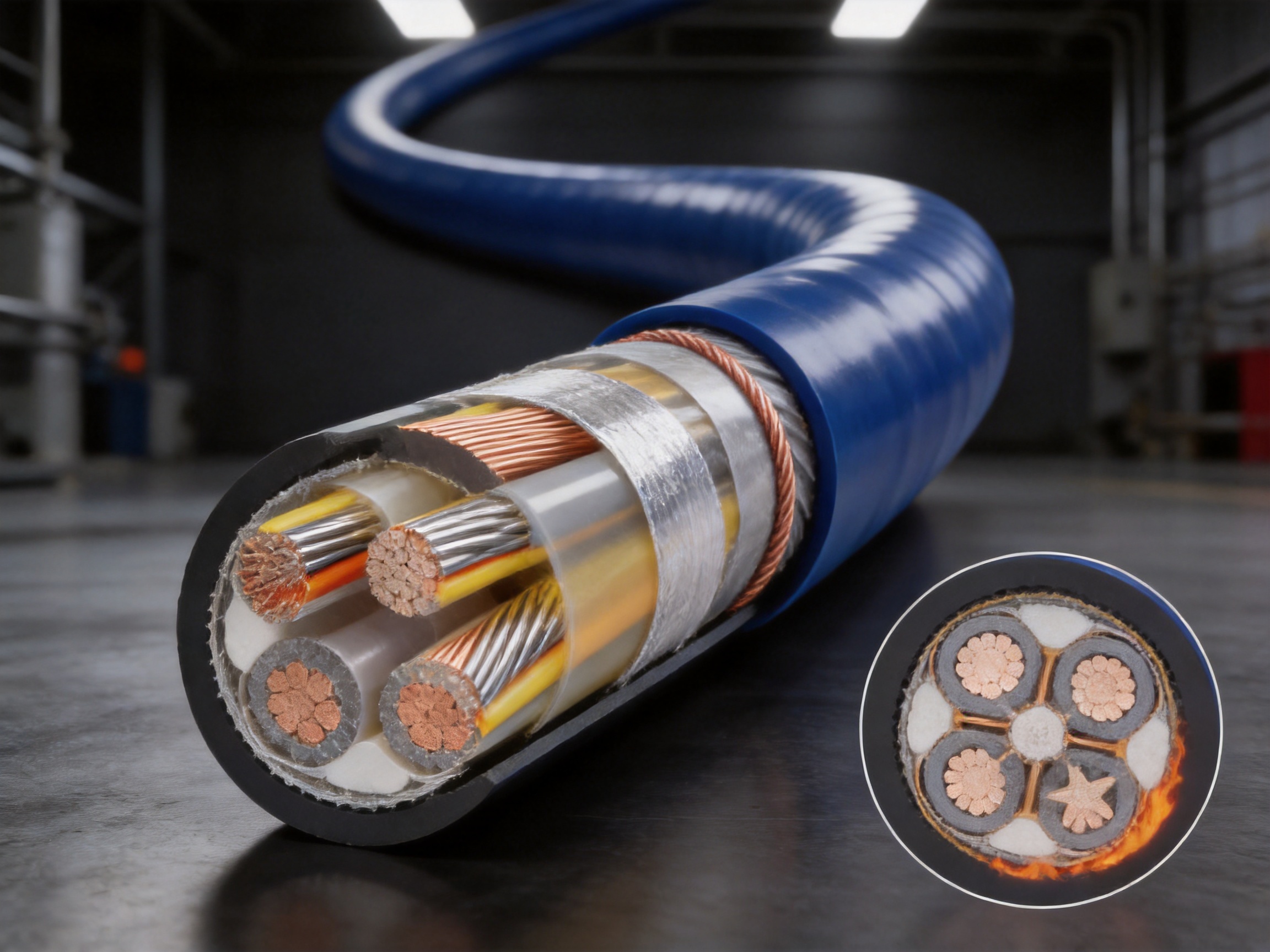
MHYVRP is used for shielded communication connections in underground mining and other demanding industrial environments. Typical applications include mobile monitoring equipment, portable communication devices, inspection robots, movable sensors, temporary wiring, and systems that require flexibility and electromagnetic interference resistance.
The stated shielding system contains an aluminum-plastic composite tape shield and a tin-plated copper drain wire. The shield coverage is specified at a minimum of 90 percent, and the shielding effectiveness is specified at at least 70 dB from 30 MHz to 100 MHz.
Yes. The cable uses Class 7 ultra-fine multi-stranded tin-plated copper conductors and a flexible PVC sheath. Its stated flexural fatigue resistance is at least 800,000 bending cycles at a 100 mm curvature radius. The actual service life depends on movement conditions, bend radius, tension, torsion, speed, temperature, and abrasion.
The stated minimum bending radius is eight times the cable outer diameter for fixed installation and ten times the cable outer diameter for mobile installation. The mobile-installation value should be used for cable sections that move or flex repeatedly.
MHYVRP is available from one to twenty-four cores. Twisted-pair and star-quad structures can be selected according to the communication system and equipment interface.
The stated single-core cross-section range is 0.5 mm² to 1.0 mm². The final selection should consider transmission distance, signal requirements, voltage drop, mechanical requirements, and termination compatibility.
The insulation is high-density polyethylene. HDPE supports high insulation resistance and stable dielectric performance. The specified insulation resistance is at least 1,500 MΩ·km at 20°C.
Yes. The outer sheath is made from flame-retardant flexible PVC, and the product information states that it passes the MT 818.1-1999 mining flame-retardant test. Project purchasers should still confirm all local approval and documentation requirements.
The long-term operating temperature range is -40°C to +65°C. A short-term overload temperature of +85°C for two hours is also specified. Actual application conditions should be reviewed together with current loading and installation configuration.
Yes. Customization can include core count, core arrangement, conductor cross-section, shielding structure, sheath color, waterproof termination treatment, identification, and other construction details. OEM and ODM development can be discussed using customer drawings or samples.
The drain wire should be connected according to the communication system’s grounding design and the equipment manufacturer’s instructions. The shield should not be left unconnected when shielding performance is required. Grounding should be checked for continuity and suitable resistance before operation.
It can be used in environments containing power equipment, and its shield is intended to reduce electromagnetic interference. However, communication and power cables should be separated where practical. Routing, parallel distance, grounding, equipment layout, and local interference conditions should be evaluated during system design.
The manufacturer reports integrated research and development, production, and sales operations, automated production lines, quality engineering resources, product test reports, and warranty support for standard cable models. Customers can request technical specifications and project-specific documentation before ordering.
A specialized cable manufacturer can connect product engineering with manufacturing control. This is important when the customer’s requirements involve more than a basic conductor and sheath. Mining applications may require a carefully balanced combination of flexibility, shielding, flame retardancy, environmental resistance, dimensional control, and delivery reliability.
Zhishang’s stated business model combines research and development, production, sales, technical consultation, and customization. The company’s manufacturing base, automated production lines, experienced technical personnel, and reported international customer experience provide a foundation for handling both standard and customized cable requirements.
Its support for OEM and ODM development is particularly relevant to equipment manufacturers. A robot builder, monitoring-system integrator, or portable communication-device manufacturer may need a cable designed around a specific housing, connector, movement pattern, or cable management system. A supplier that can review drawings and samples can help shorten the distance between concept and production.
The company’s focus on full-core and full-length production, pure-copper specifications, test reports, stocked standard products, and customized lead-time planning can also improve procurement transparency. Customers should still verify the technical data, certification requirements, sample performance, and acceptance criteria for each project.
MHYVRP is a specialized shielded mining communication cable for applications where ordinary fixed communication cable may not provide sufficient flexibility, interference resistance, or environmental protection. Its ultra-fine Class 7 tin-plated copper conductors support repeated movement, while HDPE insulation contributes to stable electrical performance. The aluminum-plastic composite tape shield and tin-plated copper drain wire help control electromagnetic interference. The flexible flame-retardant PVC sheath provides protection for demanding underground conditions.
With one to twenty-four cores, twisted-pair or star-quad construction, 0.5 mm² to 1.0 mm² conductor sizes, a 300/300 V rating, and a broad operating temperature range, the cable can be adapted to many mobile monitoring and communication systems. Its stated shielding, attenuation, insulation resistance, bending, flame-retardant, and tear-strength specifications provide measurable references for engineering evaluation.
The product’s value is strengthened by the manufacturing capabilities of Anhui Zhishang Cable Technology Co., Ltd. The company combines research and development, automated production, quality control, customization, documentation, and customer support. Its production scale and OEM/ODM capabilities make it suitable for both standard procurement and project-specific cable development.
For underground mines, inspection robots, movable sensors, portable devices, and other dynamic industrial systems, cable performance is closely connected to operational continuity and safety. Selecting a purpose-designed flexible shielded cable, installing it within its mechanical limits, and maintaining correct shielding and grounding practices can help create a more stable and durable communication network.
1. MHYVRP product technical specification, including conductor construction, insulation, shielding, sheath, electrical performance, mechanical performance, and operating conditions.
2. MT 818.1-1999, mining cable flame-retardant test requirements referenced in the product specification.
3. General principles of electromagnetic compatibility for industrial communication and instrumentation cable systems.
4. General cable engineering practices for conductor stranding, polymer insulation extrusion, metallic shielding, sheath extrusion, and routine electrical testing.
5. Manufacturer-provided information concerning research and development, production capacity, OEM/ODM services, quality assurance, customization, and delivery support.
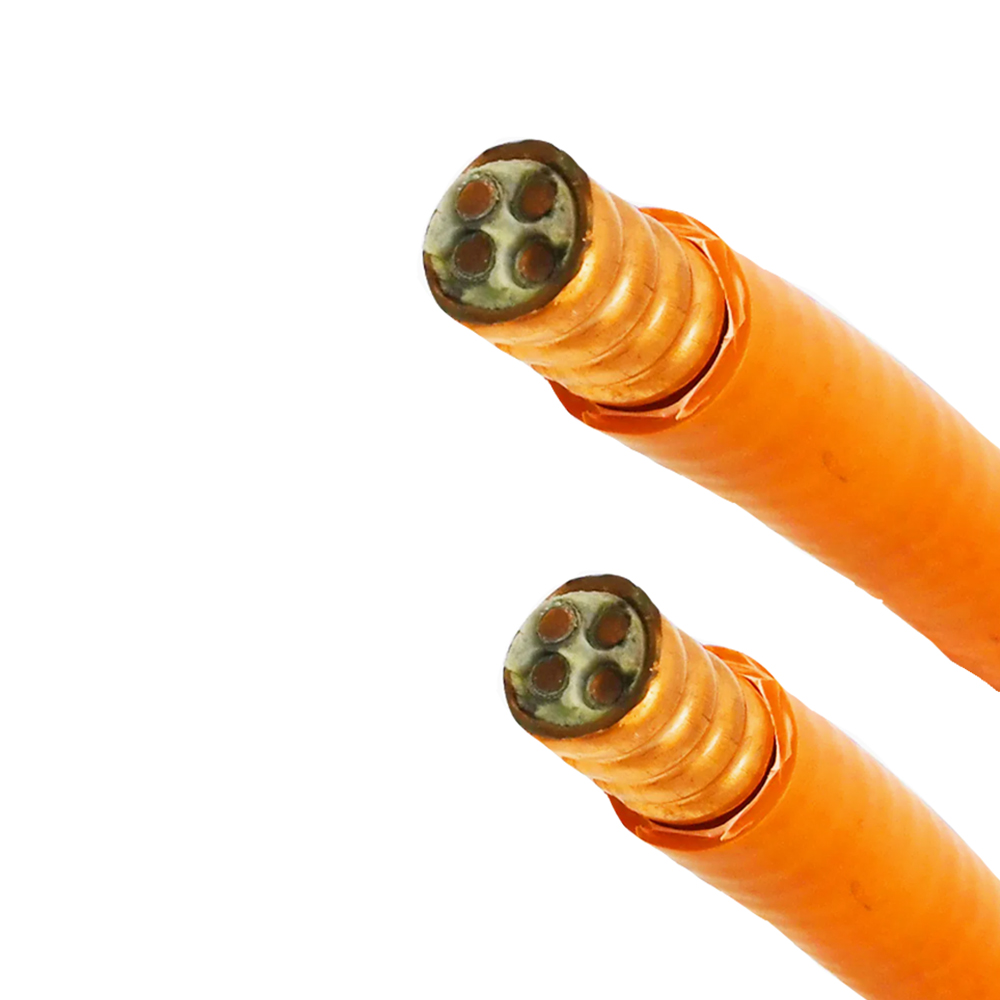

We firmly believe that good cables are not only a competition of materials, but also a reflection of craftsmanship, quality, and responsibility.

Links
Product
Send Inquiry
No. 29 Sankeshu Road, Xuanzhou District, Xuancheng City, Anhui Province, China
+86-18621104555/+86-563-2622999
 Electrical Cable Manufacturer
OEM/ODM Wire and Cable Solutions
 English
 Español
 عربى
 русский