
Get more content that can help you
Content
The biggest mistake in network planning isn't choosing a bad cable—it's choosing the wrong category of cable for the job. Coaxial, twisted pair, and fiber optic cables aren't interchangeable options ranked by quality; they're built for fundamentally different distance and bandwidth profiles. A Cat8 twisted pair cable can push 40 Gbps, but only across a 30-meter run, which makes it ideal for server-to-switch connections inside a single rack row and useless for connecting buildings on a campus. Single-mode fiber (G.652D), by contrast, carries signals up to 100 km with minimal attenuation, but costs more per meter and requires optical transceivers at both ends.
Before specifying a cable, three questions should be answered in order: What is the maximum run length? What throughput does the application require today, and in five years? And what physical environment will the cable pass through—plenum ceilings, underground conduit, or outdoor aerial spans? Getting the distance-speed tradeoff wrong is the most common and most expensive cabling error in new installations.
Each cable family serves a distinct niche. Coaxial cable (RG6, RG11) remains the standard for cable TV, satellite feeds, and analog surveillance, offering strong shielding at a low cost per meter. Twisted pair cabling, from Cat5e through Cat8, dominates enterprise Ethernet because it balances cost, ease of termination, and adequate bandwidth for most office and data center needs. Fiber optic cable, split into single-mode and multi-mode variants, is reserved for long-haul backbones and high-density data center interconnects where copper's distance and interference limits become a bottleneck.
| Cable Type | Max Speed | Max Distance | Typical Use |
| Cat6a | 10 Gbps | 100 m | Office Ethernet |
| Cat8 | 40 Gbps | 30 m | Data center racks |
| OM4 Multi-mode | 100 Gbps | 150 m | Data center interconnects |
| Single-mode G.652D | 100+ Gbps | 100 km | Metro and long-haul networks |
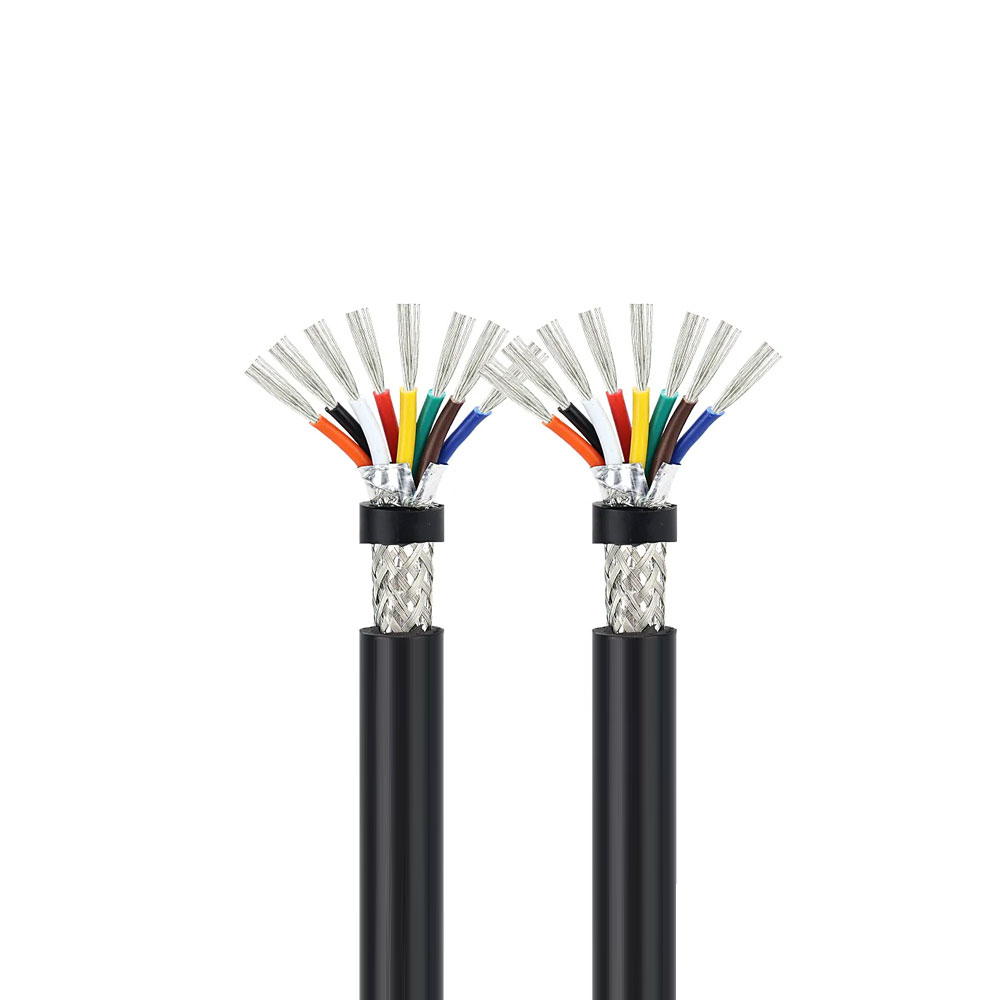
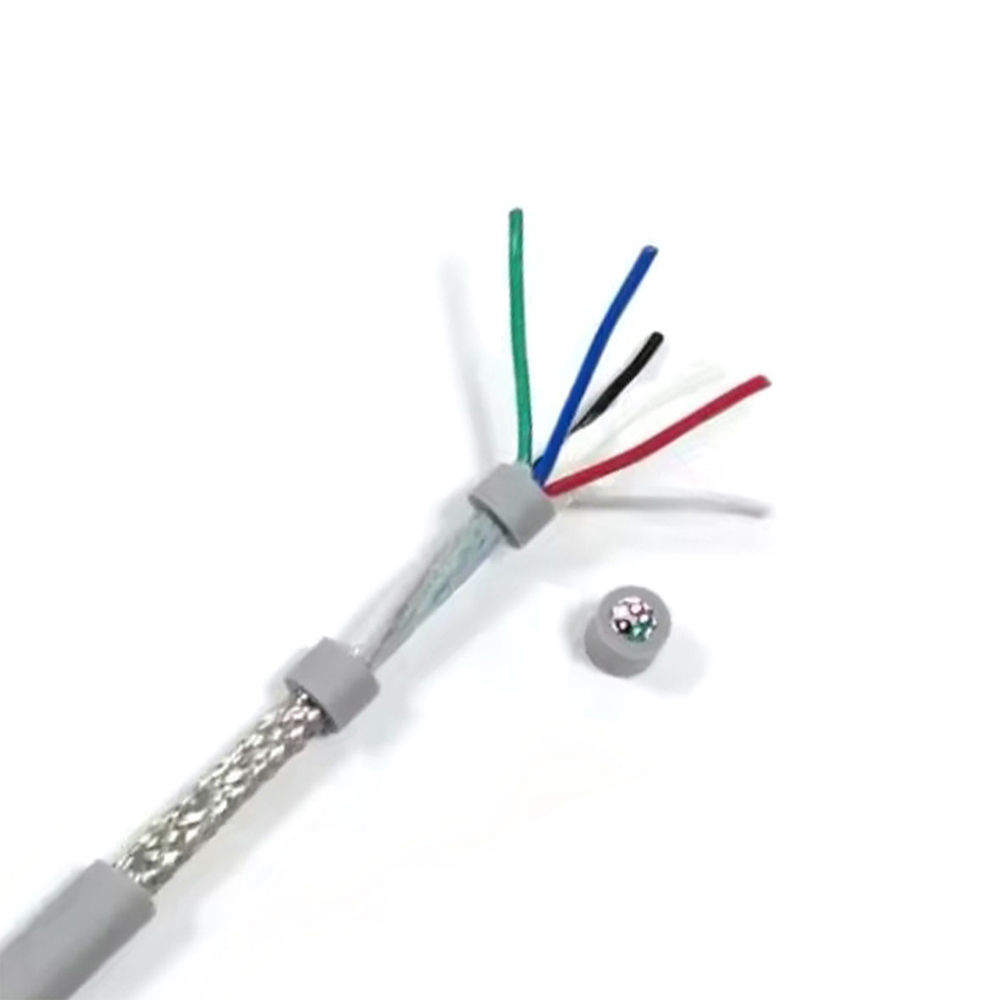
Crosstalk and electromagnetic interference become more severe as more cables are packed into a single tray or conduit—exactly the condition found in modern data centers and industrial control rooms. A properly shielded cable combines longitudinally wrapped aluminum foil with 100% coverage and tinned copper braiding at 85% coverage or higher, delivering over 80 dB of transverse conversion loss. Without this level of shielding, cables run in parallel over long distances can experience measurable bit error rate increases, particularly at frequencies above 500 MHz.
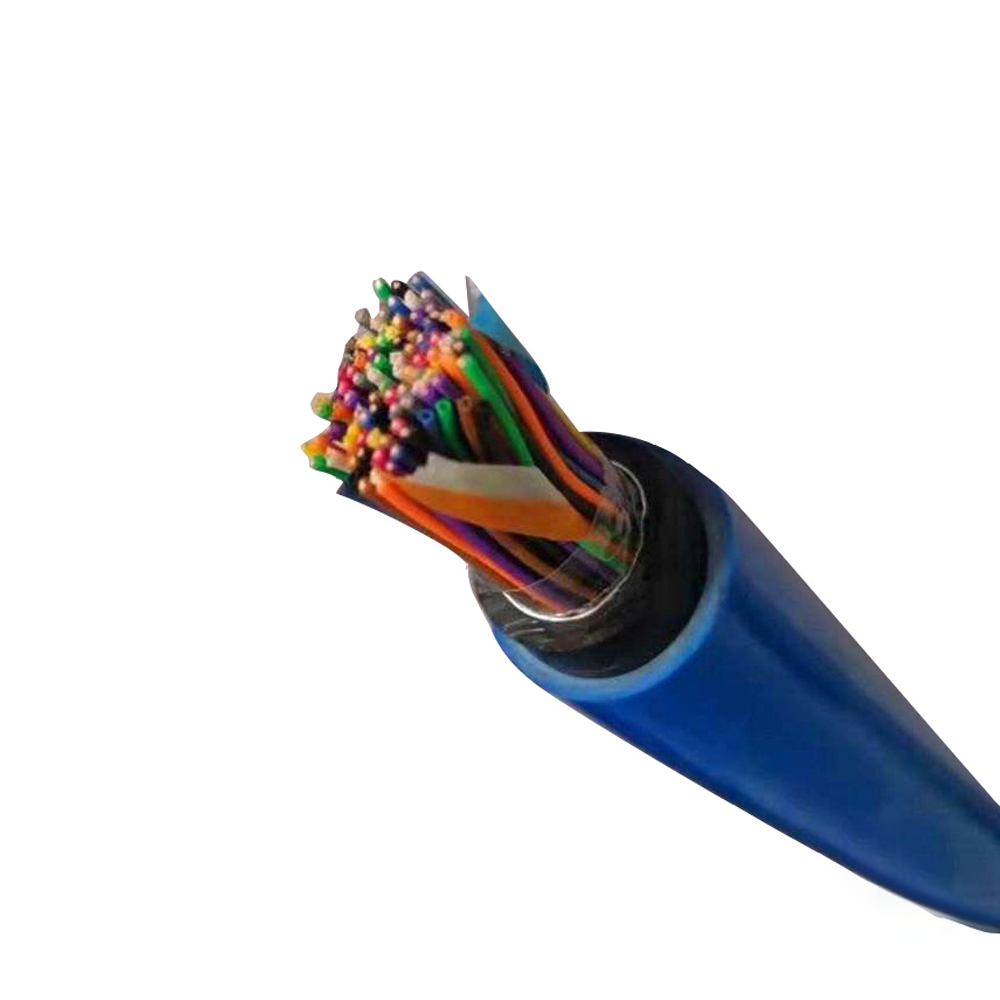
Impedance mismatches cause signal reflections that degrade throughput long before a cable's rated bandwidth is reached. Standard systems are built around 50 Ω, 75 Ω, or 100 Ω characteristic impedance, with a tolerance window of just ±2 Ω. Manufacturing consistency—stable dielectric constant, controlled eccentricity in the insulation layer, and precise twist pitch—determines whether that tolerance holds across an entire reel. Time Domain Reflectometer testing during production catches impedance discontinuities before cable ships, but installers should still verify continuity on-site, since bends tighter than four times the cable's outer diameter can introduce impedance variance even in high-quality cable.
Cable specification isn't only a performance decision—it's a compliance one. International projects typically require adherence to TIA/EIA-568, ISO/IEC 11801, or EN 50173, and mismatched standards between regions can delay equipment certification or void warranties. Fire safety classification adds another layer: plenum-rated cables must meet flame-retardant requirements for use in air-handling spaces, while low-smoke zero-halogen (LSZH) sheathing is increasingly mandated in enclosed public spaces such as transit stations and high-rise buildings. Buyers sourcing cable for multi-country deployments should confirm certification documents match the destination market before placing bulk orders, not after installation begins.
Cable priced at the lowest per-meter cost frequently loses on total cost of ownership within three to five years. A cable with a 25-year design life and performance retention above 90% avoids the labor cost of re-cabling that a cheaper, faster-degrading option eventually forces. Backward-compatible cable families, such as Cat6a supporting legacy Cat5e equipment, also reduce the cost of phased upgrades, since existing infrastructure doesn't need to be ripped out when speeds increase in one section of a facility.
Ultimately, the right communication cable is the one matched precisely to distance, bandwidth, environment, and compliance needs—not simply the one with the highest rated speed on the datasheet.

We firmly believe that good cables are not only a competition of materials, but also a reflection of craftsmanship, quality, and responsibility.

Links
Product
Send Inquiry
No. 29 Sankeshu Road, Xuanzhou District, Xuancheng City, Anhui Province, China
+86-18621104555/+86-563-2622999
 Electrical Cable Manufacturer
OEM/ODM Wire and Cable Solutions
Electrical Cable Manufacturer
OEM/ODM Wire and Cable Solutions
 English
 Español
 عربى
عربى
 русский