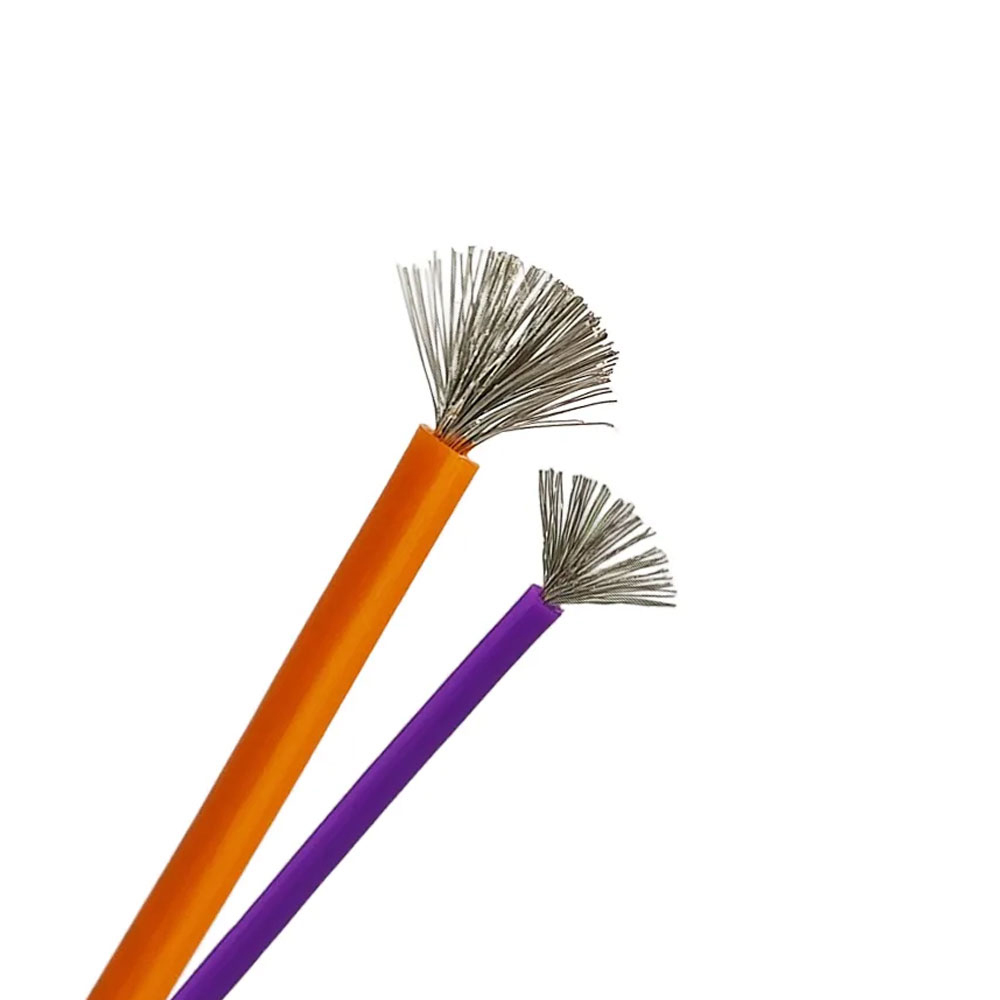

Get more content that can help you
Content
Few cable labels cause more confusion than a simple “6 mm²” print, especially when a drawing, a supplier, or an electrician uses the phrase “6mm wire gauge.” If you are trying to compare that number with AWG, estimate current capacity, or choose a cable for a real installation, the practical answer depends on more than one conversion chart. The good news is that the basics are manageable once you separate conductor area, conductor diameter, and cable construction.
This guide walks through what a 6mm wire gauge usually means, how it compares with common AWG sizes, where 6 mm² cable is used, and which details matter when you specify it. We will keep the focus on practical cable selection rather than a single number on a drum.
In most metric cable systems, “6mm wire gauge” is shorthand for a conductor with a nominal cross-sectional area of 6 square millimetres, written as 6 mm². That figure describes the conductive copper or aluminium area, not the outside diameter of the finished cable. A 6 mm² cable with thick insulation, a braided shield, or an armour layer can have a much larger overall diameter than another 6 mm² cable with a thin sheath.
A 6 mm² copper conductor has a nominal diameter of about 2.76 mm. That is useful to know, but it is not the same as 6 AWG. A 6 AWG conductor is substantially larger, with a cross-sectional area of roughly 13.3 mm². This is one of the most common points of confusion: 6 mm² and 6 AWG are not interchangeable descriptions. If a project mixes metric cable sizes with AWG references, confirm the actual cross-sectional area before comparing current ratings or terminal sizes.
A conversion table is helpful for orientation, but it should not replace the cable standard, the terminal specification, or the installation code. The values below are approximate for bare copper conductors and are intended to show relative size.
| Size reference | Approximate AWG position | Nominal conductor diameter | Nominal cross-sectional area |
|---|---|---|---|
| 6 mm² | Between 10 AWG and 9 AWG | 2.76 mm | 6.0 mm² |
| 10 AWG | 10 AWG | 2.59 mm | 5.26 mm² |
| 9 AWG | 9 AWG | 2.91 mm | 6.63 mm² |
| 6 AWG | 6 AWG | 4.11 mm | 13.3 mm² |
In everyday conversation, people may call a 6 mm² cable “6mm wire” even when the conductor is stranded, the insulation is XLPE, or the cable contains several cores. For technical work, it is safer to say “6 mm² conductor” and then state the conductor class, core count, voltage rating, and insulation type.
Many low-voltage installation tables place 6 mm² copper cable in the region of 32–40 A, but that is only a starting point. The exact current rating depends on the conductor material, insulation temperature rating, ambient temperature, number of loaded cores, grouping with other cables, installation method, enclosure, and the applicable standard. A cable installed in free air may behave differently from the same conductor buried in insulation or pulled through a crowded conduit.
Voltage drop matters as well. A 6 mm² cable may be chosen for a circuit with a lower current simply because the run is long and the allowable voltage drop is tight. In that case, the cable is not selected only for heat rise; it is selected for stable voltage at the equipment end. Before ordering, check both the protective device rating and the voltage drop over the actual route length. It is also wise to confirm that the terminals, lugs, and glands are rated for the conductor size and strand class.
The 6 mm² size sits in a useful middle ground. It is large enough for many small power distribution duties and small enough to remain manageable in panels and equipment. Common applications include sub-circuits for workshop sockets, small distribution boards, HVAC equipment, pump and motor feeds, charging-related equipment, control cabinets, and connections between power conversion equipment and downstream loads. It also appears in building services where a designer needs more capacity or lower voltage drop than a 4 mm² cable can provide.
That does not mean every 6 mm² cable is suitable for every one of those duties. A fixed building wire, a flexible panel cable, and a rubber-sheathed outdoor cable may share the same nominal conductor area but have very different jackets, bending radii, and environmental ratings. For fixed building wiring where flame-retardant behaviour is important, a product such as our flame-retardant building wire can be a relevant starting point.
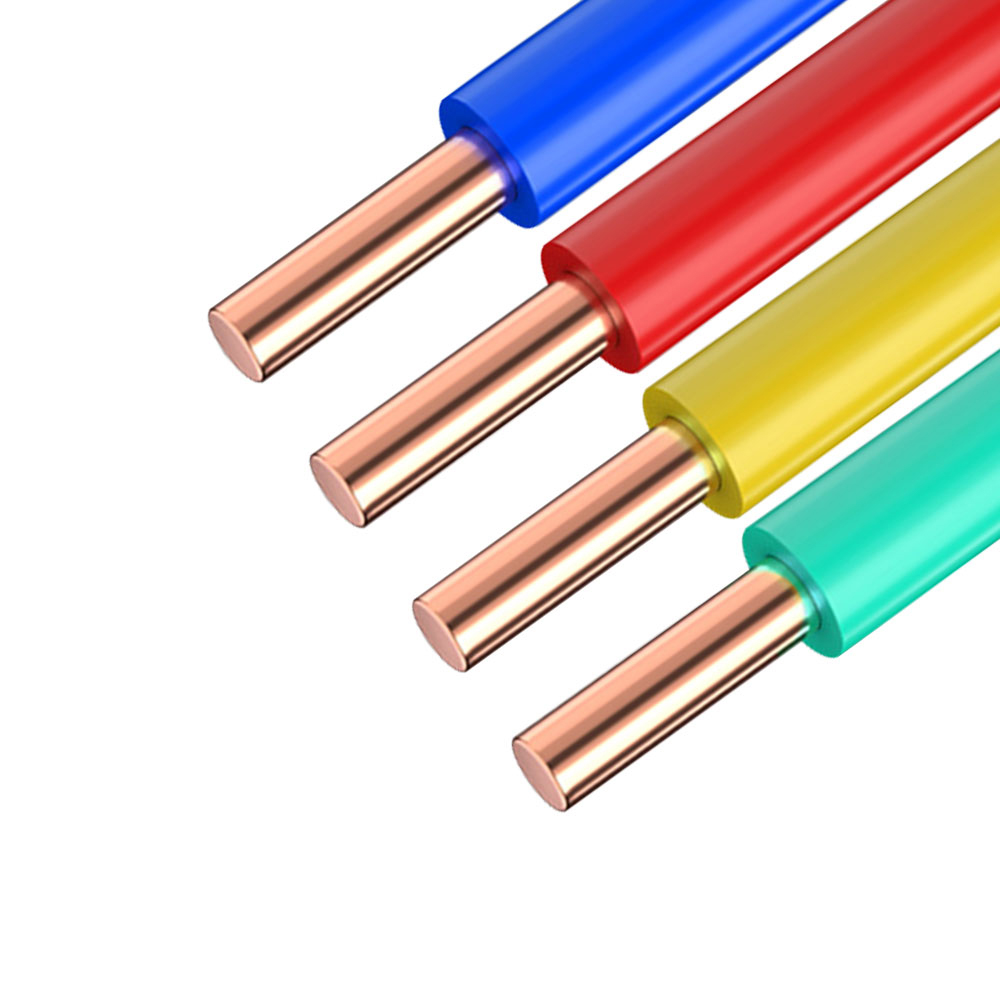 BV and NH-BV Flame-Retardant Building WireFor fixed indoor wiring and fire-resistant circuits, this series offers PVC-insulated BV and NH-BV options with a 450/750V rating.View Product →
For machinery, temporary power, or equipment connections, pay close attention to whether the cable needs a flexible stranded conductor, a higher temperature rating, oil resistance, or screening against electromagnetic interference. The application should drive the construction, not the gauge alone.
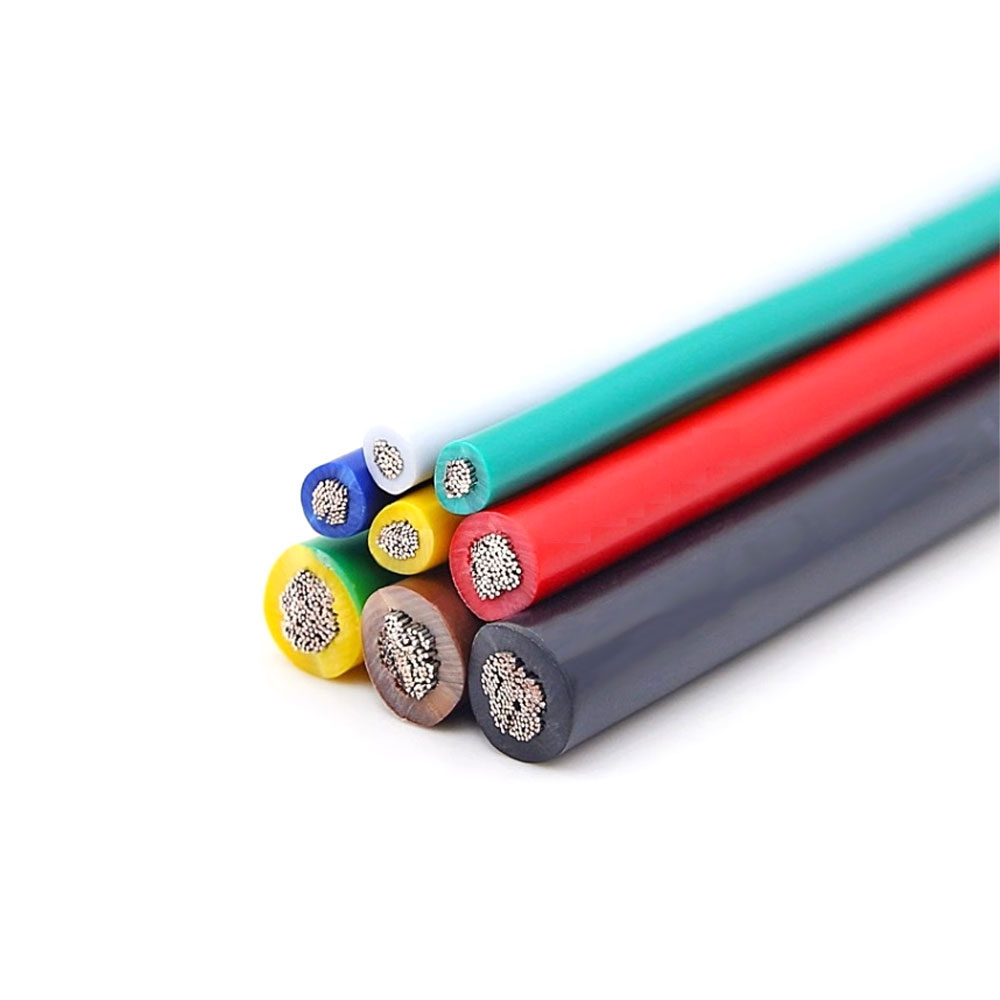
Two 6mm cables can look similar on the outside and behave very differently in service. A solid or compacted conductor may suit fixed wiring where the cable will not move after installation. A stranded conductor is usually easier to route through bends and is often preferred for panel wiring, equipment connections, and applications with vibration. The strand class affects termination: fine-strand cables may require ferrules or terminals designed for flexible conductors.
Insulation and sheath materials also change the cable’s role. PVC is common for general-purpose wiring, while XLPE offers good electrical and thermal performance for power distribution. Low-smoke, halogen-free compounds are chosen where smoke and toxic gas emissions are a concern. Silicone rubber may be appropriate for high-temperature areas, and special elastomers may be needed for oil, abrasion, or outdoor exposure. For heat-resistant fixed power distribution, an XLPE-insulated power cable is one option to evaluate.
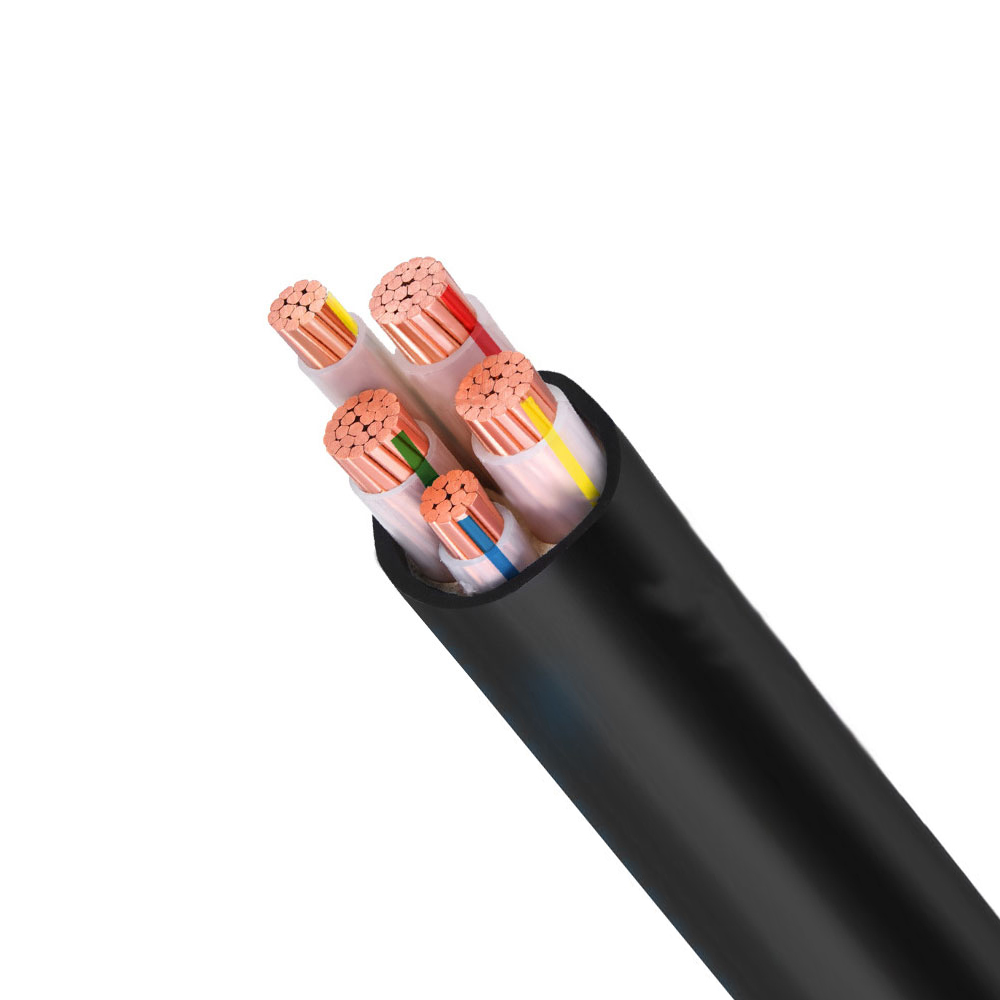 YJV Heat-Resistant XLPE Power CableFor fixed power distribution where heat resistance matters, this XLPE-insulated cable offers a 90°C operating temperature and PVC sheath.View Product →
At Anhui Zhishang Cable Technology Co., Ltd., we routinely see how much difference these construction details make in the field. A cable that is electrically correct but mechanically unsuitable for the route can create installation problems and maintenance work later.
A useful specification goes beyond “6 mm².” The following checklist helps reduce ambiguity between the drawing, the purchase order, and the cable delivered to site.
If the cable will be exposed to chemicals, frequent flexing, high ambient temperature, or outdoor weather, raise those points early. It is much easier to adjust the construction before production than to solve a mismatch after the cable has been installed.
No. A 6 mm² conductor is roughly between 10 AWG and 9 AWG in cross-sectional area. A 6 AWG conductor is much larger, at approximately 13.3 mm². Treat “6mm” and “6 AWG” as different size systems unless a drawing or standard clearly states otherwise.
For copper cable, many installation tables place 6 mm² in the 32–40 A range, but the final figure depends on insulation rating, ambient temperature, grouping, installation method, and local rules. Use the cable manufacturer’s data and the applicable installation standard for the actual project.
It is often considered, but it is not an automatic answer. The protective device, cable insulation, installation conditions, circuit length, voltage drop, and terminal ratings all need to be checked. A 6 mm² cable may be acceptable in one route and unsuitable in another.
If you are still weighing 6 mm² against AWG 10, comparing PVC with XLPE, or deciding whether a flexible conductor is needed for a particular panel, the most reliable next step is to match the cable construction to the actual installation conditions. You can learn more about our cable manufacturing background and how we approach custom requirements on our about page. We are always glad to talk through a practical specification before a cable is ordered.

We firmly believe that good cables are not only a competition of materials, but also a reflection of craftsmanship, quality, and responsibility.

Links
Product
Send Inquiry
No. 29 Sankeshu Road, Xuanzhou District, Xuancheng City, Anhui Province, China
+86-18621104555/+86-563-2622999
 Electrical Cable Manufacturer
OEM/ODM Wire and Cable Solutions
 English
 Español
 عربى
 русский