Get more content that can help you
Content
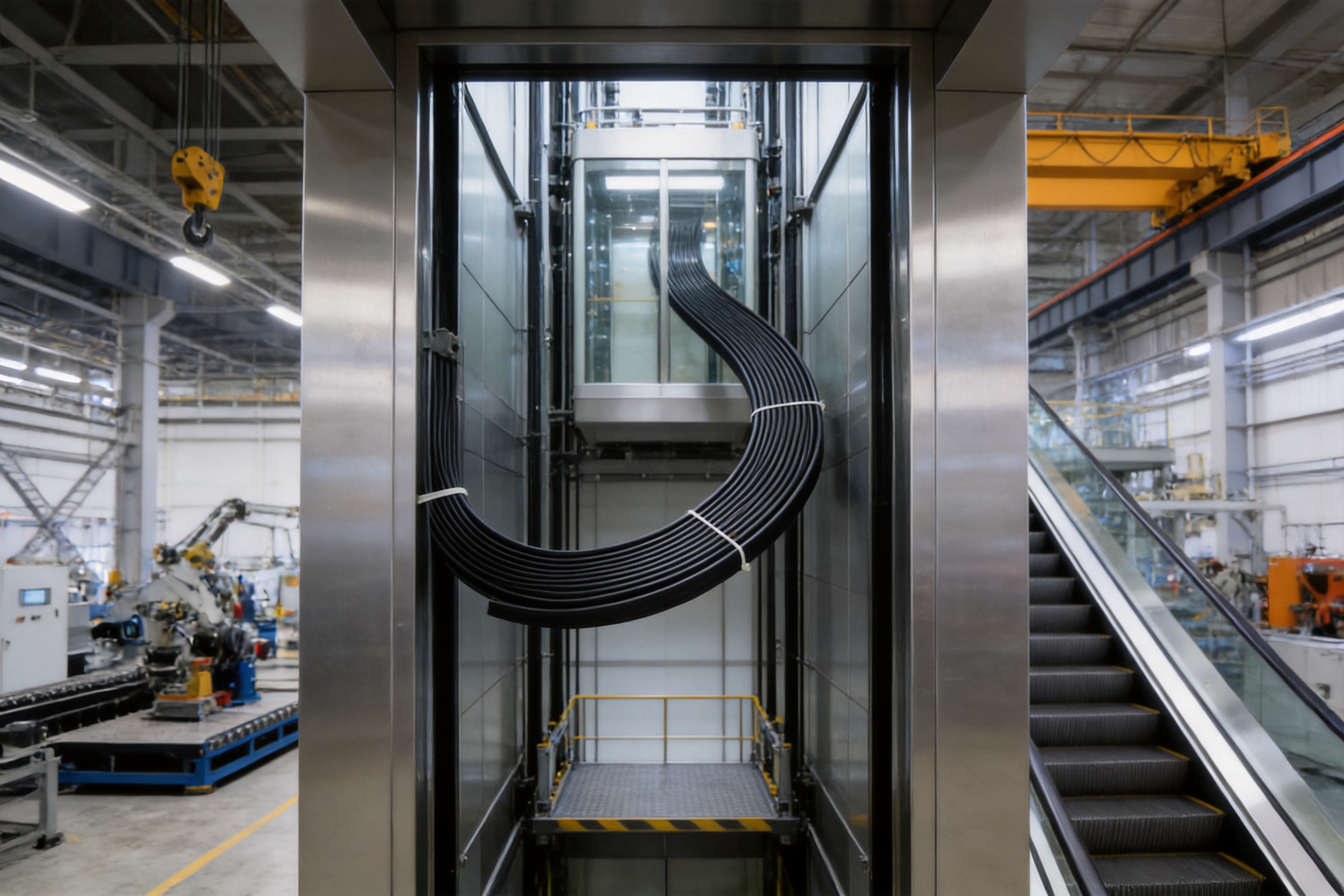
Modern elevators, escalators, lifting platforms, stage systems, cranes, and automated handling equipment depend on cables that can transmit power and signals while continuously moving. Unlike cables installed in fixed conduits, traveling cables must tolerate repeated bending, vibration, friction, tension, environmental exposure, and limited installation space. A cable that performs well in a static application may fail prematurely when subjected to millions of movement cycles.
The HO5VVH6-F multi-scenario elevator traveling flat cable is designed for this demanding operating environment. It combines ultra-fine stranded copper conductors, PVC insulation, a flexible PVC outer sheath, and a space-saving flat structure. Its European-standard design supports low-voltage power and control requirements in elevator systems and other mobile machinery. With available configurations ranging from 2 to 60 cores and conductor cross-sections from 0.5 mm² to 4.0 mm², the cable can be adapted to different power, control, and equipment-integration needs.
Manufactured by Anhui Zhishang Cable Technology Co., Ltd., the cable is positioned as a practical solution for customers seeking flexibility, electrical reliability, environmental resistance, standardized construction, and cost efficiency. It is suitable for both original equipment manufacturers and project contractors that require dependable traveling cable assemblies for new installations, upgrades, and replacement work.
An elevator traveling cable forms a moving electrical connection between the fixed building-side installation and the elevator car. As the car travels vertically, the cable moves through a repeated operating path. It may bend, straighten, twist slightly, rub against guides, and experience changing mechanical loads. In addition to supplying power, the cable may carry control circuits, door signals, lighting circuits, alarm connections, communication lines, and other low-voltage functions.
This combination of electrical and mechanical requirements makes elevator cable selection more demanding than ordinary fixed-installation cable selection. The conductor must maintain low electrical resistance. The insulation must resist breakdown between cores and between conductors and the sheath. The sheath must protect the cable from abrasion, moisture, oil, temperature changes, and mechanical contact. At the same time, the whole cable must remain flexible enough to travel smoothly without excessive force or sharp deformation.
A round cable can be appropriate for many industrial installations, but a flat traveling cable often provides practical advantages in elevator applications. Its arranged core structure can occupy less depth, fit more easily in narrow shafts, and simplify routing through cable brackets and guides. The flat form also helps organize multiple power and control cores in a predictable configuration.
The performance of a traveling cable is not determined by a single material characteristic. Conductor construction, insulation thickness, sheath formulation, core arrangement, bending radius, installation method, operating temperature, and cable support design all influence service life. The HO5VVH6-F design addresses these factors as an integrated system rather than treating flexibility as an isolated feature.
HO5VVH6-F is an extra-flexible flat cable developed for European-standard low-voltage applications. The “H05” designation corresponds to a rated voltage category of 300/500V, while the “VV” construction identifies PVC insulation and PVC sheath materials. The “H6” format is associated with a flat flexible cable design, and the “F” indicates flexibility.
The product uses stranded annealed copper conductors with ultra-fine stranding. Fine stranding allows the conductor to accommodate repeated bending more effectively than a solid conductor or a coarse-stranded construction. Around each conductor, PVC insulation provides electrical separation. The insulated cores are assembled in a flat arrangement and protected by a flexible PVC outer sheath.
The cable is available with two to 60 cores, depending on project requirements. Cross-sections from 0.5 mm² to 4.0 mm² allow the product family to cover small control circuits, lighting and auxiliary circuits, and suitable low-voltage power applications. Final selection should always consider current capacity, voltage drop, duty cycle, ambient temperature, installation conditions, and applicable local regulations.
The standard rated voltage is 300/500V. The stated test voltage is 2kV AC for one minute, providing an important indication of insulation withstand capability during production and quality verification. The reported insulation resistance is at least 15 MΩ·km at 20°C. These characteristics help support stable operation in equipment where multiple cores are installed close together and electrical reliability is essential.
The product is designed for a broad working temperature range. For fixed installation, the specified range is -40°C to +70°C. For flexible installation, the listed range is -5°C to +70°C. Project engineers should distinguish between the low-temperature capability of the material and the permitted temperature for dynamic movement. If the cable must move at temperatures below -5°C, the final design and validation should be confirmed with the manufacturer and the applicable standard.
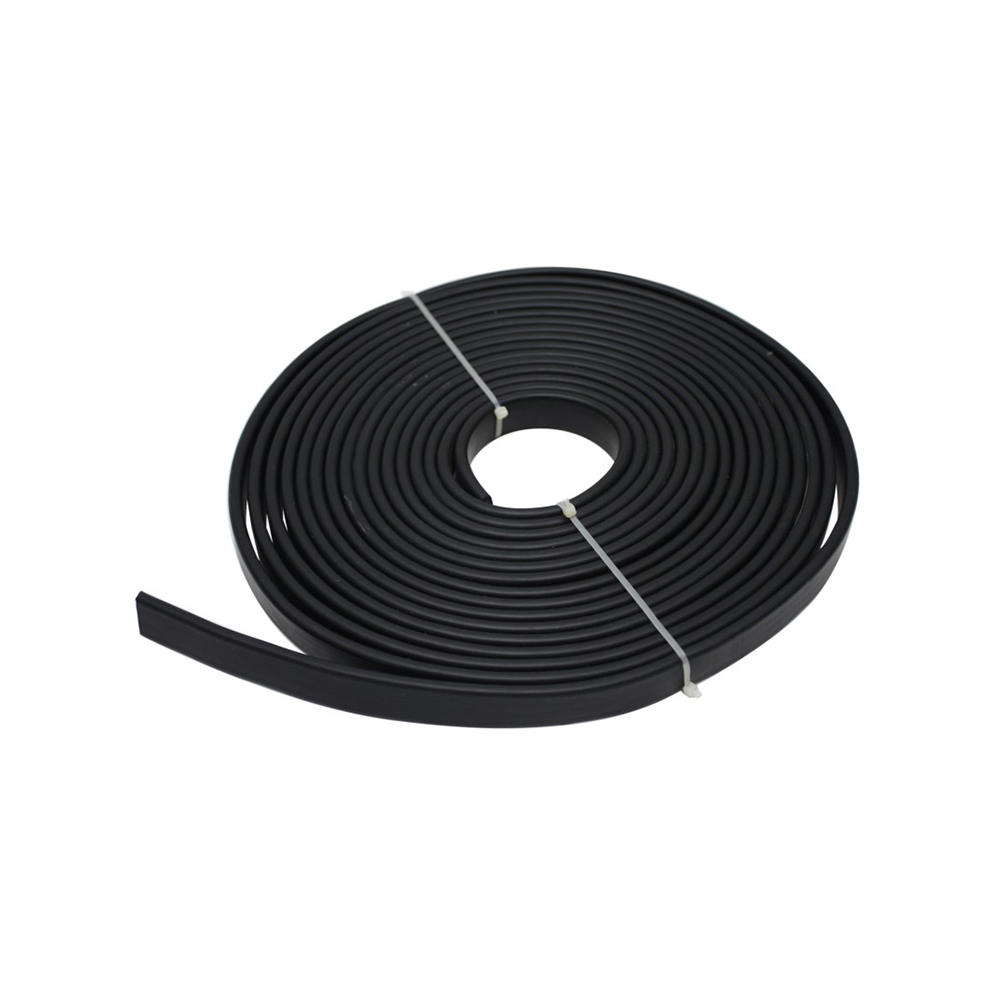
HO5VVH6-F Multi-scenario applicability Elevator Traveling Flat Cable
The conductor is the electrical core of the cable. HO5VVH6-F uses stranded annealed copper with ultra-fine strand construction. Compared with a solid conductor, a fine-stranded conductor distributes bending across many small wires. This reduces the concentration of mechanical stress at a single point and helps the conductor remain functional during repeated movement.
Copper provides high conductivity and stable electrical performance. High-quality copper conductors also help reduce resistive losses and support reliable power delivery over the cable length. In elevator systems, stable conductor performance is important because the cable may supply lighting, control equipment, door systems, safety circuits, and auxiliary devices simultaneously.
The conductor cross-section range of 0.5 mm² to 4.0 mm² gives system designers flexibility when balancing current-carrying capacity, voltage drop, cable size, and installation space. Smaller cross-sections may be suitable for control and signal circuits, while larger cross-sections can be selected for appropriate low-voltage power circuits. A complete electrical calculation remains necessary for each application.
PVC insulation separates individual conductors and helps prevent short circuits, leakage, and electrical interference caused by unintended contact. The specified insulation thickness ranges from 0.4 mm to 0.8 mm, depending on cable configuration and conductor size. The insulation is selected to balance dielectric protection with the flexibility required for a traveling cable.
In a multi-core flat cable, consistent insulation extrusion is particularly important. Uneven insulation can affect core dimensions, cable width, bending behavior, and electrical safety. Controlled production processes help maintain a uniform layer around each conductor and improve consistency from one production length to another.
The outer sheath protects the internal cores from mechanical contact and environmental exposure. The HO5VVH6-F sheath is made from flexible PVC, with a stated thickness range of 0.8 mm to 1.6 mm. The sheath is designed to resist abrasion, moisture, oil exposure, and low temperatures within the stated operating conditions.
A traveling cable sheath must be strong enough to withstand contact with guides and surrounding equipment while remaining flexible enough for continuous movement. If the sheath is too rigid, the cable may require excessive force to move and may experience accelerated fatigue. If it is too soft or poorly formed, it may suffer from wear, deformation, or insufficient mechanical protection. The product’s sheath construction is intended to provide a practical balance between protection and flexibility.
The flat structure is one of the product’s principal installation advantages. The cores are arranged across the width of the cable rather than concentrated in a round bundle. This can reduce installation depth and help the cable occupy a defined path in elevator shafts, machinery, and cable guides.
The cable width is approximately 8 mm to 60 mm, while the cable thickness ranges from approximately 2.5 mm to 12 mm, depending on the number of cores and conductor cross-section. These dimensions allow customers to select a format that matches the available space and electrical requirements.
A flat arrangement can also make the cable easier to identify, clamp, and inspect. When the cable is installed with the correct orientation and bending direction, the structure can support predictable movement. Installation personnel should follow the specified bending radius and avoid twisting, crushing, or uncontrolled lateral displacement.
Electrical performance is the foundation of any elevator traveling cable. Mechanical flexibility is valuable only when the cable can maintain insulation integrity and current-carrying capability throughout its service life. HO5VVH6-F is specified with a rated voltage of 300/500V and a test voltage of 2kV AC for one minute.
The rated voltage makes the cable suitable for many low-voltage power, control, lighting, and equipment-connection applications. It is not a substitute for higher-voltage cable types where the system voltage exceeds the stated rating. System designers should evaluate the highest operating voltage, transient conditions, grounding arrangements, and protection devices before approving the cable.
The insulation resistance specification of at least 15 MΩ·km at 20°C provides a reference for the electrical quality of the insulation system. High insulation resistance helps limit leakage current and supports separation between circuits. Because insulation resistance can vary with temperature, moisture, test method, and cable length, acceptance testing should be performed using appropriate procedures.
The cable is described as having no breakdown under long-term working voltage when operated within its design parameters. Its flame performance complies with IEC 60332-1 flame-retardant requirements. This is relevant for installations where reducing flame propagation along a cable is part of the safety strategy. Customers should still confirm whether a project requires additional fire, smoke, halogen, vertical, shaft, or building-code classifications.
The cable design follows VDE color-coding practices. Consistent color identification can simplify termination, inspection, maintenance, and troubleshooting. In systems with many cores, clear identification is especially valuable because incorrect wiring can cause downtime, equipment faults, or safety risks.
CE and RoHS compliance are identified among the product’s certification and conformity features. These requirements support market access and help address electrical safety, environmental substance restrictions, and customer procurement expectations. The exact declaration, test report, and applicable version of each standard should be verified for the specific order and destination market.
The most important distinction between a fixed cable and a traveling cable is the ability to withstand movement. HO5VVH6-F is designed as an H05-level extra-flexible cable for applications involving frequent bending and mobile operation.
The listed minimum bending radius is at least five times the cable thickness for mobile installation and at least three times the cable thickness for fixed installation. These values are essential for design and installation. A cable that is forced around a radius smaller than the recommended limit can develop excessive stress in the conductor, insulation, and sheath. Even a highly flexible cable can fail early when its installation geometry is unsuitable.
The stated bending life is at least eight million cycles under elevator operating conditions. This figure represents a significant endurance target and helps distinguish the cable from ordinary flexible power cables intended for occasional movement. Actual service life depends on travel speed, travel distance, acceleration, cable weight, support method, temperature, bending radius, torsion, guide alignment, and the presence of oil or abrasive contaminants.
The cable is also described as capable of resisting complex torsional movements. In practice, torsion should not be treated as a replacement for correct installation. A traveling cable should be supported and aligned so that twisting is minimized. Excessive uncontrolled torsion may cause uneven loading across the flat structure and shorten the life of the sheath and conductor assembly.
Abrasion resistance is another important mechanical characteristic. The product is specified as passing a 10,000-cycle reciprocating abrasion test. This supports applications where the sheath may experience repeated contact with a guide, support, or adjacent surface. Nevertheless, sharp edges, damaged brackets, excessive pressure, and misaligned guides should be corrected because they can create loads beyond laboratory test conditions.
Elevator and industrial cable installations are not always located in clean, climate-controlled spaces. Cable shafts, machinery rooms, workshops, loading areas, and outdoor lifting systems may experience humidity, temperature fluctuations, oil mist, dust, and occasional chemical exposure. A cable with suitable environmental resistance can help reduce maintenance interruptions.
The HO5VVH6-F sheath is described as oil-resistant and moisture-resistant. Oil resistance is particularly useful near machinery, hydraulic equipment, maintenance areas, and industrial production lines. Moisture resistance helps protect the cable in damp environments and during normal cleaning or condensation conditions. The cable should not automatically be treated as suitable for permanent immersion, aggressive chemicals, or corrosive atmospheres unless the relevant application has been specifically validated.
The listed weather-resistance range extends from -40°C to +70°C for material adaptability. As noted earlier, the dynamic installation range is more restrictive at low temperatures. This distinction is important because a cable can remain physically intact at a low temperature while its flexibility during movement is reduced. Customers operating elevators or mobile machinery in cold outdoor environments should request application-specific confirmation.
At the upper end of the range, continuous operation at +70°C should be evaluated together with conductor loading, ambient heat, installation density, and heat dissipation. A cable installed beside hot equipment may experience a higher local temperature than the surrounding room. Correct current-rating calculations and adequate ventilation remain necessary.
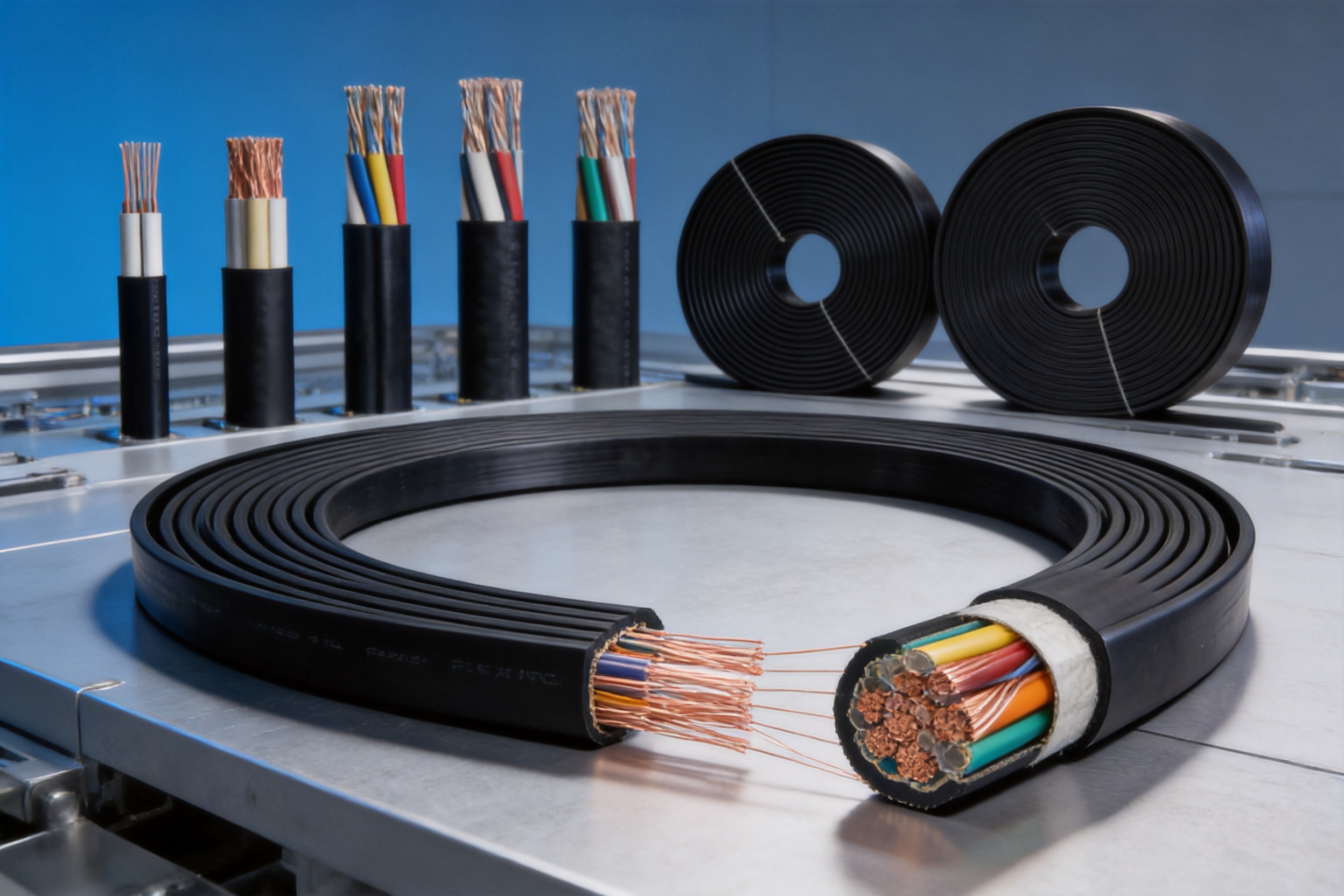
Solid-conductor cables are generally intended for fixed installations. They can provide stable electrical performance in stationary applications, but repeated bending can concentrate stress and cause conductor fatigue. The ultra-fine stranded construction of HO5VVH6-F is more appropriate for elevator travel and other mobile applications.
Some ordinary flexible power cables are designed for occasional repositioning rather than millions of repeated cycles. They may not have the appropriate flat geometry, bending-life specification, or multi-core arrangement for elevator systems. HO5VVH6-F is developed specifically around repeated movement, compact routing, and high core-count requirements.
Round cables can be useful in many moving applications, but a flat cable can provide a better fit where installation depth is limited. The flat configuration may simplify the use of cable guides and reduce the space needed in an elevator shaft. It also offers a structured way to combine power and control cores in one organized cable.
Non-standard assemblies may require additional engineering, approval, and adaptation before they can be integrated into global equipment designs. A European-standard H05 construction, VDE color coding, and CE and RoHS-related conformity features can help reduce uncertainty during procurement. Standardized dimensions and connector compatibility may also shorten installation and maintenance work.
The product is positioned as a cost-effective European-standard H-series cable. Its value is not based only on initial price. A suitable traveling cable can reduce replacement frequency, simplify installation, shorten troubleshooting time, and lower the risk of unplanned equipment downtime. The combination of standard materials, flexible configurations, and scalable production can also support more efficient procurement for OEM and project customers.
Elevator systems are the principal application. The cable can support moving connections for power, lighting, control, door circuits, alarms, and auxiliary functions, subject to the electrical design of the elevator manufacturer and installation contractor.
Escalator equipment contains moving components and may require flexible connections in confined machine spaces. A flat cable can be useful where routing space is restricted and where repeated movement or vibration must be accommodated.
Lifting equipment often moves vertically or along guided paths. Its cable system must tolerate changes in position without excessive tension or bending. The product’s fine-stranded conductors and flexible sheath can support these mobile connections when the cable is correctly installed.
Stage systems may include movable platforms, lighting structures, curtains, lifts, and scenic equipment. These applications can require compact cables that move quietly and reliably in limited spaces. The flat structure can assist with organized routing in stage machinery and entertainment equipment.
Cranes and automated handling equipment may use traveling cables to connect moving carriages, hoists, or control systems. The product can be considered for suitable low-voltage circuits where its temperature, voltage, bending, and environmental specifications match the equipment design.
Industrial automation systems frequently combine motors, sensors, controls, lighting, and operator interfaces. In some moving sections of a production line, a multi-core flat cable can provide an organized connection while reducing the need for multiple separate cables.
The cable can also serve selected temporary power, portable equipment, and mobile machinery applications. However, temporary use does not eliminate the need for proper protection, strain relief, electrical safety, and mechanical support. The cable must be selected according to the actual duty cycle and environmental exposure.
Anhui Zhishang Cable Technology Co., Ltd. integrates research and development, production, and sales. Its production base covers approximately 5,000 square meters and includes more than 50 employees, including quality engineers and research and development technicians with more than ten years of industry experience.
The company operates more than ten automated production lines and reports a monthly output of up to ten million meters. This production capacity is important for customers who need repeat orders, project-scale quantities, or stable supply across multiple cable specifications. Automation can also support repeatability in conductor processing, insulation extrusion, core arrangement, sheath extrusion, printing, and final inspection.
For a flat traveling cable, manufacturing precision is particularly important. The conductor must be consistently stranded. Insulation must be evenly extruded. Cores must maintain the intended sequence and spacing. The flat sheath must be formed without excessive thickness variation, voids, surface defects, or dimensional instability. A controlled production environment helps reduce variation across long production lengths.
The company emphasizes full-core, full-length, pure copper specifications, product test reports, and warranty support for standard cable models. Full-core production means that the supplied cable is manufactured with the specified number of functional cores rather than relying on incomplete or substituted configurations. Full-length control is also important for customers purchasing long continuous runs for elevator projects.
Quality engineers and technical personnel contribute to process monitoring and product verification. Electrical tests, dimensional checks, conductor resistance testing, insulation inspection, sheath inspection, and finished-cable evaluation are important parts of a reliable quality program. Depending on the order, the customer can request relevant test documentation and conformity records.
The company supports OEM and ODM development based on customer drawings or samples. This capability is useful when a standard catalog configuration does not fully match a project. Customers may require a particular core count, conductor size, color sequence, marking method, cable width, cable thickness, packaging format, or connector arrangement. Technical engineers can help evaluate the required design and provide a tailored cable solution.
Standard products may be stocked for fast shipment, while customized products typically require seven to 20 days of lead time. Actual lead time depends on specification, quantity, production scheduling, testing, packaging, and shipping arrangements. A clear technical specification at the quotation stage can help prevent delays caused by later design changes.
The company’s business philosophy emphasizes quality orientation, integrity, and stability. It serves industrial automation, weak-current engineering, intelligent manufacturing, appliance equipment, power engineering, and related sectors. Its products are reported to be supplied to customers in the United States, Canada, Australia, Japan, and parts of Eurasia.
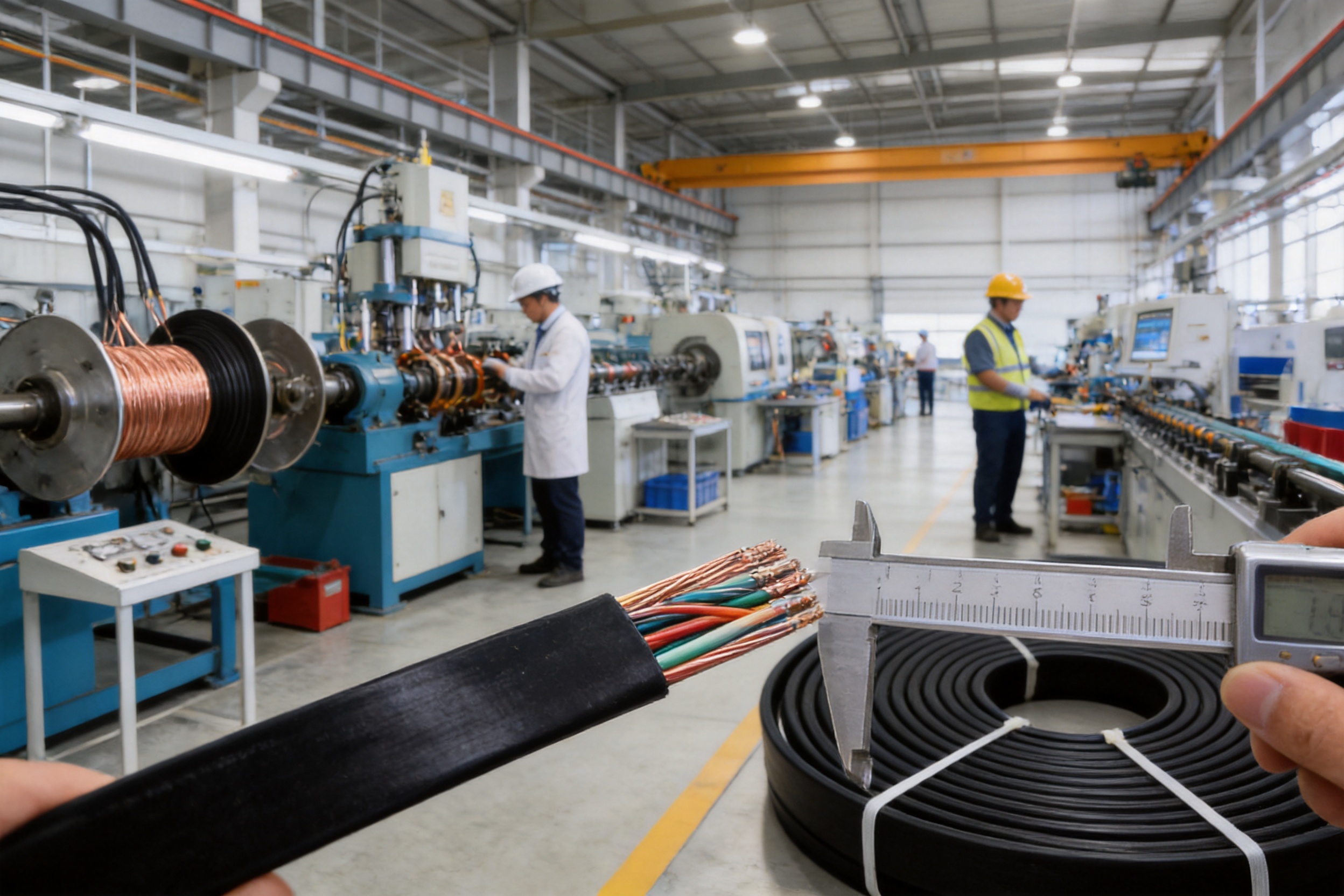
Production begins with the preparation and inspection of annealed copper conductors. Conductor diameter, surface quality, resistance, and strand condition affect both electrical performance and flexibility. Fine-stranding equipment must maintain stable tension so that the strands are compact without becoming excessively hard or uneven.
The stranding process combines multiple fine copper wires into a flexible conductor. Uniform lay length and stable compaction help create consistent bending behavior. Poorly controlled stranding can cause local bulges, uneven insulation thickness, or irregular conductor resistance.
PVC insulation is extruded around each conductor. Process temperature, extrusion speed, cooling conditions, and die alignment are controlled to achieve a consistent layer. Online and offline checks can be used to identify surface imperfections, dimensional variation, or insulation defects.
After insulation, the cores are identified according to the required color sequence or marking system. The cores are then arranged into the flat configuration. Correct order and spacing are important because they affect cable width, thickness, bending characteristics, and termination accuracy.
The assembled flat core group passes through the sheath extrusion process. The PVC sheath must surround the core arrangement evenly and maintain the specified flat profile. Controlled cooling helps preserve dimensional stability. The finished surface should be smooth and free from visible cracks, blisters, exposed cores, or serious deformation.
Finished cables may undergo conductor resistance testing, insulation resistance testing, high-voltage withstand testing, dimensional inspection, visual inspection, flame-performance verification, abrasion testing, and mechanical flexibility evaluation. Long-term quality depends on both design validation and routine production control.
Traceability is also valuable. Production records can connect the cable length to raw materials, production parameters, inspection results, and packaging information. This helps manufacturers and customers investigate quality issues and maintain consistent supply during repeat orders.
Correct installation is essential to obtaining the expected service life of any traveling cable. Before installation, confirm the cable designation, core count, conductor cross-section, voltage rating, dimensions, bending radius, temperature range, and intended movement path.
The cable should be routed without sharp kinks or forced twists. The flat surface should be oriented according to the equipment design, and the cable should not be compressed by clamps that are too tight. Supports should hold the cable securely without damaging the sheath or restricting the natural movement required by the elevator or machine.
Maintain the specified minimum bending radius. For mobile installation, the recommended minimum is at least five times the cable thickness. If a cable has a thickness of 10 mm, the dynamic bending radius should therefore be at least 50 mm unless a project-specific instruction states otherwise.
Prevent contact with sharp metal edges, rough welds, hot surfaces, and moving components that can pinch the cable. Cable guides should be aligned with the travel path. If the cable rubs continuously against a bracket or shaft surface, the cause should be corrected rather than relying only on the sheath’s abrasion resistance.
Provide suitable strain relief at termination points. The cable should not carry excessive terminal weight, and its movement should not be transferred directly to electrical connections. Connectors, clamps, and glands should be compatible with the cable’s flat geometry and outer dimensions.
During commissioning, inspect the complete travel path at slow speed if possible. Check for rubbing, twisting, excessive sag, tension, abnormal noise, and interference with other equipment. Record the installation condition so that future maintenance personnel can identify changes.
Regular maintenance helps protect the investment in a traveling cable. Inspection intervals should be based on elevator usage, travel frequency, environmental conditions, cable movement, and the consequences of failure.
Inspect the sheath for cuts, cracks, flattening, swelling, abrasion, discoloration, or exposed internal cores. Pay particular attention to points where the cable enters a clamp, guide, connector, or moving transition. Damage at these locations may indicate excessive tension, incorrect bending, or poor support.
Check for unusual changes in cable movement. Increased resistance, jerking, scraping, or abnormal noise can signal guide misalignment, mechanical obstruction, or internal cable deterioration. A cable that appears electrically functional may still be approaching mechanical failure, so visual and mechanical checks should accompany electrical testing.
Electrical maintenance may include insulation resistance tests, continuity checks, conductor resistance checks, and verification of protective-earth continuity where applicable. Testing should be performed by qualified personnel using procedures appropriate for the equipment and safety system.
Do not repair a seriously damaged traveling cable with improvised tape or non-rated joints. Temporary repairs can change the cable’s flexibility, compromise insulation, and create a new failure point. Replacement should use a compatible cable with the correct voltage, core arrangement, dimensions, and mechanical rating.
Before requesting a quotation, customers should prepare a detailed specification. The most important information includes the required number of cores, conductor cross-section, rated voltage, cable length, travel distance, operating speed, bending path, installation orientation, temperature range, and environmental exposure.
It is also useful to identify which cores are intended for power, control, lighting, communication, alarm, or safety functions. Some projects require special color sequences, printed core numbers, shielding, additional support elements, or customized terminations. Providing drawings or samples can help the manufacturer evaluate feasibility more accurately.
Buyers should distinguish between a standard product and a customized design. Standard configurations may offer faster shipment and established production data. Customized configurations may provide a better technical fit but require design review and additional lead time.
For international projects, confirm the required certificates, declarations, test reports, packaging, marking, and destination-market requirements. CE and RoHS features can support many procurement processes, but project-specific requirements may include additional elevator, machinery, fire, or building standards.
Price comparisons should include total ownership considerations. A lower initial price may not be economical if the cable has insufficient bending life, poor dimensional consistency, or limited environmental resistance. Conversely, a correctly selected standardized cable may deliver savings through easier installation, reduced downtime, and simpler replacement planning.
| Item | Specification |
|---|---|
| Product type | HO5VVH6-F extra-flexible flat elevator traveling cable |
| Conductor | Stranded annealed copper conductor with ultra-fine stranding |
| Conductor cross-section | 0.5 mm² to 4.0 mm² |
| Number of cores | 2 to 60 cores |
| Rated voltage | 300/500V |
| Test voltage | 2kV AC for one minute |
| Insulation material | Polyvinyl chloride |
| Insulation thickness | 0.4 mm to 0.8 mm |
| Sheath material | Flexible polyvinyl chloride |
| Sheath thickness | 0.8 mm to 1.6 mm |
| Structure | Flat European-standard design |
| Temperature range | -40°C to +70°C fixed; -5°C to +70°C flexible installation |
| Minimum bending radius | At least 5 times cable thickness for mobile installation; at least 3 times for fixed installation |
| Insulation resistance | At least 15 MΩ·km at 20°C |
| Flame performance | IEC 60332-1 flame-retardant requirements |
| Minimum tensile strength | At least 10 N/mm² |
| Bending life | At least 8 million cycles under elevator operating conditions |
| Oil resistance | Passes EN 60811-2-1 oil immersion test |
| Abrasion resistance | Passes 10,000 reciprocating abrasion test |
| Approximate cable thickness | 2.5 mm to 12 mm, depending on configuration |
| Approximate cable width | 8 mm to 60 mm, depending on configuration |
| Color identification | VDE color-coding practice |
| Conformity features | CE and RoHS-related compliance support, subject to product documentation |
The cable is designed for low-voltage moving applications, especially elevator traveling systems, escalators, lifting equipment, stage machinery, cranes, and other equipment requiring repeated bending and reliable electrical connection.
The flat structure can reduce installation depth, simplify routing in narrow spaces, organize multiple cores, and fit common traveling-cable support arrangements. It is particularly useful where a round cable would occupy more space or be more difficult to guide.
The product range supports approximately two to 60 cores. The exact core count, arrangement, width, thickness, and conductor cross-section should be confirmed according to the project specification.
Available cross-sections range from approximately 0.5 mm² to 4.0 mm². Selection should be based on current, voltage drop, temperature, duty cycle, installation method, and applicable electrical regulations.
Yes. The product includes a fixed-installation temperature range of -40°C to +70°C and a minimum fixed-installation bending radius of at least three times the cable thickness. However, customers should select the cable according to the complete electrical and environmental requirements of the installation.
The listed flexible-installation range is -5°C to +70°C. Although the material may tolerate lower fixed-installation temperatures, dynamic movement at very low temperatures should be evaluated separately with the manufacturer.
The cable offers weather and temperature adaptability for suitable indoor and outdoor industrial environments. Outdoor applications should be reviewed for ultraviolet exposure, water accumulation, chemical contact, mechanical protection, and local regulatory requirements.
The stated bending life is at least eight million cycles under elevator operating conditions. Actual service life depends on travel distance, speed, bending radius, installation alignment, temperature, load, abrasion, torsion, and maintenance quality.
The product is specified as passing an EN 60811-2-1 oil immersion test. It is suitable for environments with relevant oil exposure within the tested conditions, but highly aggressive chemicals and permanent immersion require separate confirmation.
Yes. Anhui Zhishang Cable Technology Co., Ltd. supports customized development based on customer drawings or samples. Possible customization areas may include core count, cross-section, dimensions, color coding, markings, packaging, and related cable requirements.
Depending on the product and order, customers may request specifications, product test reports, conformity information, inspection records, and warranty documentation. Required documents should be confirmed before production.
Use the correct bending radius, align guides, prevent sharp-edge contact, avoid excessive clamping, provide proper strain relief, control temperature, inspect the sheath regularly, and replace damaged cables with a compatible rated product.
The HO5VVH6-F cable brings together several characteristics that are valuable in elevator and mobile-equipment projects: ultra-fine stranded copper conductors, a flexible PVC insulation and sheath system, a flat space-saving profile, a wide core-count range, European-standard voltage classification, and mechanical endurance for repeated movement.
Its advantages become more meaningful when considered alongside manufacturing capability. A cable design can only deliver consistent field performance when the conductor, insulation, core arrangement, sheath, dimensions, and test results are controlled throughout production. Anhui Zhishang Cable Technology Co., Ltd. combines automated production lines, technical personnel, quality engineers, OEM and ODM support, standard product inventory, and international supply experience to address these requirements.
For equipment manufacturers, the product can provide a standardized starting point for elevator and machinery designs. For contractors, the flat structure and available core configurations can simplify cable selection and routing. For maintenance teams, standardized color coding and stable dimensions can make replacement and troubleshooting more efficient. For procurement departments, the combination of European-standard construction, conformity features, customization support, and production capacity can help balance performance and cost.
As with every cable product, correct selection and installation remain essential. The cable should be matched to the actual electrical load, motion profile, temperature, environmental exposure, and applicable safety requirements. When these factors are properly evaluated, HO5VVH6-F offers a reliable and economical solution for demanding low-voltage traveling connections.
Elevator traveling cables must perform under continuous motion, confined routing conditions, and changing environmental stresses. HO5VVH6-F is engineered to meet these challenges through a flexible flat structure, ultra-fine stranded copper conductors, PVC insulation, a protective PVC sheath, and a wide range of core and cross-section options.
Its rated voltage of 300/500V, 2kV AC test voltage, stated insulation resistance, flame-retardant performance, oil resistance, abrasion resistance, VDE-oriented color coding, and bending-life target make it suitable for many elevator and mobile industrial applications. Its flat profile can save space, while its standardized construction can support easier integration and maintenance.
Behind the product, Anhui Zhishang Cable Technology Co., Ltd. provides integrated research, manufacturing, quality control, customization, and supply services. With automated production capacity, experienced technical staff, international market experience, and support for OEM and ODM projects, the company is equipped to serve both standard orders and specialized cable requirements.
For elevator manufacturers, machinery builders, system integrators, distributors, and project contractors, this cable represents a balanced approach to flexibility, safety, environmental adaptability, manufacturing consistency, and procurement efficiency.
IEC 60332-1, Tests on Electric and Optical Fibre Cables Under Fire Conditions: Test for Vertical Flame Propagation for a Single Insulated Wire or Cable.
EN 50525-2-21, Electric Cables: Low Voltage Energy Cables of Rated Voltages up to and Including 450/750V.
EN 60811-2-1, Electric and Optical Fibre Cables: Test Methods for Non-Metallic Materials.
VDE Cable Identification and Color-Coding Practices for Low-Voltage Cable Systems.
RoHS Requirements for the Restriction of Hazardous Substances in Electrical and Electronic Equipment.
General engineering principles for elevator traveling cable installation, flexible cable bending radius, cable support, and maintenance.

We firmly believe that good cables are not only a competition of materials, but also a reflection of craftsmanship, quality, and responsibility.

Links
Product
Send Inquiry
No. 29 Sankeshu Road, Xuanzhou District, Xuancheng City, Anhui Province, China
+86-18621104555/+86-563-2622999
 Electrical Cable Manufacturer
OEM/ODM Wire and Cable Solutions
 English
 Español
 عربى
 русский