
Get more content that can help you
Content
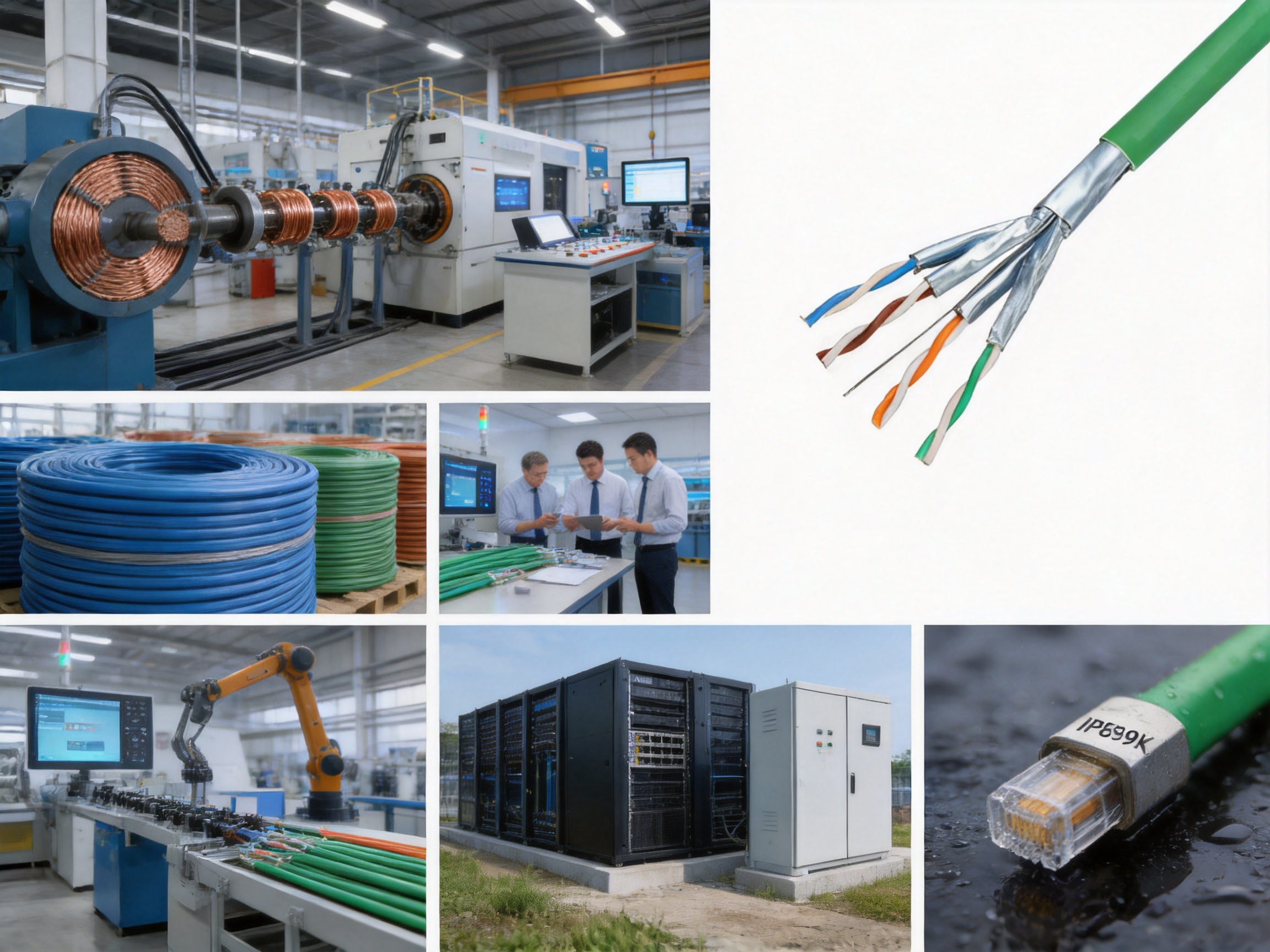
Industrial communication networks are becoming more demanding as factories adopt robotics, machine vision, cloud-connected production systems, automated inspection, and real-time control. These applications require much more than a conventional data cable. The cable must transmit large volumes of information at high speed while resisting electromagnetic interference, oil, vibration, temperature variation, mechanical stress, and chemical exposure. It must also maintain reliable performance over long operating periods in environments where cable replacement can be difficult and expensive.
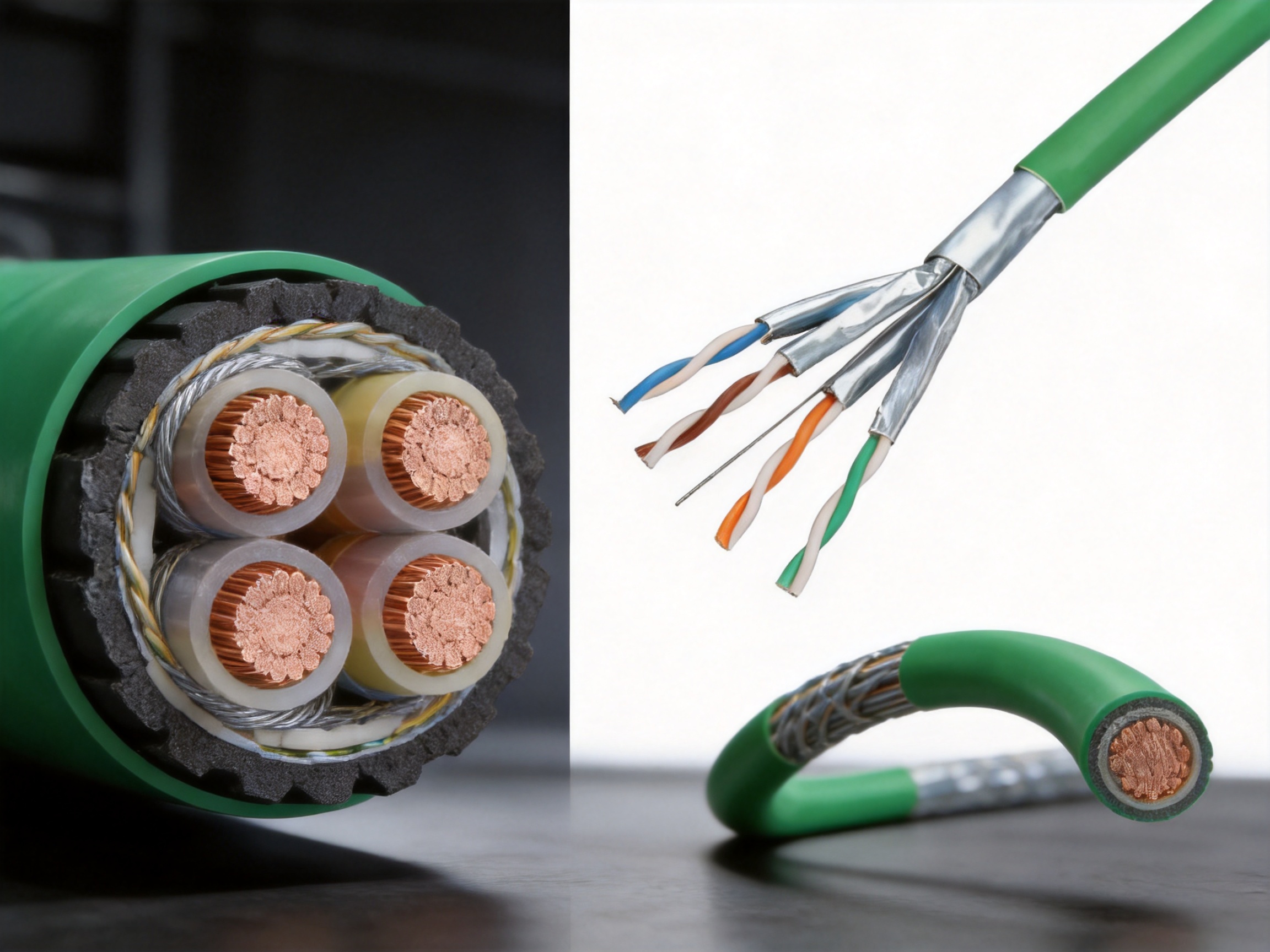
The Cat7 Industrial Bus Cable developed by Anhui Zhishang Cable Technology Co., Ltd. is designed for these demanding conditions. It combines a high-bandwidth four-pair construction with individual pair shielding, an overall shield, stranded tinned copper conductors, HDPE insulation, and a flexible PUR or TPE outer sheath. The result is a robust industrial Ethernet cable intended for 10 Gigabit Ethernet and other high-frequency data transmission applications.
With transmission performance up to 600 MHz, a maximum recommended transmission distance of 100 meters for 10GBASE-T, shielding effectiveness of at least 95 dB at 600 MHz, and optional IP68/IP69K connector solutions, this cable is suited to industrial automation, machine vision, motion control, data center interconnections, high-precision measurement, and other applications where stable communication is essential.
Traditional office Ethernet installations generally operate in relatively clean environments. Cables are routed through ceilings, floors, or protected cable trays, and they are seldom exposed to coolant, oil, repeated flexing, high mechanical loads, or powerful motors. Industrial installations are fundamentally different. A communication cable may run alongside variable-frequency drives, servo motors, welding equipment, switching power supplies, relays, and high-current power cables.
These sources can generate electromagnetic noise that interferes with data transmission. In addition, industrial cables may be dragged through cable chains, twisted during robotic movement, compressed inside conduits, or exposed to sharp temperature changes. A cable that performs well in an office may not provide sufficient mechanical strength or shielding in a production line.
Network failure in an industrial environment can have serious consequences. A temporary communication interruption may stop a robot, interrupt a vision inspection process, cause production losses, or compromise the coordination of multiple control systems. For this reason, industrial Ethernet cable design must address both electrical performance and environmental durability.
The Cat7 Industrial Bus Cable addresses these requirements through a combination of high-frequency construction and industrial-grade materials. Its shielded twisted-pair design helps protect the signal from external electromagnetic interference, while the PUR or TPE sheath provides resistance to abrasion, oil, chemicals, and temperature stress. The cable is therefore designed as a complete industrial communication solution rather than simply as a higher-category office network cable.
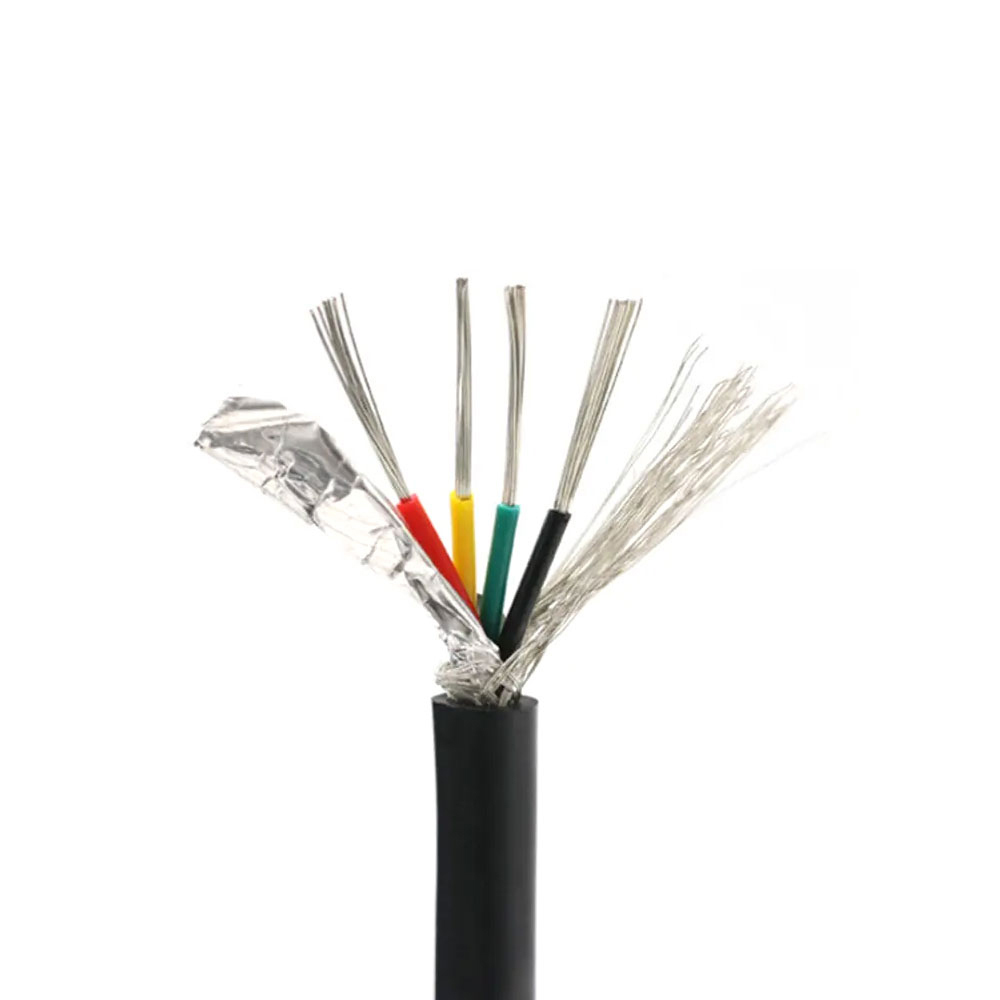
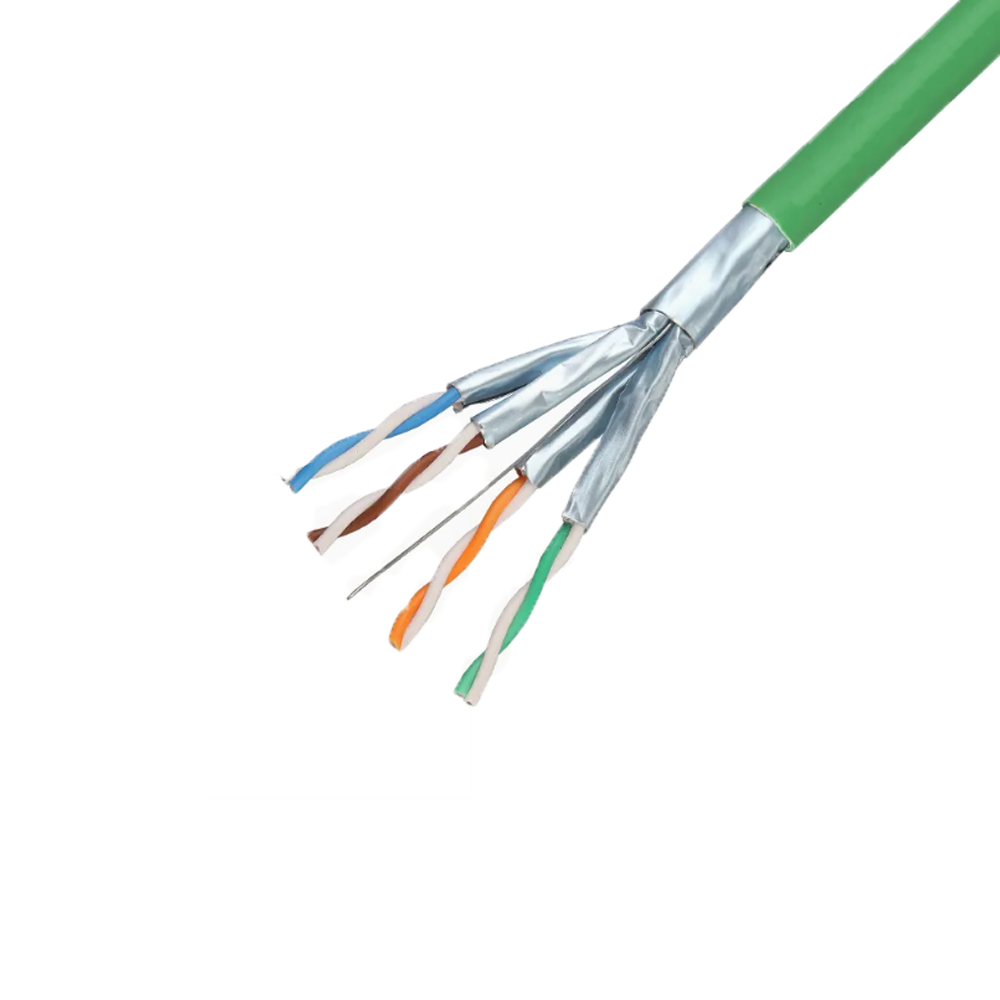
The cable contains four twisted pairs, each based on 22 AWG conductors. Every pair is individually shielded with a foil and braid double-layer arrangement. Individual drain wires support the grounding system, and an overall shield provides an additional barrier against interference and crosstalk.
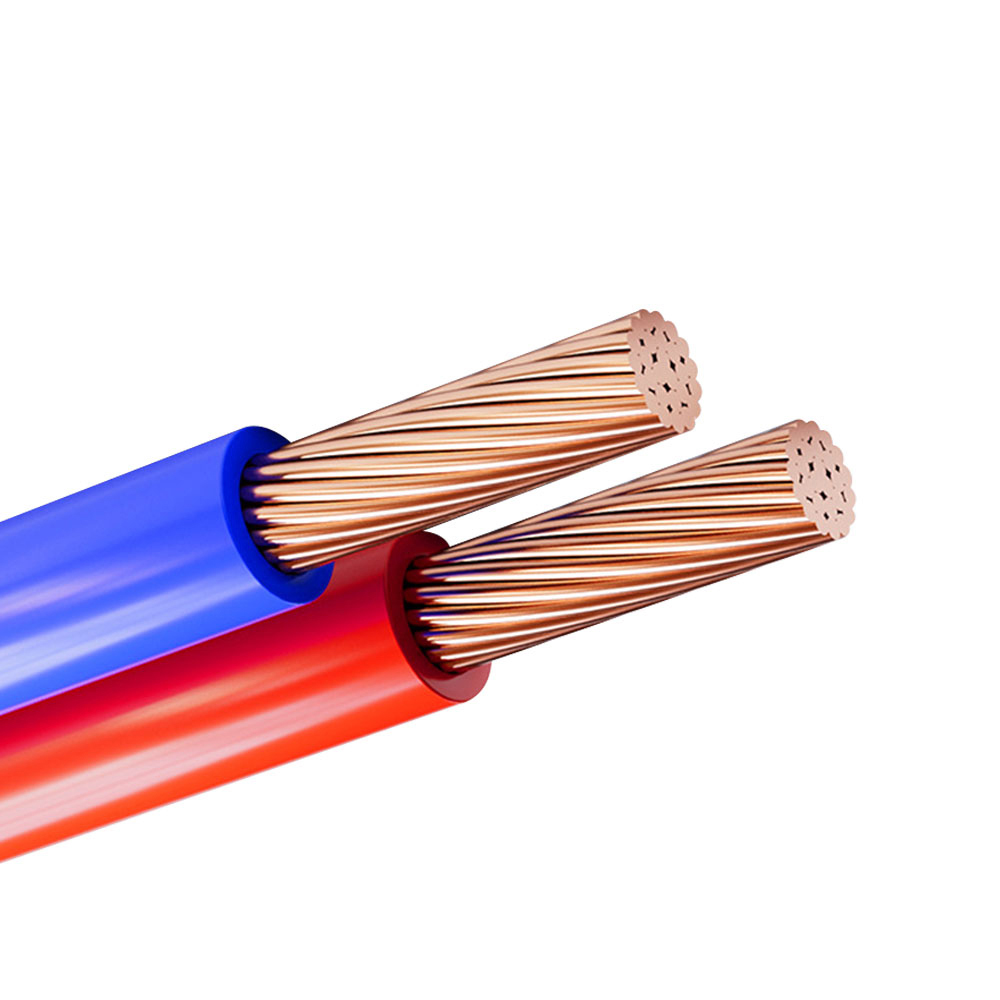
The conductors use multi-stranded tinned copper in a Class 7 conductor structure. Compared with a solid conductor, the stranded construction offers improved flexibility and is more suitable for industrial routing, equipment connections, and applications involving vibration or movement. Tin plating helps protect the copper surface against oxidation and supports stable long-term electrical contact.
High-density polyethylene is used for the primary insulation. HDPE provides suitable dielectric properties for high-frequency transmission and helps maintain consistent pair geometry. The outer sheath is available in flame-retardant PUR or TPE. PUR is particularly suitable for environments requiring strong abrasion resistance, oil resistance, and a broad operating temperature range, while TPE can be selected where flexibility and specific environmental characteristics are prioritized.
The cable is available in gray, green, or black. Depending on the project, matching connectors may be supplied with IP68 or IP69K protection. Optional metal armor can also be considered when the cable requires additional mechanical protection in exposed or high-risk installation areas.
Item | Specification |
Product Type | Cat7 Industrial Bus Cable |
Structure | Four twisted pairs, individually foil and braid shielded, with overall shielding |
Conductor | Multi-stranded tinned copper, Class 7 structure |
Conductor Size | 22 AWG |
Insulation | High-density polyethylene |
Sheath Options | Flame-retardant PUR or TPE |
Nominal Impedance | 100 ohms plus or minus 15 ohms |
Transmission Bandwidth | Up to 600 MHz |
Maximum Distance | 100 meters for 10GBASE-T applications |
Operating Temperature | Minus 50 to plus 90 degrees Celsius with PUR; minus 40 to plus 80 degrees Celsius with TPE |
Minimum Bending Radius | Ten times the cable outer diameter |
Protection Option | IP68 or IP69K with a matching connector |
Cat7 Industrial Bus Cable
One of the most important advantages of this cable is its multi-level shielding architecture. Each twisted pair receives its own foil and braid double-layer shield. The individual pair shields limit the interaction between adjacent pairs, while the overall shield protects the complete cable from external electromagnetic fields. Drain wires provide a controlled path for grounding and help maintain continuity between the shielding layers and the equipment grounding system.
This construction is particularly valuable in industrial automation. Servo drives, frequency converters, motors, contactors, welding systems, and switching devices may all create electromagnetic disturbances. If an Ethernet cable has insufficient shielding, interference can increase bit errors, packet retransmissions, communication latency, or unexpected network disconnections.
Individual pair shielding offers an advantage over basic overall-shielded designs because it addresses both external interference and internal crosstalk. The four pairs are physically close to one another, and high-frequency signals in one pair can influence adjacent pairs if the construction is not properly controlled. By shielding each pair independently, the cable reduces unwanted coupling and improves signal separation.
The overall shield adds another protective layer. It is especially useful when the cable is installed near power cables or electrical equipment. When the shield is correctly terminated at compatible connectors and integrated into a suitable grounding system, the complete cable assembly can provide significantly better electromagnetic compatibility than an unshielded or lightly shielded alternative.
The specified shielding effectiveness is at least 95 dB at 600 MHz. This indicates a high level of attenuation of external electromagnetic energy across the relevant high-frequency range. Actual system performance will also depend on connector quality, grounding, installation method, cabinet design, and separation from high-voltage wiring. For this reason, Zhishang supports complete grounding solutions and compatible shielded connector options rather than treating the cable as an isolated component.
The cable is designed for transmission bandwidth up to 600 MHz. This exceeds the frequency range commonly associated with many lower-category communication cables and provides additional performance margin for demanding data applications. The higher bandwidth is valuable for networks that need to transmit large image files, sensor data, control instructions, diagnostic information, and cloud-connected production data at the same time.
For 10GBASE-T applications, the specified maximum transmission distance is 100 meters. This makes the cable suitable for many factory-floor links, equipment-to-switch connections, production cells, and data center interconnections. A 100-meter capability also provides practical flexibility when routing cables through machine structures, control cabinets, cable trays, and building infrastructure.
The cable specifications include a nominal impedance of 100 ohms plus or minus 15 ohms, maximum DC resistance of 7.5 ohms per 100 meters, mutual capacitance of no more than 4.0 nanofarads per 100 meters, propagation delay of no more than 536 nanoseconds per 100 meters, and delay skew of no more than 20 nanoseconds. These parameters are important because high-speed data transmission depends on controlled electrical characteristics throughout the cable length.
Low resistance helps reduce power loss and supports stable electrical performance. Controlled capacitance contributes to predictable signal behavior, while low propagation delay and delay skew help ensure that the signals within the four pairs arrive within an acceptable timing relationship. This is particularly important for high-frequency Ethernet systems that depend on coordinated differential signaling.
Electrical Parameter | Specified Value | Practical Importance |
Nominal Impedance | 100 ohms plus or minus 15 ohms | Supports impedance matching and reduces signal reflection |
Bandwidth | Up to 600 MHz | Provides capacity for high-speed and future-oriented applications |
Maximum DC Resistance | 7.5 ohms per 100 meters | Helps maintain stable electrical performance over long links |
Mutual Capacitance | No more than 4.0 nF per 100 meters | Supports predictable high-frequency transmission characteristics |
Propagation Delay | No more than 536 ns per 100 meters | Helps control network timing |
Delay Skew | No more than 20 ns | Helps preserve timing consistency between pairs |
NEXT at 600 MHz | At least 62.9 dB | Reduces near-end crosstalk between pairs |
Return Loss at 600 MHz | At least 28.0 dB | Reduces reflected signal energy |
ACR at 600 MHz | At least 58.1 dB | Indicates signal-to-crosstalk performance margin |
Industrial cable reliability depends on mechanical performance as much as electrical performance. A cable may be subjected to pulling forces during installation, compression from cable management systems, repeated bending, vibration from machinery, and abrasion against metal surfaces. The Cat7 Industrial Bus Cable has a specified tensile strength of at least 1500 N, offering a strong mechanical foundation for demanding routing conditions.
The recommended minimum bending radius is ten times the cable outer diameter. Following this requirement helps protect the internal pair geometry and shielding structure. Excessive bending can deform the pairs, alter impedance, weaken the shield, and reduce high-frequency transmission performance. Proper cable routing is therefore essential to achieving the specified electrical characteristics in the field.
The multi-stranded Class 7 conductor design supports flexibility in comparison with rigid solid-core construction. This makes the product suitable for control cabinets, moving equipment interfaces, industrial workstations, robotic cells, and locations where the cable must be routed around machinery. The specific suitability for continuous motion should be confirmed according to the application, bend-cycle requirements, travel distance, and cable-chain conditions.
For exposed installations or areas with high risk of mechanical damage, optional metal armor can provide an additional layer of protection. Armored configurations may be useful in heavy equipment zones, outdoor industrial installations, mining-related systems, and locations where cables could be impacted by tools, materials, or moving machinery.
Industrial production frequently involves lubricants, hydraulic fluids, cutting oils, cleaning agents, and other chemicals. Cable sheaths that soften, crack, swell, or become brittle after exposure can lead to premature failure. The PUR sheath option is designed to provide strong resistance to abrasion, oil, and chemical corrosion, making it suitable for factory environments where standard PVC or general-purpose cable jackets may not provide sufficient protection.
The product specification states that the cable passes an IRM 903 oil immersion test at 90 degrees Celsius for seven days. This test information provides a reference for evaluating the cable's oil resistance. In actual installations, the precise compatibility of the sheath should still be reviewed against the specific chemical mixture, concentration, exposure time, temperature, and cleaning procedure used at the site.
Temperature adaptability is another important strength. With a PUR sheath, the specified operating temperature range is minus 50 to plus 90 degrees Celsius. With a TPE sheath, the specified range is minus 40 to plus 80 degrees Celsius. This makes the cable suitable for cold storage areas, outdoor equipment, high-temperature machinery zones, and factories with substantial day-to-night or seasonal temperature changes.
The choice between PUR and TPE can be made according to the balance of flexibility, abrasion resistance, environmental exposure, and project temperature requirements. Zhishang's engineering team can support material selection and cable customization based on equipment conditions, routing, installation method, and expected service environment.
Fire performance is an important consideration in cable selection, especially when multiple cables are installed in bundles. The Cat7 Industrial Bus Cable is specified to pass the IEC 60332-3C bundle flame test. Flame-retardant construction can help limit flame propagation along cable groups and may support safer installation in industrial buildings, equipment rooms, data centers, and control areas.
Flame retardancy does not eliminate the need for correct installation. Cable spacing, tray design, ventilation, fire barriers, connector selection, and local regulations must all be considered. However, using a cable with a defined bundle flame performance provides a stronger foundation for a complete fire-safety strategy than using an untested general-purpose cable.
For wet, dusty, washdown, or outdoor environments, matching connectors can provide IP68 or IP69K protection. IP68 solutions are commonly selected for protection against dust and prolonged water immersion under defined conditions. IP69K solutions are intended for demanding high-pressure and high-temperature washdown environments. The final rating applies to the complete mated cable assembly and not only to the cable itself, so correct connector installation is essential.
These protection options make the cable suitable for food and beverage equipment areas, outdoor automation systems, vehicle production lines, chemical processing areas, and machinery that is frequently cleaned. The connector and cable interface should be selected according to the required ingress protection, vibration level, mating cycle, grounding method, and network equipment interface.
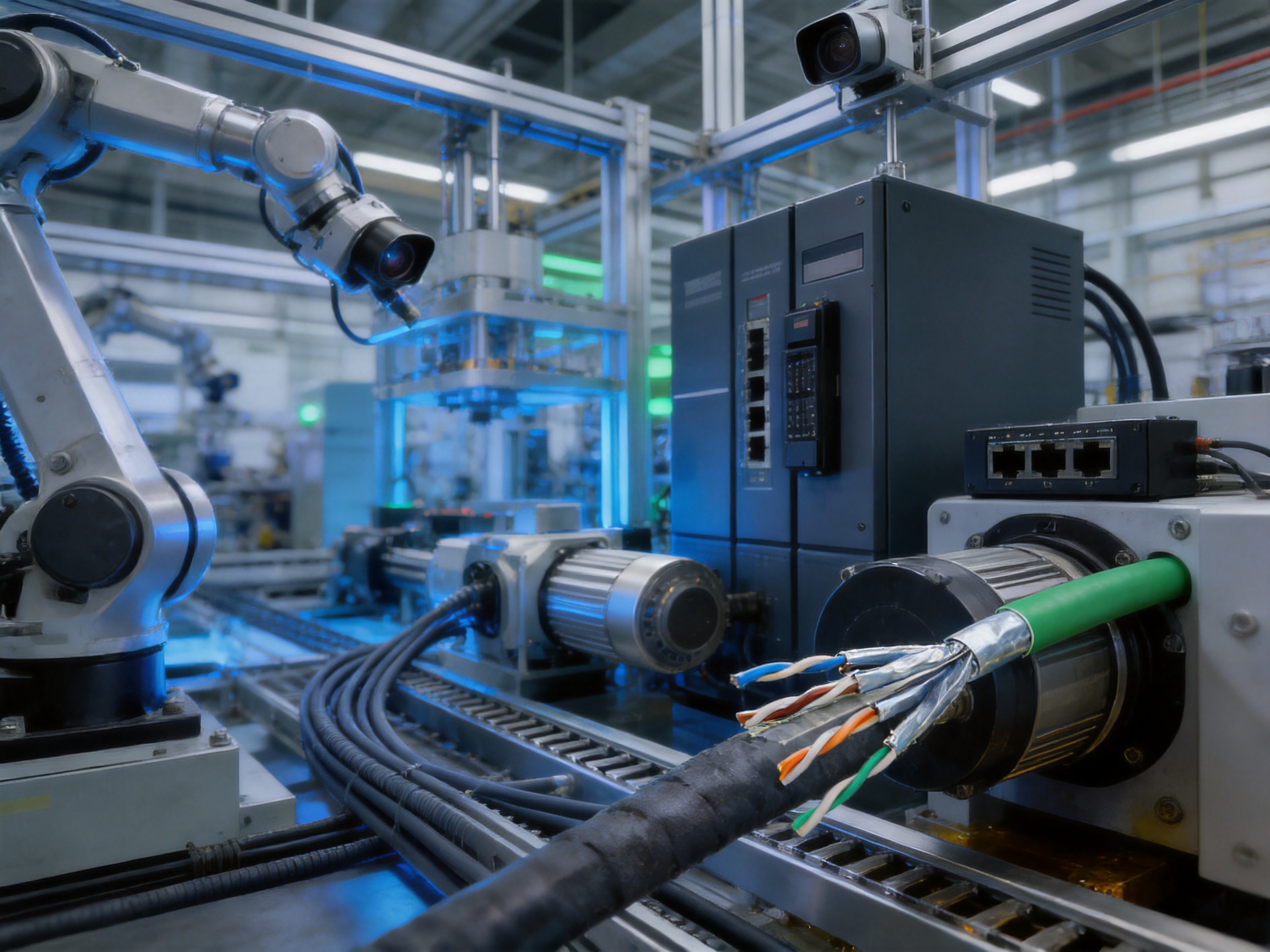
Industrial automation systems rely on continuous communication between programmable logic controllers, remote input and output modules, drives, sensors, human-machine interfaces, industrial switches, and production management systems. The Cat7 cable's shielding and high bandwidth help support reliable communication in control cabinets and production cells containing motors, switching equipment, and high-current circuits.
Machine vision systems generate large data files from cameras and inspection devices. High-resolution images must often be transmitted rapidly to processing units while control signals and inspection results are communicated in the opposite direction. The cable's 600 MHz transmission capability and low crosstalk characteristics are suitable for high-speed camera networks and inspection stations operating near electrically noisy equipment.
Robotic and motion-control systems require predictable communication timing. Delays, packet loss, and retransmissions can affect synchronization between axes and reduce production efficiency. The controlled impedance, propagation delay, delay skew, and high shielding performance of this cable support stable network infrastructure for servo systems and coordinated motion applications.
Modern factories increasingly connect production equipment to local servers, edge-computing units, and cloud-based monitoring platforms. These systems may collect production data, equipment status, energy information, quality records, and predictive maintenance indicators. A high-performance physical network helps ensure that the increasing volume of information can move between machines, switches, servers, and management platforms without creating communication bottlenecks.
Data centers and industrial server rooms require high-speed, high-density connections with controlled electrical performance. The cable's 10GBASE-T capability over distances up to 100 meters can support equipment interconnections, distribution areas, and industrial computing infrastructure. When installed with suitable connectors and grounding, its double-layer shielding can be especially useful in facilities located near heavy electrical equipment.
Measurement systems used in laboratories, manufacturing inspection, calibration, and process control can be sensitive to communication errors and electromagnetic disturbance. The cable's individual pair shielding, overall shielding, and low crosstalk performance help provide a stable connection for instruments that transmit precise measurement results or require dependable synchronization.
Welding lines, metal processing facilities, motor test areas, power conversion systems, and heavy industrial plants can expose communication cabling to severe electromagnetic interference. In these settings, a multi-level shielded cable can offer a meaningful advantage over unshielded or lightly shielded products, provided that the installation uses correct grounding and appropriate cable separation.
The most significant advantage of this Cat7 design is the combination of high-frequency performance and environmental durability. Some communication cables provide adequate bandwidth but use jackets that are not suitable for oil, abrasion, or wide temperature ranges. Others offer rugged jackets but use less advanced shielding or conductor structures. This product is designed to balance these requirements in one cable construction.
Compared with unshielded cables, it provides much stronger protection against external electromagnetic interference. Compared with cables using only an overall foil shield, the individual foil and braid shielding around each pair offers improved pair-to-pair isolation. Compared with basic solid-core office cables, its stranded tinned copper construction provides greater flexibility for industrial routing and equipment connections.
The PUR option provides a strong solution where abrasion, oil, and temperature exposure are important. The TPE option provides an alternative for projects requiring a different balance of flexibility and environmental performance. Optional metal armor and IP68/IP69K connector solutions allow the cable system to be adapted to more demanding mechanical and ingress conditions.
The 600 MHz bandwidth also creates a useful performance margin. Even when the immediate application uses a lower data rate, additional bandwidth can help support future network upgrades, higher-resolution machine vision, expanded sensor networks, and increasing data traffic. This future-oriented design can reduce the need for early cable replacement when production systems are modernized.
Comparison Factor | Conventional General-Purpose Cable | Cat7 Industrial Bus Cable |
Pair Shielding | May be unshielded or use limited shielding | Each pair has foil and braid double-layer shielding |
Overall Shielding | May not be included | Overall shield with drain wires |
Bandwidth | Typically lower depending on category and design | Up to 600 MHz |
Conductor | Often solid or standard copper construction | Multi-stranded tinned copper, Class 7 structure |
Sheath Options | May have limited oil or abrasion resistance | PUR or TPE options for industrial environments |
Temperature Range | Often designed for moderate indoor conditions | Up to minus 50 to plus 90 degrees Celsius with PUR |
Mechanical Protection | Basic jacket protection | High tensile strength and optional metal armor |
Ingress Protection | Depends on installation accessories | IP68/IP69K connector solutions available |
Anhui Zhishang Cable Technology Co., Ltd. integrates research and development, manufacturing, and sales. Its production base covers approximately 5,000 square meters and includes ten automated production lines. Reported monthly capacity can reach up to 10 million meters, providing the scale required for standard product supply as well as larger project orders.
Manufacturing high-performance industrial communication cable requires careful control at every stage. The conductor must maintain consistent dimensions and plating quality. The insulation must preserve pair geometry and dielectric stability. Shielding materials must be applied uniformly, and the overall cable must maintain controlled roundness, flexibility, and sheath thickness. Automated production equipment helps improve repeatability and reduce variation between batches.
The company's production model is supported by quality engineers and research and development technicians with more than ten years of industry experience. This combination of manufacturing capacity and technical experience allows the company to respond to both standard cable requirements and customized project specifications.
Zhishang follows national standards, relevant international standards, and industry benchmarks when developing and producing cable products. Its quality approach emphasizes full-core, full-length, pure copper specifications, product test reports, and warranty support for standard models. These practices provide customers with greater confidence in conductor material, product consistency, and traceability.
Quality control for industrial Ethernet cable should not be limited to a final visual inspection. Important checks may include conductor resistance, insulation dimensions, pair geometry, impedance, capacitance, propagation delay, delay skew, crosstalk, return loss, shielding continuity, tensile performance, sheath properties, flame performance, and environmental resistance. The specified product parameters demonstrate the importance of evaluating both electrical and mechanical characteristics.
Industrial projects frequently require cable designs that are not available as standard catalog products. The required cable may need a specific outer diameter, conductor size, color, sheath material, shielding structure, connector, marking, packaging method, or length. It may also need to meet a particular bend radius, installation condition, or equipment interface.
Zhishang supports OEM and ODM development based on customer drawings or samples. Its engineering team can assist with product selection, cable design, material selection, and application-specific configuration. This is especially valuable for equipment manufacturers that need a private-label cable assembly or a customized communication cable integrated into a machine platform.
Customization can also help improve installation efficiency. A project may benefit from factory-terminated cables, predetermined lengths, molded connectors, special boots, identification markings, or customized packaging. By defining these requirements in advance, customers can reduce field preparation, shorten installation time, and lower the possibility of wiring errors.
Customers should provide as much technical information as possible during the design stage. Useful information includes the required data rate, cable length, installation environment, expected temperature, exposure to oil or chemicals, bending or motion requirements, connector type, grounding method, fire-performance requirements, and desired delivery schedule. Clear technical information allows the manufacturer to recommend a suitable configuration rather than relying on general assumptions.
Supply continuity is an important consideration for industrial equipment manufacturers and system integrators. Delayed cable delivery can postpone machine assembly, commissioning, factory acceptance testing, and project completion. With ten automated production lines and a stated monthly output of up to 10 million meters, Zhishang has the capacity to support both recurring orders and larger industrial projects.
Standard products may be stocked for fast shipment, while customized products typically require a lead time of approximately 7 to 20 days, depending on the design, quantity, materials, connector configuration, and testing requirements. This distinction allows customers to plan procurement more effectively. Standard cable can support urgent replacement or routine installation needs, while customized products can be scheduled according to the engineering and production plan.
Stable supply also supports product consistency. When the same cable design is produced repeatedly under controlled processes, system integrators can simplify qualification, documentation, installation instructions, and maintenance procedures. For international customers, a reliable manufacturer can also help coordinate technical communication, packaging, export documentation, and after-sales support.
Even a high-performance cable must be installed correctly. The cable should be routed according to the specified minimum bending radius of ten times the cable outer diameter. Sharp bends, excessive pulling, crushing, and twisting should be avoided. Cable ties should not be tightened so strongly that they deform the sheath or alter the internal pair geometry.
Communication cables should be separated from high-voltage power cables whenever possible. If they must cross, a crossing angle close to 90 degrees can help reduce the length of parallel exposure. In areas with severe electromagnetic interference, cable trays, grounded partitions, metal conduits, and appropriate cabinet design may further improve system performance.
Shield termination is critical. The drain wires and shield layers should be connected according to the grounding design of the network equipment and installation. Incomplete shield termination can reduce the effectiveness of the cable and may create unwanted grounding conditions. Matching shielded connectors should be used, and the complete link should be inspected for shield continuity.
Outdoor, wet, dusty, or washdown applications require suitable connectors and sealing methods. IP68 or IP69K performance depends on correct assembly, proper cable preparation, intact seals, and complete mating. The cable alone cannot guarantee the ingress protection rating of the finished installation.
Before commissioning, installers should verify cable length, pin assignment, connector seating, shielding continuity, grounding, link speed, and communication error rates. For critical applications, certification testing or detailed network performance testing should be completed after installation.
When selecting the Cat7 Industrial Bus Cable, the first consideration should be the required transmission speed and distance. For 10GBASE-T links up to 100 meters, the cable provides a suitable high-bandwidth option. If the project involves another protocol, unusual equipment, or a proposed 25GBASE-T application, the complete system should be evaluated because actual transmission distance and performance depend on active equipment, connectors, installation conditions, and protocol requirements.
The second consideration is the environment. PUR is appropriate for applications that require strong abrasion resistance, oil resistance, and a wider temperature range. TPE may be selected when the project requires a different balance of flexibility and environmental properties. Where mechanical impact is a concern, the optional metal armor should be evaluated.
The third consideration is movement. A cable installed in a fixed tray has different requirements from one routed through a moving robot or cable chain. The number of bend cycles, bending radius, travel speed, torsion, and support method should be reviewed before final selection.
The fourth consideration is the connector and grounding system. Cat7 performance depends on compatible interfaces. The product can connect to Cat6A or Cat6 devices through appropriate adapters, but specialized GG45 or TERA interfaces may be required to realize the intended Cat7 system performance. The network designer should verify compatibility before purchasing connectors and active equipment.
Project Requirement | Recommended Evaluation |
High electromagnetic interference | Use the full individual-pair and overall shielding structure with a complete grounding plan |
Oil and abrasion exposure | Consider the PUR sheath and verify chemical compatibility |
High or low temperatures | Confirm the selected sheath and operating temperature range |
Wet or washdown environment | Use compatible IP68 or IP69K connector solutions |
Mechanical impact risk | Evaluate optional metal armor and protected routing |
High-speed data transmission | Confirm equipment compatibility, cable length, connectors, and grounding |
Customized equipment integration | Provide drawings, samples, connector details, and environmental data for OEM or ODM development |
The value of an industrial communication cable is measured not only by its purchase price. A cable that fails prematurely can cause production downtime, emergency maintenance, data loss, troubleshooting costs, and replacement labor. A cable with stronger shielding, more durable materials, and higher bandwidth may provide a lower total cost of ownership when it reduces failures and supports future system upgrades.
The Cat7 Industrial Bus Cable is designed to support this long-term perspective. Its 600 MHz bandwidth provides technical margin for changing network requirements. Its individual and overall shielding helps protect communication stability. Its PUR or TPE sheath options allow the product to be matched to demanding environments. Its stranded tinned copper conductors support flexible industrial installation, and its optional armor and protected connectors extend the range of possible applications.
The product can also simplify the standardization of industrial networks. A single robust cable family can be specified across automation cells, machine vision systems, control cabinets, equipment rooms, and interconnection routes. Standardization can reduce procurement complexity, simplify maintenance training, and make spare-parts management more efficient.
It is designed for high-speed industrial Ethernet communication, particularly 10 Gigabit Ethernet links in automation, machine vision, real-time motion control, industrial computing, data center interconnections, and high-interference environments.
The cable combines four individually shielded twisted pairs, an overall shield, drain wires, multi-stranded tinned copper conductors, industrial PUR or TPE sheathing, and high-frequency performance up to 600 MHz. These features address both signal integrity and harsh environmental conditions.
The product specification identifies 10GBASE-T support over a maximum distance of 100 meters. The complete link must still use compatible connectors, active equipment, grounding, and installation practices.
Individual pair shields reduce crosstalk between the four pairs and help protect each differential signal from external interference. The overall shield provides an additional barrier around the complete cable.
PUR is suitable for applications requiring strong abrasion, oil, chemical, and temperature resistance. TPE provides an alternative material option with its own flexibility and environmental characteristics. Selection should be based on the actual installation conditions.
The stranded Class 7 conductor structure supports flexibility, but suitability for continuous movement depends on the bend radius, bend cycles, travel speed, torsion, cable-chain design, and application requirements. These conditions should be reviewed with the manufacturer before final selection.
It can be configured with matching IP68 or IP69K connector solutions for demanding wet, dusty, or washdown conditions. The complete connectorized assembly must be correctly installed to achieve the intended protection rating.
The cable can connect to Cat6 or Cat6A devices through suitable adapters. However, specialized GG45 or TERA interfaces may be required to achieve the intended Cat7 system performance.
Yes. Because the cable uses individual shields, an overall shield, and drain wires, the installation should include a complete and properly designed grounding system. Shielded connectors and correct termination are important for maintaining electromagnetic performance.
Yes. The company supports OEM and ODM development based on customer drawings or samples. Customization may include conductor specifications, sheath material, cable color, length, shielding, connectors, markings, packaging, and other project requirements.
Customized products typically require approximately 7 to 20 days, depending on the design, quantity, materials, connector configuration, and testing requirements. Standard products may be available for faster shipment.
Customers can request product test reports and technical documentation appropriate to the project. Important data may include electrical performance, mechanical strength, flame performance, environmental resistance, shielding effectiveness, and connector specifications.
The Cat7 Industrial Bus Cable is engineered for industrial networks that require high-speed data transmission, strong electromagnetic protection, and reliable operation under mechanical and environmental stress. Its four-pair architecture, individual foil and braid shielding, overall shield, drain wires, tinned stranded copper conductors, HDPE insulation, and PUR or TPE sheath provide a comprehensive solution for modern industrial communication.
With bandwidth up to 600 MHz, 10GBASE-T support over distances up to 100 meters, high shielding effectiveness, controlled electrical parameters, strong tensile performance, broad temperature capability, oil resistance, flame retardancy, and optional IP68/IP69K connector solutions, the cable offers advantages over conventional general-purpose Ethernet products in demanding applications.
Anhui Zhishang Cable Technology Co., Ltd. strengthens this product offering through automated production capacity, experienced quality and research personnel, OEM/ODM engineering support, standard product inventory, customized manufacturing, and a focus on full-core, full-length pure copper cable quality. These capabilities allow the company to support industrial automation manufacturers, system integrators, equipment builders, data infrastructure projects, and international customers seeking dependable cable solutions.
Correct cable selection, grounding, connector termination, routing, and installation remain essential. When these elements are designed as a complete system, the Cat7 Industrial Bus Cable can provide a reliable foundation for high-performance industrial Ethernet networks and future expansion.
International Electrotechnical Commission, IEC 60332-3C, Tests on Electric and Optical Fibre Cables Under Fire Conditions.
International Electrotechnical Commission, IEC 60502 Series, Power Cables with Extruded Insulation and Accessories.
International Organization for Standardization, ISO/IEC 11801 Series, Information Technology Generic Cabling for Customer Premises.
ANSI/TIA Telecommunications Standards, Balanced Twisted-Pair Telecommunications Cabling and Component Requirements.
IEEE 802.3 Ethernet Working Group, Ethernet and 10GBASE-T Physical Layer Specifications.
International Electrotechnical Commission, IEC 60529, Degrees of Protection Provided by Enclosures.
IRM 903 Oil Resistance Test Method, Standard Reference for Evaluation of Elastomeric Cable Jacket Materials.
Anhui Zhishang Cable Technology Co., Ltd., Cat7 Industrial Bus Cable Technical Specification and Product Information.

We firmly believe that good cables are not only a competition of materials, but also a reflection of craftsmanship, quality, and responsibility.

Links
Product
Send Inquiry
No. 29 Sankeshu Road, Xuanzhou District, Xuancheng City, Anhui Province, China
+86-18621104555/+86-563-2622999
 Electrical Cable Manufacturer
OEM/ODM Wire and Cable Solutions
 English
 Español
 عربى
 русский